
Kootenai County fixes the ordinary high water mark of Coeur d'Alene Lake at 2,128.71 feet and keeps a 25-foot shoreline management area above it where ground disturbance is limited. Inside the city, the hillside overlay calls for a foundation engineered from a geotechnical report and a Class A or noncombustible covering on every new or replacement roof. I have found no Idaho FAIR plan, so a house the admitted market declines goes to surplus lines.
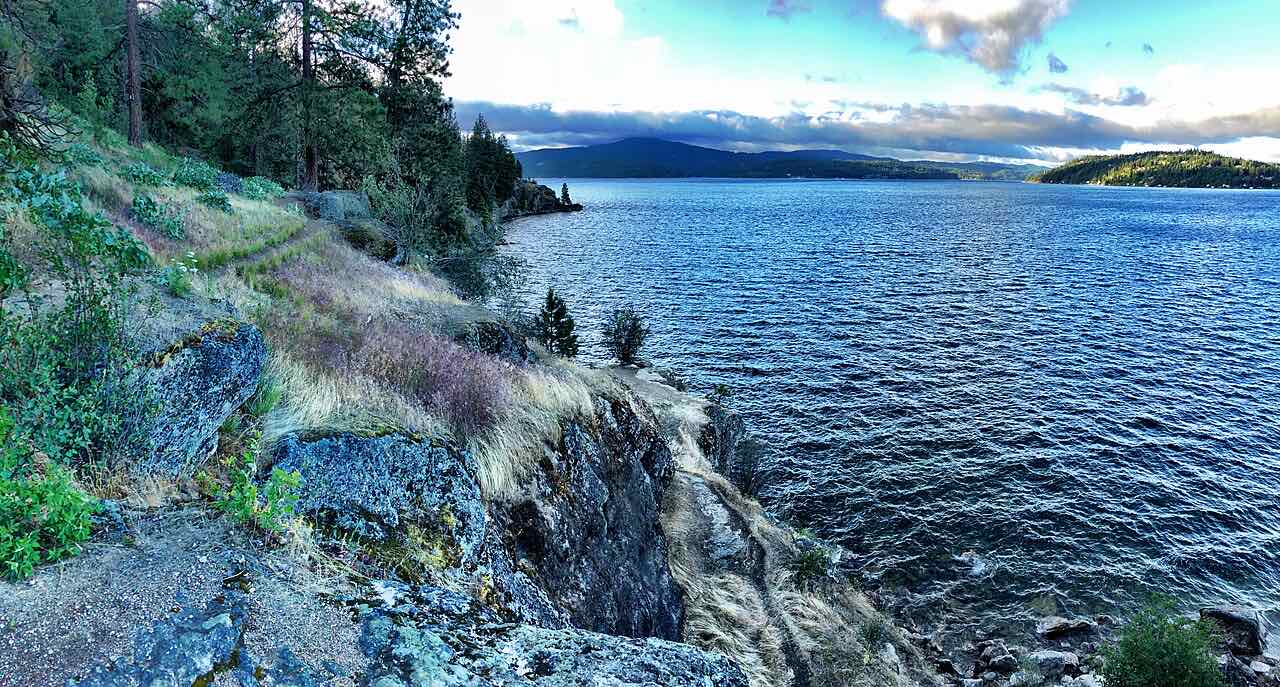

The shoreline rules behind a lakefront rebuild
- County bufferSection 8.7.111 of the Kootenai County code sets a shoreline management area 25 feet in slope distance landward of the ordinary high water mark of every recognized lake, the Coeur d'Alene River and the Spokane River. On the North American datum of 1988 it puts that mark at 2,128.71 feet for Coeur d'Alene Lake, 2,242.9 for Hayden Lake and 2,135.1 for Fernan Lake. Inside the area, fertilizing turf, storing chemicals and mechanical ground disturbance are prohibited except as the section permits.
- What is permittedOne stairway or walkway with landings and a tram, plus one more for each 250 feet of frontage beyond the first, with stairs no wider than four feet; repair, replacement and relocation of existing retaining walls, landscaping and shoreline revetments on an approved site plan; removal of structures or debris left by wildfire or flooding; and vegetation work under an approved wildfire mitigation plan.
- City lotsWithin 500 feet of a sensitive surface water body, the city's section 17.08.940 requires a storm water management plan from an Idaho licensed engineer or landscape architect, and a waterfront lot keeps an undisturbed natural vegetation buffer at least 25 feet from the high water mark, which the city states as 2,125.0 feet on the 1929 datum for the lake.
Retaining walls, revetments, stairs and a tram can be much of what a lakefront claim has to repair, so I check the other structures and landscaping limits against them. The federal flood form lists fences, retaining walls, seawalls, bulkheads, piers and docks among property it does not insure, and the boat belongs on a boat policy that the umbrella lists underneath it.
Hillside lots: the geotechnical report and the roof
Coeur d'Alene's hillside overlay article applies to land inside the mapped Hillside Overlay Zone and to all land annexed after May 1, 2005, unless the average slope is under fifteen percent. Its rules reach into the cost of building the house again:
- GroundBefore development, section 17.08.915 requires a geotechnical study approved by the city that rates the risk of landslides or slumping and recommends foundation design, slope stability, drainage, fill and retaining walls, with inspections during construction.
- FireThe city sets wildfire mitigation goals for each development before work starts, using the Kootenai County wildland-urban interface fire mitigation plan, the 2000 urban-wildland interface code and National Fire Protection Association standards as guides.
- BuildingSection 17.08.935 allows only Class A or approved noncombustible coverings on new roofs and on replacement roofs, requires foundations designed by an Idaho licensed engineer from the geotechnical recommendations, calls for bay windows, decks or step-backs on walls taller than twenty feet, and holds exterior colors to a light reflective value of forty or less outside established residential areas, with nonmirrored glass.
An older hillside house with a wood roof and a foundation nobody engineered comes back as a different building. That difference is what ordinance or law coverage pays for, and I read each form's earth movement wording before recommending it. Extended versus full replacement cost.
Building in the county floodplain
Flood is always a separate policy. The National Flood Insurance Program, under 44 CFR 61.6, covers a single-family house up to two hundred fifty thousand dollars and its contents up to one hundred thousand dollars, so a lake house worth millions to rebuild needs private or excess flood above it.
Kootenai County's floodplain standards, section 8.7.204, ask more of a house than a federal policy does. New and replacement homes and all improvements to existing homes, whether or not they count as a substantial improvement, must put the top of the lowest floor, attached garage and basement included, at or above the county's flood protection elevation. Enclosed areas below that floor are prohibited except crawl spaces under four feet high with flood openings, and a house whose lowest structural member sits more than four feet above grade goes on piers, posts or piles instead of solid walls. A remodel on a low lot can therefore turn into raising the house. Maps and zones are on my Idaho flood page.
Who writes the house, and the Idaho rules on the policy
The Property Insurance Plans Service Office's member list has no Idaho plan, and I have found no other state insurer of last resort for homes. Under Idaho Code 41-1214 a house goes to surplus lines only after a diligent search among authorized insurers writing that kind of coverage, and under 41-1217 the broker may place it only with insurers on the director's eligible list. The statute says eligibility means only that the insurer appears financially sound with satisfactory claims practices. Section 41-1229 taxes surplus lines premiums at one and five-tenths percent, and when Idaho is your home state the tax runs on the whole premium, even for exposures in other states. Admitted versus surplus lines.
Idaho Code 41-2401, in the version in force through 2026, requires fire policies to follow the New York standard form as revised in 1943. That form suspends coverage while a described building is vacant or unoccupied beyond sixty consecutive days unless something added in writing says otherwise. A lake house closed from fall to spring passes that mark, so I ask who checks it, how often, and whether the water is shut off and drained, and I read each quote's vacancy and freeze wording. Second home insurance.
Two more statutes matter after a loss and for staff. Idaho Code 41-1839 makes an insurer that fails to pay the amount justly due within thirty days after proof of loss pay reasonable attorney's fees in a later suit or arbitration, so the proof of loss goes in on time and in the form the policy asks. Section 72-212 puts household domestic service outside workers' compensation unless the employer elects coverage under 72-213. Idaho workers' comp rules.
What a high-value form adds on the lake
A form that pays the full rebuild, or a set percentage over the limit, with a cash option if you choose not to rebuild; art, jewelry and wine scheduled at agreed values (fine art and collections); a named insured that matches the deed when a trust or LLC holds title (homes owned by a trust or LLC); builder's risk before a remodel or a new dock house goes up; and an umbrella over the home, cars and boats.
Ways to start
- Have your current policy readUpload the declarations page and get a written second look in about a minute: what it covers, what to double-check and what it leaves out.
- Send everything at onceOwners, business managers and family offices: private client insurance puts every home, flood, earthquake, umbrella and valuables policy on one file.
- Buying, with a closing dateYour real estate agent can send me the address and the closing date, and the evidence of insurance goes to escrow and the lender.
- Check the address and the limitThe address hazard lookup shows the flood zone, wildfire hazard and nearby fires on the public maps, and the rebuild cost estimator checks the dwelling limit.
What I need to quote
The declarations pages for the home, flood, boat and umbrella policies; the latest rebuild estimate or appraisal; year built, square footage, construction, and roof material and year; whether the lot is in the hillside overlay, with any geotechnical report; the lot's distance and elevation above the high water mark, any elevation certificate and flood zone determination; the retaining walls, revetments, stairs and tram in the shoreline area; months the house is occupied and who checks it; household staff; how title is held; and a schedule of art, jewelry and wine with appraisal dates.
Common questions
Can I rebuild a retaining wall on my Coeur d'Alene Lake property?
Kootenai County's shoreline section permits repair, replacement and relocation of existing retaining walls and shoreline revetments within the 25-foot shoreline management area, on an approved site plan if no site disturbance plan is otherwise required.
What is the high water mark of Coeur d'Alene Lake for building rules?
Kootenai County uses 2,128.71 feet on the 1988 datum. The city's waterfront buffer rule states it as 2,125.0 feet on the 1929 datum.
Does a hillside home in Coeur d'Alene need a Class A roof?
In the city's Hillside Overlay Zone, yes: section 17.08.935 allows only Class A or approved noncombustible coverings on new and replacement roofs, unless the lot's average slope is under fifteen percent.
Is the federal flood policy enough for a lake house in Kootenai County?
No. It stops at two hundred fifty thousand dollars on the house and one hundred thousand on contents, and it does not insure docks, piers, seawalls or retaining walls, so a large lake house needs private or excess flood above it.
Who insures a high-value lake home in Idaho when admitted insurers decline it?
A surplus lines insurer on the Idaho director's eligible list, placed after a diligent search among authorized insurers. Idaho taxes the premium at one and five-tenths percent.
Is my Coeur d'Alene lake house covered if it sits empty all winter?
Check the vacancy wording. The 1943 standard fire policy form that Idaho law follows suspends coverage while a building is vacant or unoccupied beyond sixty consecutive days unless the policy says otherwise in writing.
What if my Idaho home insurer is slow to pay a claim?
Idaho Code 41-1839 says an insurer that fails to pay the amount justly due within thirty days after proof of loss pays reasonable attorney's fees in a later suit or arbitration.
General information about high-value home insurance in Coeur d'Alene and on Kootenai County's lakes as of November 2026, not legal advice. Code sections are summarized as published for the City of Coeur d'Alene and Kootenai County, and statutes as they read in November 2026; local rules and insurer appetite change, and your policy wording controls what is covered. Coverage depends on underwriting and the terms, conditions and exclusions of the policy actually issued.