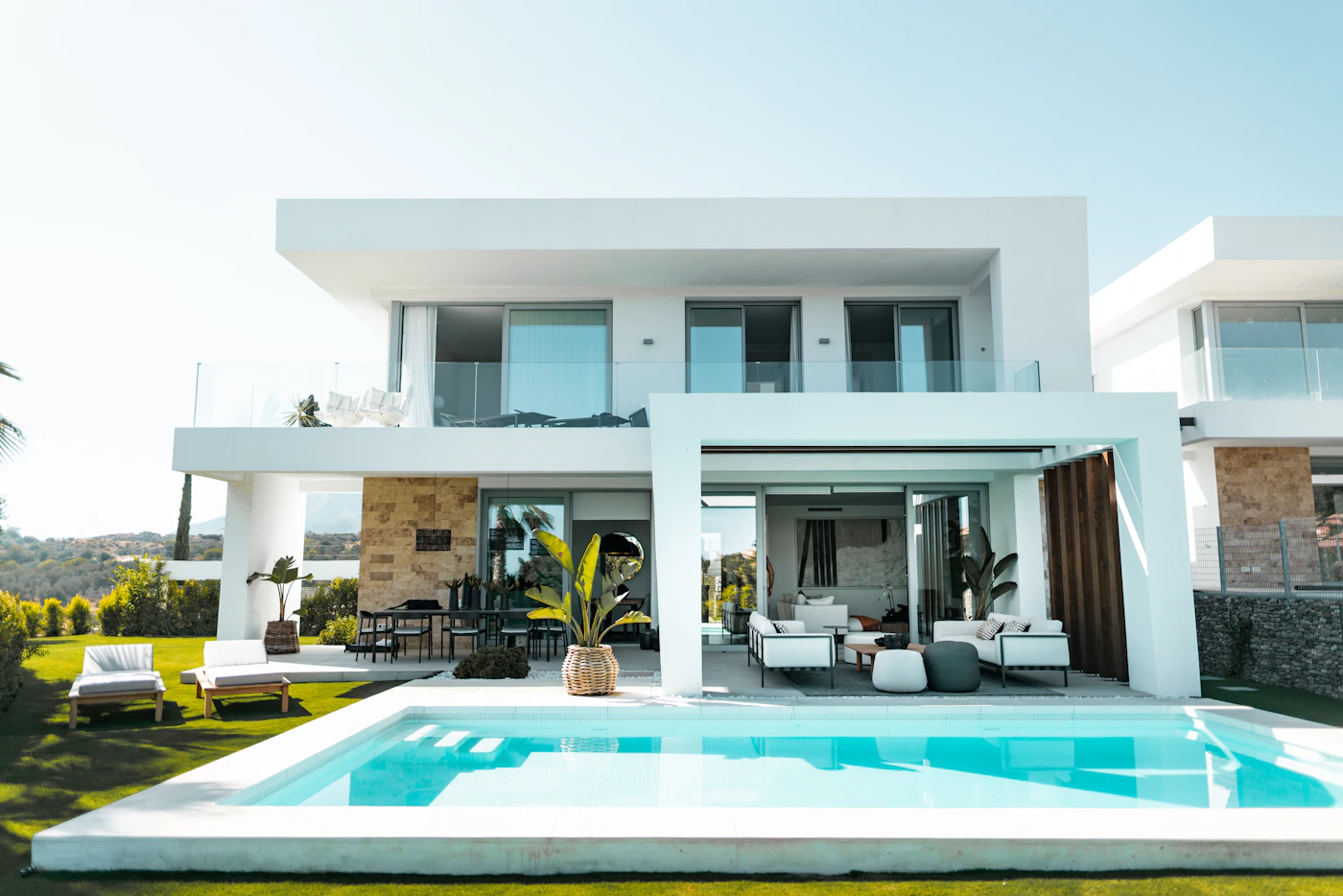
Rebuild cost is what a contractor charges to put your structure back on the lot you already own. It has nothing to do with market value, because land does not burn, and nothing to do with your mortgage balance or your assessed value. It is driven by square footage, construction quality, local labor and materials, the number of stories, site access and finish level — and it is set by the insurer, usually from cost-estimating software fed with your home’s characteristics. Use the range below to find out whether the Coverage A limit on your declarations page is plausible. If it sits well under the low end, that is a conversation to have before a claim rather than after one.
Why this one number decides everything else
Almost every other limit on a homeowners policy is calculated from the dwelling limit. Other structures is commonly a percentage of it. Personal property is commonly a percentage of it. Loss of use is often a percentage of it. Ordinance or law is usually expressed as a percentage of it. So if Coverage A is thirty percent too low, a great deal more than the house is thirty percent too low.
And the error runs almost entirely in one direction. Dwelling limits get set when a home is bought and then drift: a kitchen goes in, a bathroom is added, an ADU appears in the back, a roof is replaced with something better, construction costs move, and nobody tells the insurer. The limit that was right in 2015 is the limit on the policy in 2026.
The purpose of this estimator is narrow, and worth being clear about. It will not tell you your replacement cost. It will tell you whether the number on your declarations page is in a believable range for a house like yours, in the part of California you are in, built the way yours is built.
How to read the range you get
The output is a band, not a figure, and the band is wide on purpose. Treat it like this:
- Your limit sits inside the bandReasonable. Still worth checking the inputs behind the carrier’s estimate at renewal, particularly the square footage and the quality grade.
- Your limit sits above the bandNot automatically wrong. Older homes, custom work and hillside lots often cost more to rebuild than a general model suggests, and carriers see that in their data. Ask to see the estimate rather than asking for the limit to come down.
- Your limit sits below the bandThis is the one to act on. Get the carrier’s replacement cost estimate, read its inputs, and correct anything out of date — square footage after an addition, a remodeled kitchen, a finished basement, an ADU.
- Your limit is close to your purchase priceA warning sign either way. Price includes land; rebuild cost does not. The two matching is usually a coincidence rather than a check.
If you want the real answer instead of a plausible one, it comes from the carrier’s valuation, a contractor’s estimate, or an appraisal written for insurance purposes on an unusual house. Larger and architecturally significant homes are underwritten from exactly that.
What each input is actually doing
- Square footageThe base. Use conditioned living area — what an appraiser would call gross living area — not lot size and not the garage. If you added on and never told anyone, use the real number, because that is what would have to be rebuilt.
- RegionLabour and material costs, permit timelines and contractor availability are not the same in Fresno and on the Peninsula. The regional factor is a blunt instrument for a real effect.
- Construction qualityThe input that moves the answer most, and the one people get wrong most often. Quality grade is about how the house was built and finished, not how nice it looks or what it sold for.
- StoriesA small upward nudge. Multi-story framing, stairs and scaffolding cost more, though there is less roof and foundation per square foot, which is why the factor is small.
- GarageAdded as a flat allowance rather than per square foot, because garage space is cheap per foot but not free.
- Hillside or difficult accessThe most under-appreciated cost in California. Caissons, retaining structures, crane access, a single-lane road and nowhere to stage materials can add more than the finishes do.
- Historic or significantPlaster, lath, period millwork and tile have to be reproduced by hand. That is labor, and labor is what has gone up.
- ADUPriced per square foot on its own band, because a small building with a kitchen and a bathroom costs more per foot than the house in front of it. How ADUs are insured is a separate question worth reading.
What this cannot see, and a carrier can
Everything in the list below changes a real replacement cost estimate and is not an input here. That is the honest limit of a web tool:
- Roof type, pitch and material. A complex tile roof and a simple composition roof are different jobs.
- Foundation type, and whether there is a basement, a crawl space or a slab.
- Room count and layout. Six small bathrooms cost far more than one large room of the same area — kitchens and bathrooms are where the money is.
- Interior finish detail, which a quality grade cannot capture: how much stone, which windows, what the millwork actually is.
- Systems: HVAC zones, electrical service, solar, batteries, well and septic.
- Demolition and debris removal, and site work before a foundation goes back in.
- Demand surge. After a major wildfire every contractor in the county is booked and materials are scarce. Rebuilds in that window cost more than the same rebuild in a quiet year, which is the whole reason extended replacement cost exists.
- Current building code, which a rebuild has to meet even though the old house was legally built without it.
The last two are not details. They are the reason the limit on the policy should not simply equal an estimate of the rebuild.
Ordinance or law, and extended replacement cost
Two coverages exist because a dwelling limit that was accurate at renewal is often not accurate at the claim. Both are worth asking for by name.
Ordinance or law coverage — sometimes called building code upgrade — pays the extra cost of rebuilding to today’s code rather than the code the house was built to. In California that can mean wildfire-hardened materials in a high fire severity zone, sprinklers, seismic detailing, updated electrical and energy standards. It is usually written as a percentage of the dwelling limit rather than being unlimited, and on an older home it is frequently the difference between rebuilding and selling a lot. It is also the coverage most often missing from a FAIR Plan and DIC package that nobody checked.
Extended replacement cost adds a cushion above the dwelling limit — an additional percentage the insurer will pay if reconstruction costs more than the limit. That is the answer to demand surge. The percentage offered varies by carrier and by program, and so does whether it reaches other structures and contents or only the dwelling. On a wildfire-exposed home it is one of the most valuable options on the policy. Guaranteed replacement cost, which promises to rebuild regardless of the limit, still exists on some programs and usually comes with conditions — insuring to the carrier’s full estimate and reporting renovations among them.
The estimator shows what common percentages would be worth in dollars against your own range, so the choice is a number rather than a word. The longer explanation of how rebuild cost is set is here.
What to do with this in the next twenty minutes
- Find Coverage A on your declarations page. That is the dwelling limit.
- Compare it to the range above, and note which of the four cases in the section above you are in.
- Ask your carrier or broker for the replacement cost estimate behind the limit, and read its inputs. Square footage, quality grade and finish level are where the errors hide.
- List what has changed since the limit was set: additions, a kitchen, bathrooms, a roof, solar, an ADU. Remodels raise rebuild cost and are almost never reported.
- Look at Coverage B, other structures, against what your walls, decks, pool equipment and detached garage would really cost.
- Check the cushions: extended replacement cost, ordinance or law, and whether loss of use is a dollar limit or a time limit.
- Send me the declarations page if the number looks stale. It takes a few minutes to tell you whether it still makes sense, and it costs nothing.
Common questions
Is this the same as my insurance company’s replacement cost estimate?
No. Carriers use commercial valuation software fed with detailed characteristics of your specific home, often with an inspection or aerial imagery behind it. This is a wide planning range built from a handful of inputs and the labelled assumptions printed on this page. Use it to sanity-check the limit on your policy, not to set one.
Why is the range so wide?
Because an honest range for a house described in six answers is wide. Roof complexity, interior finish detail, bathroom count, site work and demand surge all move a real estimate and none of them are inputs here. A narrow number from this little information would be a false precision that leaves people underinsured.
Should I insure my home for what I paid for it?
No. Purchase price includes the land, which does not need rebuilding, and reflects location and market conditions rather than construction cost. Insure the structure for what it costs to rebuild it.
My dwelling limit is higher than my home’s market value. Is that an error?
Often not. Older homes, custom construction and hillside lots regularly cost more to reproduce than the market pays for the property, and carriers see that in their own data. It is still worth reading the estimate behind the limit.
Does the estimate include the land, the pool or the landscaping?
No. Land is never insured because it does not need rebuilding. Pools, hardscape, retaining walls, fences and detached structures are usually covered under other structures, a separate limit that is commonly a percentage of the dwelling limit. The estimator adds an allowance for a garage and an ADU only.
Do I have to tell my insurer about a remodel?
Yes, and it is in your interest. A kitchen, an addition, a new roof or an ADU changes what it costs to rebuild. Reporting it keeps the dwelling limit accurate; not reporting it is how homes end up underinsured at the worst possible moment.
Does using this tool sign me up for anything?
No. There is no email field, nothing is sent anywhere, and the numbers stay in your browser. If you want me to look at your policy there is a form at the bottom of the page, and it is optional.
Sources
- California Department of Insurance: Residential Insurance Guide
- California Department of Insurance: consumer guides by insurance type
General information about California homeowners insurance as of September 2026, not legal advice. Construction costs, carrier valuation tools and available endorsements vary by address and change constantly; the ranges on this page are labelled planning assumptions. This page and the estimator on it are general information from Saman Alishahi, an independent California insurance broker, License #4348151 — not a policy, not a quote, not an offer of coverage and not an appraisal or a replacement cost estimate. Coverage depends on underwriting and on the terms, conditions and exclusions of the policy actually issued.