
Irma made its final landfall near Marco Island in September 2017, and the Marco Island Police Department reported a 113-knot gust. Ian left a high water mark of 4.7 feet above ground on the island in 2022. The city's flood maps took effect in February 2024, and it counts repairs and improvements over 12 months against the structure's value. Three stretches of Marco's shoreline are critically eroded. Flood is always a separate policy.
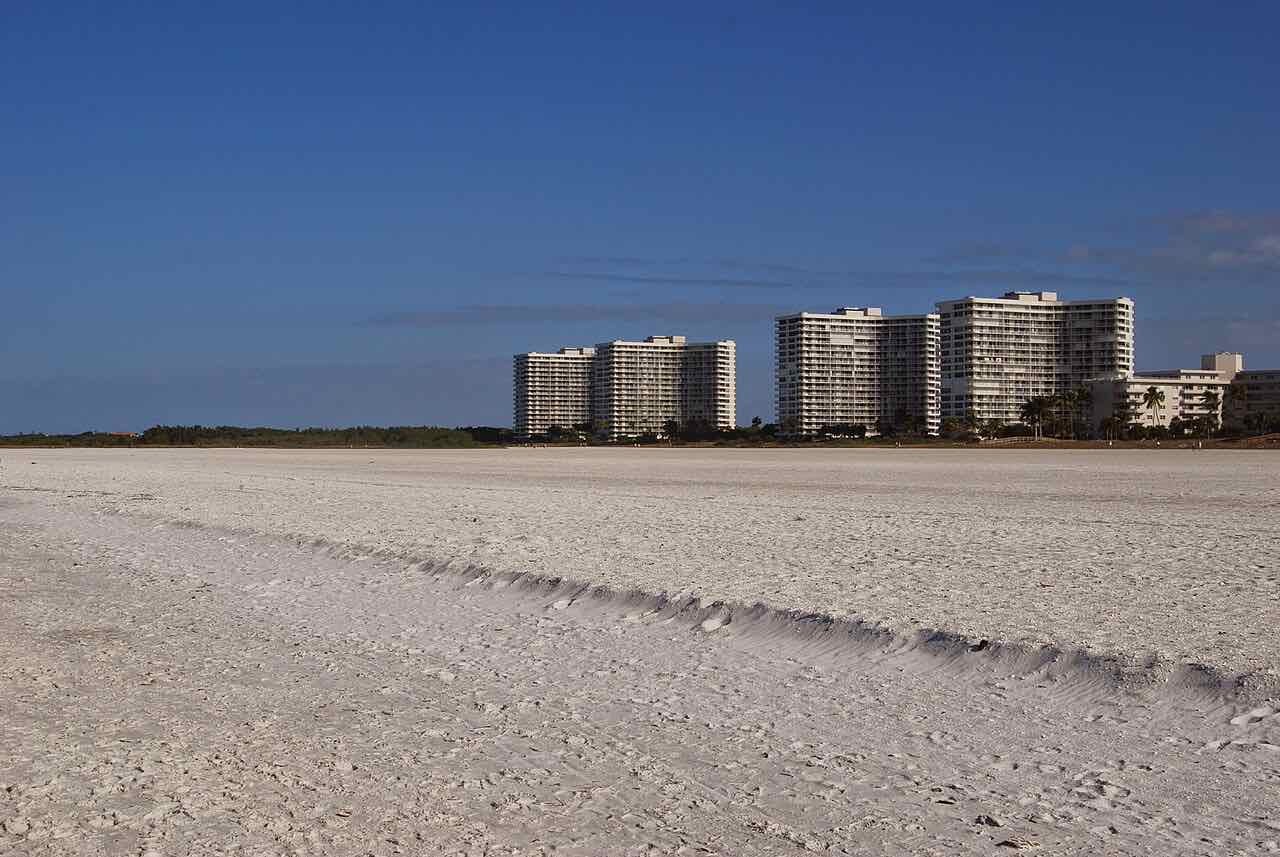

Three hurricanes at Marco Island
- Wilma, October 2005Wilma's center came ashore near Cape Romano, just south of the island, with estimated winds near 105 knots. The center's report gives 4 to 8 feet of surge on the coast of Collier County.
- Irma, September 2017Irma made its final landfall near Marco Island. A spotter on the island reported a minimum pressure of 936.9 millibars, sustained winds of 97 knots and a gust of 112 knots, and the Marco Island Police Department reported a 113-knot gust. The report notes heavy tree and power pole damage on Marco Island.
- Ian, September 2022Ian's maximum inundation was 4 to 6 feet above ground from Marco Island through Everglades City, and the highest high water mark collected was 4.7 feet above ground on Marco Island.
Two of those three storms came ashore within a few miles of the island. A house here needs its wind and its flood coverage each written to the full value of the house and its contents.
The 2024 maps and the Coastal A rules
The city says its current flood maps carry an effective date of February 8, 2024, and its first maps took effect on September 14, 1979, the date that divides pre-FIRM from post-FIRM houses. The flood zones on the island are AE and VE. Seaward of the Limit of Moderate Wave Action, in the Coastal A Zone, any structure, pool, spa or enclosure, garages included, must be built to the Florida Building Code's section R322.3 and the ASCE 24 standard, with stricter rules for elevation, foundations, walls and enclosures.
An elevation certificate is the only document the city uses to confirm finished floor and equipment heights, and it must accompany a building permit. The city notes that for a house built before 1999 with no qualifying work since, it may have no certificate on record, so I ask for a new one before quoting flood on an older house.
How the city counts the 50 percent
Marco Island adds up the cost of repairs and improvements over a 12-month period that starts with the first permit, and compares it with the structure's market value: the Collier County Property Appraiser's structure value plus a 30 percent market adjustment, or a private appraisal. Accessory structures are not part of that value. At 40 percent the city asks for added cost forms, and at 50 percent the house must meet the flood-resistant construction rules of the Florida Building Code and the city's ordinance.
One provision matters for owners who harden a house between storms. The city leaves out the cost of code-compliant work meant to reduce future wind or flood damage, such as storm shutters, impact-resistant windows and doors, stronger roof attachments and raised equipment, as long as that work plus anything else done at the same time stays under 50 percent; additions are never left out. I want those permits on file, because they also earn wind credits on the home policy.
Eroding beaches and the coastal control line
The Department of Environmental Protection's June 2026 report lists three critically eroded stretches on Marco Island: 0.8 mile of inlet shoreline along Hideaway Beach on Big Marco Pass, 0.8 mile of the central Gulf beach, and 0.9 mile of the southern beach, all with restoration projects. Seaward of the coastal construction control line, section 161.053 lets the department permit repair or rebuilding within the confines of the original foundation, but not rebuilding that expands the structure's capacity seaward of the 30-year erosion projection.
Section 161.57 requires a seller of property partly or wholly seaward of the line to give the buyer a written coastal disclosure at contract and, unless waived, an affidavit or survey locating the line at closing. For an agent in escrow, that survey also tells me whether the dwelling limit should be set to rebuild the same house in the same place, and how much ordinance or law coverage it needs.
Wind on the policy, and the claim clock
Section 627.712 requires a residential property policy to include windstorm coverage, but a house too valuable for Citizens is exempt from that requirement if it lies within Citizens' coastal account boundaries, and any policyholder may exclude wind by writing out a prescribed statement signed by every named insured, with the lender's written approval. So I confirm wind is on each quote rather than assume it.
On a replacement cost dwelling claim, section 627.7011 has the insurer first pay at least the actual cash value and the rest as repairs are done, while a total loss is paid without holding back depreciation. Section 627.70132 bars a claim unless notice is given within one year after the date of loss, or 18 months for a supplemental claim, and for a hurricane the date of loss is landfall. An owner who is away for the summer should have someone check the house after every storm (Florida claim deadlines).
Citizens, flood and the rest of the household
Florida law closes Citizens Property Insurance Corporation to a home with a dwelling replacement cost of seven hundred thousand dollars or more, and Citizens' worksheet names only Miami-Dade and Monroe as exceptions, so a large Marco house goes to authorized high-value insurers or, after the signed section 626.916 disclosure, to surplus lines insurers (admitted versus surplus lines). The federal flood program stops at two hundred fifty thousand dollars for the building and one hundred thousand dollars for contents, so excess flood carries the rest.
Florida's workers' compensation law excludes domestic servants in private homes, so household staff are a question for the liability and umbrella policies. A boat at the seawall belongs on a yacht policy, a trust or LLC on the deed must be the named insured, and art, jewelry and wine go on a schedule at agreed values.
Ways to start
- Have your current policy readUpload the declarations page and get a written second look in about a minute: what it covers, what to double-check and what it leaves out.
- Send everything at onceOwners, business managers and family offices: private client insurance puts every home, flood, earthquake, umbrella and valuables policy on one file.
- Buying, with a closing dateYour real estate agent can send me the address and the closing date, and the evidence of insurance goes to escrow and the lender.
- Check the address and the limitThe address hazard lookup shows the flood zone, wildfire hazard and nearby fires on the public maps, and the rebuild cost estimator checks the dwelling limit.
What I need to quote
The declarations pages for the home, flood and umbrella policies; the latest replacement cost appraisal; year built, square footage, construction, and roof material and age; the wind mitigation form; a current elevation certificate and flood zone, including whether the lot is in the Coastal A Zone or seaward of the coastal construction control line; permits from the last 12 months; what Wilma, Irma and Ian did to the house; how title is held; months of occupancy; and a schedule of art, jewelry and wine. The declarations pages are enough to start.
Common questions
Who insures large homes on Marco Island?
Authorized high-value insurers, and surplus lines insurers where they decline. Citizens cannot take a home with a dwelling replacement cost of seven hundred thousand dollars or more in Collier County.
How does Marco Island figure the 50 percent rule?
It adds up repairs and improvements over 12 months from the first permit and compares them with the Collier County Property Appraiser's structure value plus a 30 percent adjustment, or a private appraisal.
Do hurricane shutters count against the 50 percent on Marco Island?
The city leaves out code-compliant wind and flood mitigation work such as shutters and impact windows, if it and other work done at the same time stay under 50 percent of the structure's value.
When did Marco Island's current flood maps take effect?
The city gives the effective date as February 8, 2024. Its first flood maps took effect on September 14, 1979.
How long do I have to report hurricane damage to my Marco Island home?
Florida law bars a claim unless notice is given within one year after the date of loss, which for a hurricane is the landfall date, and 18 months for a supplemental claim.
Can my insurer leave wind out of my Marco Island policy?
A policyholder can exclude wind only with a handwritten statement signed by every named insured and the lender's approval, and a house too valuable for Citizens inside its coastal account is exempt from the wind requirement, so check each quote.
What storm surge did Ian bring to Marco Island?
The National Hurricane Center reports 4 to 6 feet of inundation from Marco Island through Everglades City, with a 4.7-foot high water mark on the island.
General information about high-value home insurance on Marco Island, Collier County, Florida, as of November 2026, not legal advice. Storm figures come from the National Hurricane Center's reports on Wilma, Irma and Ian; flood map and substantial improvement rules are from the City of Marco Island; erosion data is from the Florida Department of Environmental Protection; statutes, federal rules and Citizens' worksheet are summarized as they read in November 2026. Your policy wording controls what is covered. Coverage depends on underwriting and the terms, conditions and exclusions of the policy actually issued.