
The National Hurricane Center ranks the 1935 Labor Day storm in the Keys at 892 millibars, lower than any other U.S. landfall of the century. Irma in 2017 left a high water mark of 4.11 feet above ground in Key Largo. Monroe County's flood maps rest on studies more than 30 years old while FEMA prepares new preliminary maps. Citizens accepts a dwelling replacement cost below one million dollars in Monroe, a line a large house passes, and flood is always a separate policy.
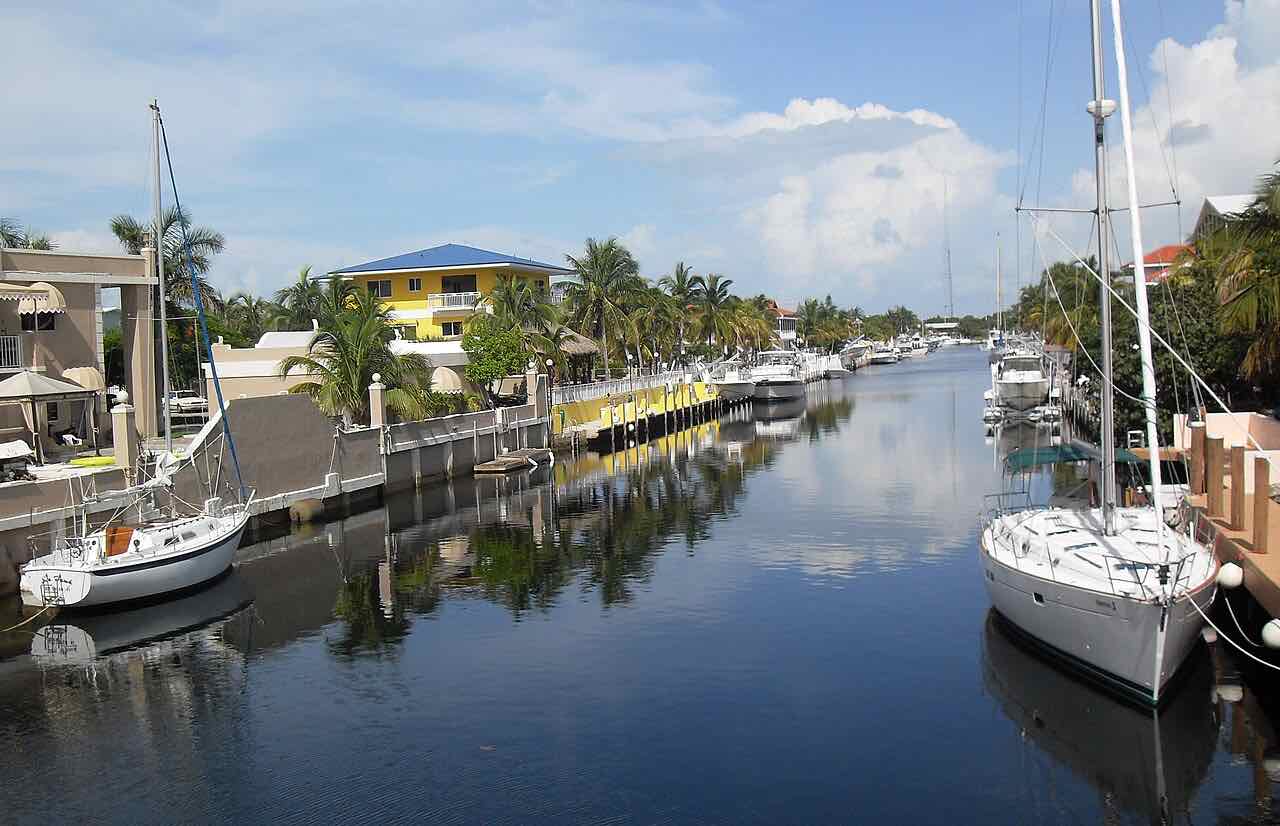

Three storms in the Upper Keys record
- Labor Day, 1935The center's Andrew report notes that only the Labor Day (Keys') storm of 1935, at 892 millibars, and Camille in 1969 had lower U.S. landfall pressures than Andrew in that century.
- Andrew, August 1992Andrew came ashore near Homestead Air Force Base with an estimated 125 knots (about 145 mph) of sustained wind. The report calls its impact extreme from Kendall southward through Homestead and Florida City to near Key Largo, and says about 55,000 people left the Keys.
- Irma, September 2017Irma made landfall near Cudjoe Key with winds estimated at 115 knots. The report gives inundation of 4 to 6 feet above ground across the Middle and Upper Keys, including a surveyed high water mark of 4.11 feet in Key Largo.
One quiet line in the state's beach data: the Department of Environmental Protection's June 2026 report finds no identified erosion problem areas in the Upper Keys. The threat here is water over the island, not a beach washing away.
Flood maps that are still being redrawn
FEMA released preliminary coastal flood maps for Monroe County in December 2019. The county's consultant appealed, and the county's 2026 update says FEMA will release a new set of preliminary maps before the new maps are final, with neither FEMA's preliminary maps nor the county's appeal maps expected to become final as drawn. Meanwhile, the county says, the current maps rest on studies from 30-plus years ago. The new maps use the NAVD88 datum rather than NGVD29, which shifts elevations by about 1.5 feet on average.
The county's building department has owners sign, with their permits, an acknowledgment that the preliminary maps may change the elevation required for what is being permitted. For a buyer or a family office, that means the flood zone and base flood elevation on today's elevation certificate may not be the ones the next owner, lender or flood underwriter uses. I quote flood on the current map and look at what the preliminary map shows for the lot.
Building above the waves, and what's under the house
Monroe County's floodplain rules put the bottom of the lowest horizontal structural member of the lowest floor in Zone V and the Coastal A Zone at the base flood elevation plus one foot, and require buildings in the Coastal A Zone to be designed to Zone V standards. Where a house sits in more than one zone, the stricter rule applies. A reconstruction, addition or repair costing 50 percent or more of the structure's market value means bringing the whole building up to those standards, and the county tells owners to ask the building official how much of that threshold earlier permits have already used.
The federal flood form follows the house up on its pilings. Below the lowest elevated floor of a post-FIRM building in a V or A zone it covers only a short list, such as central air conditioners, cisterns, water heaters and pumps, and not the finishes and furniture that end up downstairs. Federal regulations cap the building at two hundred fifty thousand dollars and contents at one hundred thousand dollars. A large house needs private flood or excess flood, and I read its wording for the ground level too.
Rebuilding inside an area of critical state concern
The Florida Keys Area Protection Act, section 380.0552 of the Florida Statutes, ratifies the Keys' designation as an area of critical state concern and directs local plans to keep the hurricane evacuation clearance time for permanent residents at no more than 24.5 hours. Monroe County meters new homes through its Rate of Growth Ordinance, or ROGO, which it describes as a competitive permit allocation system.
Rebuilding an existing house is a different path. The county's replacement checklist asks whether a ROGO exemption is on file; if one is, replacing or substantially improving a residential unit does not need an allocation, and if not, the owner requests an exemption letter from the Planning Department or applies for an allocation first. I ask owners to have that letter, or the original permits that establish the house, before a storm rather than after. The rebuild also has to meet today's elevation and building code, which is what ordinance or law coverage pays for, so I set that limit against a full rebuild to current rules.
Citizens' Monroe line, and the market past it
Section 627.351 bars Citizens Property Insurance Corporation from homes with a dwelling replacement cost of seven hundred thousand dollars or more, except in counties the Office of Insurance Regulation finds lack a reasonable degree of competition. Citizens' coverage worksheet applies that exception to Miami-Dade and Monroe, where the dwelling limit must be less than one million dollars. A large Ocean Reef or Key Largo house is past both lines.
That leaves authorized high-value insurers and, where they decline, surplus lines insurers, after the documented acknowledgment section 626.916 requires: the policy is not protected by the Florida Insurance Guaranty Act, and no Florida agency approves the rates and forms (admitted versus surplus lines). An authorized insurer must give at least 120 days' written notice of nonrenewal under section 627.4133, which is the window to remarket the house (Florida nonrenewal rules).
Boats, staff, the summer months and title
The hurricane deductible applies once per calendar year to all hurricane losses under policies from the same insurer group, and if a second policy from that group also has a loss, the deductible is the highest one stated in any of them (how the Florida hurricane deductible works). The boat at the dock belongs on a boat or yacht policy, and the federal flood form does not insure docks or a boathouse. Florida's workers' compensation law excludes domestic servants in private homes from employment, so staff coverage is a choice to weigh with the liability policy and the umbrella. A house closed for summer needs its unoccupancy, water and storm-shutter terms read (second home insurance). If a trust or LLC holds title, the named insured must match it (homes owned by a trust or LLC), and art, jewelry and wine go on a schedule at agreed values.
Ways to start
- Have your current policy readUpload the declarations page and get a written second look in about a minute: what it covers, what to double-check and what it leaves out.
- Send everything at onceOwners, business managers and family offices: private client insurance puts every home, flood, earthquake, umbrella and valuables policy on one file.
- Buying, with a closing dateYour real estate agent can send me the address and the closing date, and the evidence of insurance goes to escrow and the lender.
- Check the address and the limitThe address hazard lookup shows the flood zone, wildfire hazard and nearby fires on the public maps, and the rebuild cost estimator checks the dwelling limit.
What I need to quote
The declarations pages for the home, flood, boat and umbrella policies; the latest replacement cost appraisal; year built, square footage, construction, and roof material and age; the wind mitigation form; the elevation certificate and current flood zone; what is enclosed or finished below the lowest elevated floor; the ROGO exemption letter or the original building permits; the dock, boats, pool and guest house; how title is held; how many months a year the house is occupied; and a schedule of art, jewelry and wine. The declarations pages are enough to start.
Common questions
Who insures expensive homes at Ocean Reef or in Key Largo?
Authorized insurers that write high-value homes, and surplus lines insurers where they decline. Citizens accepts a dwelling replacement cost only below one million dollars in Monroe County.
Can I rebuild my Key Largo house after a hurricane without a new ROGO allocation?
Monroe County's checklist says that with a ROGO exemption on file, replacing or substantially improving a residential unit does not need an allocation. Without one, request an exemption letter or apply for an allocation first.
Are the flood maps changing in the Florida Keys?
Yes, but not yet. Monroe County says FEMA will issue a new set of preliminary maps before anything is final, and the current maps rest on studies more than 30 years old.
Does flood insurance cover the ground floor under my elevated house in the Keys?
Only a short list of items under the federal flood form, such as air conditioners, water heaters and pumps, for a post-FIRM elevated building in a V or A zone. Finishes and contents down there are largely outside it.
How high does a rebuilt house in Monroe County have to be?
In Zone V and the Coastal A Zone, the county puts the bottom of the lowest horizontal structural member at the base flood elevation plus one foot.
Do I need hurricane coverage at Ocean Reef if I'm only there in winter?
Yes. Irma in September 2017 left a 4.11-foot high water mark in Key Largo, and the house is insured all year whether or not anyone is there.
General information about high-value home insurance at Ocean Reef, in Key Largo and in the Upper Florida Keys, Monroe County, as of November 2026, not legal advice. Storm figures come from the National Hurricane Center's reports on Andrew and Irma; flood map, elevation and ROGO details are from Monroe County; erosion data is from the Florida Department of Environmental Protection; statutes, federal rules and forms are summarized as they read in November 2026. Your policy wording controls what is covered. Coverage depends on underwriting and the terms, conditions and exclusions of the policy actually issued.