
The county line matters. Florida's wind mitigation form puts the High-Velocity Hurricane Zone in Miami-Dade and Broward counties, so a Fort Lauderdale house is asked about the South Florida code and a Boca Raton or Delray Beach house about the Florida Building Code. In both counties the state's insurer is closed to a house whose dwelling replacement cost is seven hundred thousand dollars or more, and Palm Beach County says the FEMA flood maps that took effect December 20, 2024 raised the base flood elevation by a foot or more on more than 16,000 parcels.
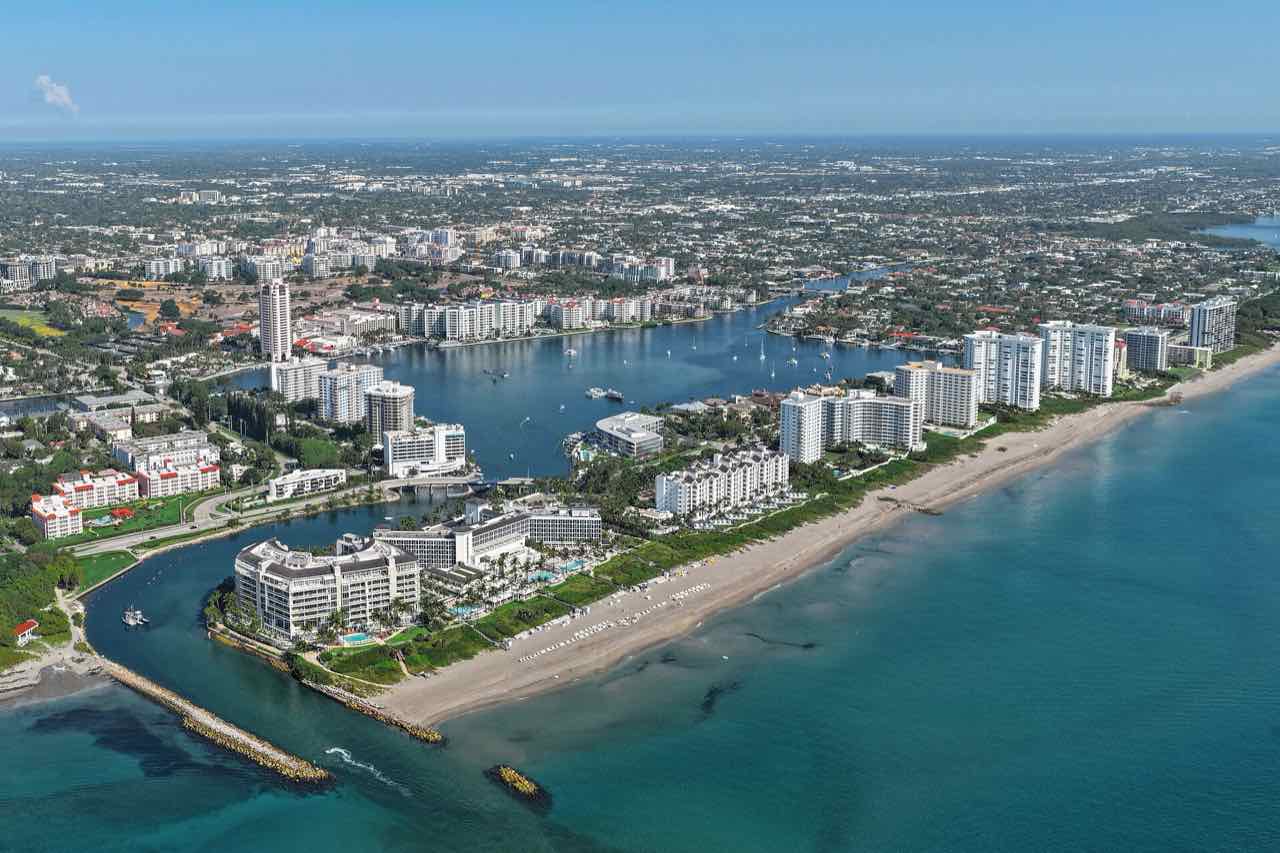

What the coastal record shows an underwriter
- Hurricane Wilma, October 24, 2005The National Hurricane Center puts landfall near Cape Romano on the Gulf coast and has the center back over the Atlantic near Jupiter four and a half hours later. It concludes that parts of Broward and Palm Beach counties likely had Category 2 conditions, and that upper floors of high-rise buildings saw stronger wind than the ground did.
- Hurricane Irma, September 10, 2017Irma's Florida landfalls were in the Keys and on the southwest coast. The Center's report still lists a gust of 97 knots at Deerfield Beach, between Boca Raton and Fort Lauderdale.
- Hurricane Sandy, October 2012Sandy stayed over the Bahamas. The National Weather Service in Miami records that its swell put seawater and sand a couple of feet deep on A1A at Fort Lauderdale Beach between Las Olas Boulevard and NE 20th Street, about two blocks inland in places, closed the road for the weekend and damaged a few homes, while wind had no significant effect.
- Fort Lauderdale seawallsThe city updated its seawall ordinance, ULDR Section 47-19.3, on March 23, 2023 to set a minimum top elevation for seawalls and other tidal barriers. An owner has to raise a wall when building a new one, when more than 50 percent of the structure is damaged, or when cited for tidal water crossing it onto a neighbor or the street.
- Delray Beach seawallsThe city says its vulnerability analysis shows 85 percent of waterfront parcels need seawall upgrades and that it has adopted a seawall ordinance raising minimum elevation standards.
Sandy is the one I point to: a flood loss on the barrier island with no hurricane wind, which is the flood policy's job alone.
The roof, the inspector and the wind mitigation form
Section 627.7011 bars an insurer from refusing to write or renew a homeowners policy only because of roof age when the roof is under 15 years old, and past that age the owner may get an inspection and cannot be refused on age alone if the inspector finds five or more years of useful life. Two details matter on a large house. The roof's age runs from the last date all of its surface was built or replaced under the code then in force, or from the first date of a partial replacement once later work has covered the whole surface. And the inspector has to be one the statute lists, such as a home inspector, building code inspector, contractor, engineer or architect holding the state credential, and approved by the insurer. Florida roof age rules.
Wind credits come from one document. Section 627.711 requires insurers to accept the state's uniform mitigation verification form when one of the inspectors it names has signed it, and the signer must inspect the house personally; the insurer may have the form independently verified. The form, OIR-B1-1802, was revised by a rule that took effect April 1, 2026, and it requires at least one photograph or document for each feature marked in questions 2 through 9. On a custom house with several roof shapes and many openings, I ask the inspector to document every one, because a single unprotected opening changes the answer.
The hurricane deductible on a large dwelling limit
Section 627.701 treats large houses differently from the rest. Where the dwelling limit is two hundred fifty thousand dollars or more the insurer need not offer the five hundred dollar hurricane deductible. Where it is one million dollars or more but under three million, the insurer may offer 3 percent in place of the 2 percent option. At three million dollars or more it need not offer 2 percent at all, though the other statutory options still have to be offered. The dollar value of the hurricane deductible has to be printed on the declarations page, and a policy with an inflation guard has to warn that the figure may be higher when a loss occurs.
The same statute lets a deductible go above 10 percent of the dwelling limit on a risk valued under five hundred thousand dollars only when the owner writes out and signs a statement accepting it and any lender approves. Section 626.916, on surplus lines, exempts windstorm insurance from its rule that deductibles match those authorized insurers use. So I read the deductible on every quote in dollars. How the Florida hurricane deductible works.
Citizens, surplus lines and the Hurricane Catastrophe Fund
Section 627.351 sets the Citizens size limit by dwelling replacement cost, and Citizens' worksheet applies the higher, one million dollar limit only in Miami-Dade and Monroe counties. Palm Beach and Broward are under the lower one. A larger house goes to an authorized high-value insurer or to surplus lines.
The State Board of Administration describes the Florida Hurricane Catastrophe Fund as a tax-exempt state trust fund that reimburses residential property insurers for a portion of their catastrophic hurricane losses, with participation mandatory for residential property insurers doing business in Florida. Section 215.555 defines the policies it covers as those issued by authorized insurers and Citizens, and says a policy issued by a surplus lines insurer is not a covered policy. The same section lets the fund's emergency assessments be levied on property and casualty premiums including surplus lines business, collected by the surplus lines agent along with the surplus lines tax. I say which kind of insurer is behind each quote, and that a surplus lines policy is outside the Florida Insurance Guaranty Act, as the required disclosure states.
Oceanfront rebuilds, the 50 percent rule and flood
On the ocean side, section 161.053 has the Department of Environmental Protection set a coastal construction control line county by county, marking the part of the beach and dune system subject to severe change in a 100-year storm surge. Building or rebuilding seaward of it needs a permit under special siting and design standards, which the department says may be stricter than those in the rest of the coastal building zone; the statute allows a permit to rebuild within the original foundation and bars repairs that expand the structure seaward of the 30-year erosion projection.
On the Intracoastal and the canals the limit is elevation. Boca Raton's floodplain guidance says that when improvements or repairs to a building below the required elevation cost more than 50 percent of the structure's market value, the building must meet the rules for new construction, including being raised, and that the city adds up permits over three years. Market value there leaves out pools, accessory structures and landscaping. That is why I pair the dwelling limit with the higher level of ordinance or law coverage.
Flood is its own policy. Palm Beach County puts it in one line: windstorm insurance does not cover flood damage. The National Flood Insurance Program's building coverage stops at two hundred fifty thousand dollars and contents at one hundred thousand, and its dwelling form does not insure seawalls, bulkheads, piers, docks or swimming pools, so these houses carry private flood or excess flood above the federal policy.
Cars, guests, collections and the excess layer
Above the home, cars and boat sits the excess liability policy. Florida's uninsured motorist statute, section 627.727, does not require that coverage on a policy that is not primary auto liability, but the insurer issuing such a policy has to make it available with the application, and at the insured's written request, up to the policy's bodily injury limit or one million dollars, whichever is less. I quote the excess layer with it. Umbrella insurance.
Art, jewelry and wine go on a schedule at agreed values. Fine art and collections. A house titled to a trust or an LLC needs the titleholder as named insured. For a seasonal house I ask who checks it, how often, and whether the water is shut off while it is empty, because unoccupancy and water damage conditions vary by form. Second home insurance.
Ways to start
- Have your current policy readUpload the declarations page and get a written second look in about a minute: what it covers, what to double-check and what it leaves out.
- Send everything at onceOwners, business managers and family offices: private client insurance puts every home, flood, earthquake, umbrella and valuables policy on one file.
- Buying, with a closing dateYour real estate agent can send me the address and the closing date, and the evidence of insurance goes to escrow and the lender.
- Check the address and the limitThe address hazard lookup shows the flood zone, wildfire hazard and nearby fires on the public maps, and the rebuild cost estimator checks the dwelling limit.
What I need to quote
The declarations pages for the home, flood, excess flood, auto, boat and umbrella policies; the latest rebuild estimate or appraisal; year built, square footage, stories and construction; the roof permit date, material and any roof inspection; the signed wind mitigation form with its photographs; an elevation certificate and the flood zone; the seawall's height, age and last inspection; whether the lot is seaward of the coastal construction control line; how the property is titled; the months it is occupied; and a schedule of art, jewelry and wine with appraisal dates.
Common questions
Who insures high-value waterfront homes in Boca Raton and Fort Lauderdale?
Authorized insurers with high-value forms write some and surplus lines insurers write others. Citizens is closed to a house whose dwelling replacement cost is seven hundred thousand dollars or more in Palm Beach and Broward counties.
Can an insurer refuse my Boca Raton home because of the roof's age?
Not solely for age if the roof is under 15 years old. For an older roof, section 627.7011 lets you get an inspection, and the insurer cannot refuse on age alone if the inspector finds five or more years of useful life.
What hurricane deductible applies to a home insured for several million dollars in Florida?
Section 627.701 says that at dwelling limits of three million dollars or more the insurer need not offer the 2 percent option, and between one million and three million it may offer 3 percent instead. The dollar value must be printed on the declarations page.
Is Fort Lauderdale in the High-Velocity Hurricane Zone, and is Boca Raton?
Florida's wind mitigation form identifies the zone as Miami-Dade and Broward counties, so Fort Lauderdale is in it. Boca Raton and Delray Beach are in Palm Beach County, which is not named.
Does the Florida Hurricane Catastrophe Fund back a surplus lines home policy?
No. Section 215.555 says a policy issued by a surplus lines insurer is not a covered policy, although the fund's emergency assessments can be levied on surplus lines premiums.
Do I have to raise my seawall in Fort Lauderdale?
Under the ordinance the city updated on March 23, 2023, an owner must meet the minimum top elevation when building a new seawall, when more than 50 percent of the wall is damaged, or when cited for tidal water crossing it onto a neighbor or the street.
Does my umbrella policy include uninsured motorist coverage in Florida?
Only if you take it. Section 627.727 requires the insurer to make it available with the application, and on written request, up to the policy's bodily injury limit or one million dollars, whichever is less.
General information about high-value home insurance in Boca Raton, Delray Beach and Fort Lauderdale as of November 2026, not legal advice. Storm facts come from the National Hurricane Center and the National Weather Service in Miami; local facts come from the City of Fort Lauderdale, the City of Delray Beach, the City of Boca Raton and Palm Beach County; statutes, rules and policy forms are summarized as they read in November 2026. Your policy wording controls what is covered. Coverage depends on underwriting and the terms, conditions and exclusions of the policy actually issued.