
Helene pushed 5 to 7 feet of water above ground as far south as Longboat Key in September 2024, and Milton came ashore on Siesta Key on October 9. Seaward of Florida's coastal construction control line, a house may be repaired or rebuilt within its original foundation only as the statute and a state permit allow. Flood is a separate policy, and the federal one pays little for what sits under an elevated house.
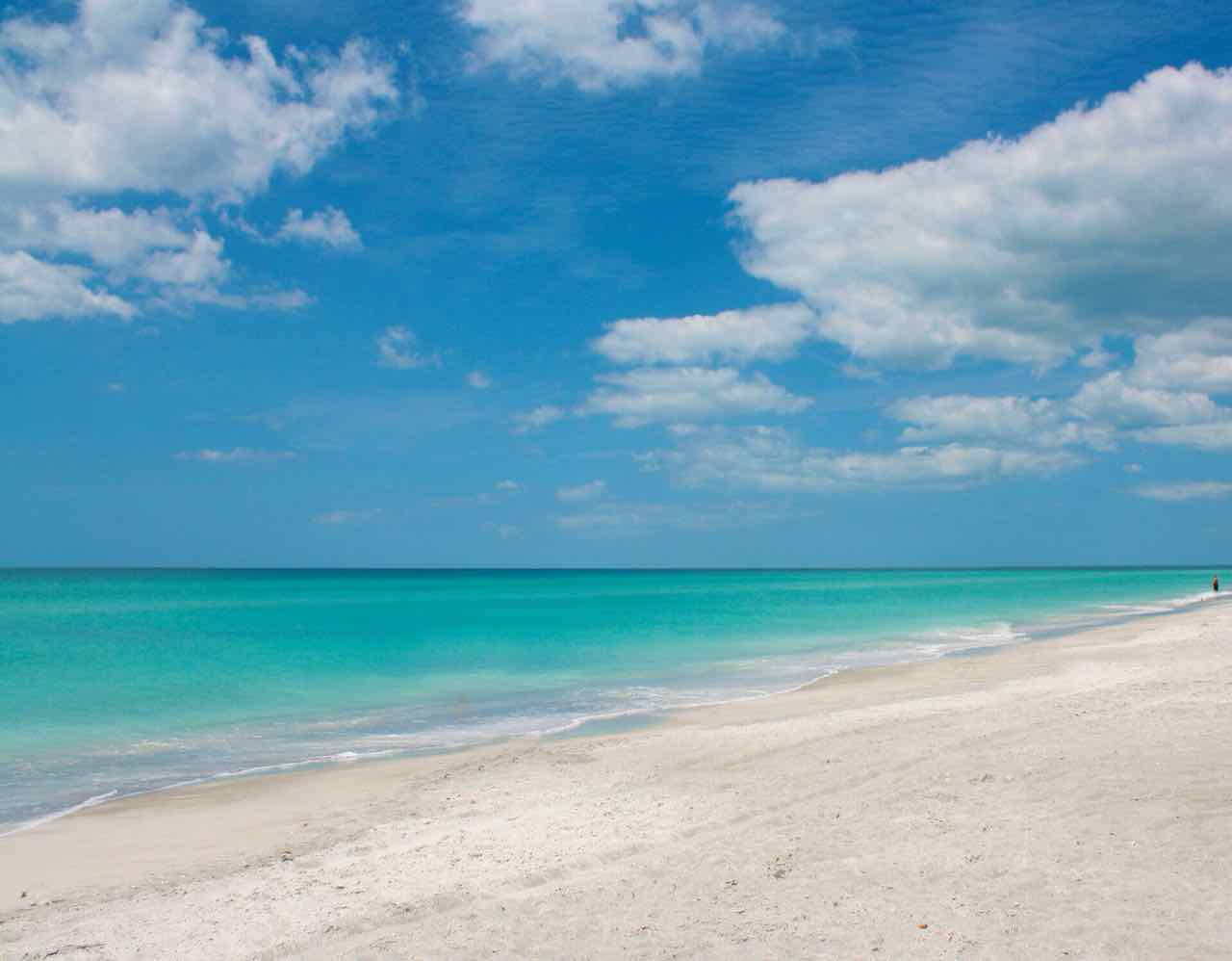

What Ian, Helene and Milton measured on these islands
- Ian, September 28, 2022The National Hurricane Center puts Ian's Florida landfall on the Lee County barrier island of Cayo Costa at 130 knots. Its report adds that most of the water sensors set out in Port Charlotte and Englewood, and northward through Tampa Bay, stayed dry because the wind there blew offshore, and that the readings show how sensitive surge is to a storm's exact track.
- Helene, September 26 and 27, 2024Helene made landfall near Perry in the Big Bend and never crossed this coast. The center still found maximum inundation of 5 to 7 feet above ground from the Anclote River south to Longboat Key, where a U.S. Geological Survey sensor on the Manatee County end of the island recorded a storm tide of 6.68 feet above the high-tide line. Survey crews saw still-water lines inside many homes.
- Milton, October 9, 2024Milton's center came ashore on Siesta Key that evening at 100 knots, category 3. The report says any major-hurricane winds on the coast were likely confined to a small area near Sarasota and Siesta Key. Surge ran 4 to 6 feet from Longboat Key to Venice and 6 to 9 feet above ground from Venice south to Boca Grande.
- The beachesThe Department of Environmental Protection's June 2026 inventory lists both halves of Longboat Key as critically eroded, along with a 2.4-mile stretch of southern Siesta Key and the southern 4.0 miles of Gasparilla Island, where it says erosion threatens development in Boca Grande and much of the shore has bulkheads.
An underwriter will ask what each storm did to the house, what was repaired and under which permits. I ask the same questions before I send the file anywhere.
The control line and the 30-year erosion projection
The state's Coastal Construction Control Line program sets an area of jurisdiction in which, the department says, special siting and design criteria apply, and those standards may be more stringent than the ones in the rest of the coastal building zone because of the greater forces expected nearer the water in a storm. For a large Gulf-front house three parts of section 161.053 matter after a loss.
First, repair or modification of an existing structure within the limits of its existing foundation is outside the control line requirements, so long as the foundation itself is not added to, repaired or modified. Seawalls, and enclosures added below the first dwelling floor, are left out of that exemption. Second, the department may issue a permit to repair or rebuild a major structure within the confines of its original foundation, or to move it landward, but it may not permit a rebuild that expands the structure's capacity seaward of the 30-year erosion projection. Third, with narrow exceptions the department may not permit a structure on ground that its erosion projection places seaward of the seasonal high-water line within 30 years.
What that means for the policy: the dwelling limit should price the house as the state and the town would let it be rebuilt, and the cost of meeting current rules is paid from law and ordinance coverage. Section 627.7011 lets that coverage be limited to 25 or 50 percent of the dwelling limit, as the policyholder selects. On a house seaward of the line I ask for the survey showing the line and any state permits on file. More: ordinance or law coverage.
Elevated houses, town rules and the federal flood form
The Town of Longboat Key's permitting page for Helene and Milton repairs says a building that is substantially damaged or substantially improved, meaning the cumulative cost reaches 50 percent of the building's market value, must be brought up to the flood protection elevation, and that only parking, building access and limited storage are allowed below the flood level. The town starts from the tax assessment of the structure, without the land, and will take a licensed appraiser's depreciated value certified within 12 months instead. Its building FAQ adds that in every flood zone seaward of the control line, construction must stand three feet above base flood elevation or at the height the state requires, whichever is higher.
Flood is its own policy. The federal program's limits on a single-family home are two hundred fifty thousand dollars for the building and one hundred thousand dollars for contents. In an elevated building in the AE and VE zones that the federal dwelling form calls post-FIRM, broadly one built after the community's first flood rate map, the form also restricts coverage below the lowest elevated floor to a short list of equipment and structural items, so a finished ground-level room, its furnishings and most of what is stored there are not covered by that form. I ask what is under the house before I price private flood or excess flood above the federal policy.
After a claim: what Florida's notice rules say
Section 627.4133 requires 120 days' written notice of a nonrenewal on a residential policy. It also bars an authorized insurer from cancelling or nonrenewing a home damaged by a hurricane that was the subject of a declared emergency and an order of the Insurance Commissioner until 90 days after the home has been repaired, with exceptions that include nonpayment. A home counts as repaired when it is restored to the point that another authorized insurer could insure it. The paragraph defines insurer as an authorized insurer, so I do not assume it reaches a surplus lines policy.
Two hurricanes in one year is not a theory here. Section 627.701 applies the hurricane deductible once per calendar year with the same insurer or insurer group, and lets the insurer ask you to report hurricane losses that fall under the deductible so they count toward a later storm. If Helene's damage was never reported because it was under the deductible, tell me. More: how the Florida hurricane deductible works.
Citizens, surplus lines and who writes these houses
Citizens Property Insurance Corporation is the state's insurer of last resort, and section 627.351 makes a house with a dwelling replacement cost of seven hundred thousand dollars or more ineligible, with a one million dollar line only in counties the Office of Insurance Regulation finds lack reasonable competition. A large island house is therefore written by an authorized insurer or by a surplus lines insurer. Before a surplus lines policy is placed, section 626.916 has you acknowledge a disclosure that coverage may be available in the admitted market, that the Florida Insurance Guaranty Act does not protect you if that insurer becomes insolvent, and that no Florida agency approves its rates or forms. I compare the form with the one you have now, exclusion by exclusion. More: admitted versus surplus lines.
Seasonal use, title, staff and collections
For a house used part of the year I ask how long it stands empty, who checks it and whether the water is shut off when nobody is there, then read the policy's unoccupancy wording against those answers (second home insurance). If a trust or an LLC holds title, the named insured has to match the deed (homes owned by a trust or LLC). Florida's workers' compensation law says employment does not include service by domestic servants in private homes, so cover for household staff is a choice I price for you and never assume. Art, jewelry and wine go on a schedule at agreed values, a renovation needs the insurer told before work starts (builder's risk insurance), a boat at the dock belongs on a yacht policy, and the umbrella sits over all of it.
Ways to start
- Have your current policy readUpload the declarations page and get a written second look in about a minute: what it covers, what to double-check and what it leaves out.
- Send everything at onceOwners, business managers and family offices: private client insurance puts every home, flood, earthquake, umbrella and valuables policy on one file.
- Buying, with a closing dateYour real estate agent can send me the address and the closing date, and the evidence of insurance goes to escrow and the lender.
- Check the address and the limitThe address hazard lookup shows the flood zone, wildfire hazard and nearby fires on the public maps, and the rebuild cost estimator checks the dwelling limit.
What I need to quote
The declarations pages for the home, flood, excess flood and umbrella policies; the latest replacement cost appraisal; the survey showing the coastal construction control line if the lot is on the Gulf; the elevation certificate and flood zone; what is built or stored below the elevated floor; year built, square footage, construction and roof age; the wind mitigation form; what Ian, Helene and Milton did to the house and the permits for the repairs; how many months a year it is occupied and who watches it; how title is held; household staff and who employs them; and a schedule of art, jewelry and wine. The declarations pages and the elevation certificate are enough to start.
Common questions
Who insures large Gulf-front homes on Longboat Key and Siesta Key?
Authorized high-value insurers write some and surplus lines insurers take others, with private or excess flood above the federal flood policy. Citizens is closed to a house whose dwelling replacement cost is seven hundred thousand dollars or more, unless the state has found the county lacks reasonable competition.
How high was the storm surge on Longboat Key in Helene and Milton?
The National Hurricane Center reports 5 to 7 feet above ground from the Anclote River to Longboat Key in Helene and 4 to 6 feet from Longboat Key to Venice in Milton. U.S. Geological Survey sensors on the island read 6.68 feet and 5.04 feet above the high-tide line.
Can I rebuild a house seaward of the coastal construction control line after a hurricane?
Section 161.053 lets the state permit repair or rebuilding of a major structure within the confines of its original foundation, or a move landward. It may not permit a rebuild that expands the structure's capacity seaward of the 30-year erosion projection.
Can my insurer drop me after a hurricane claim in Florida?
Section 627.4133 bars an authorized insurer from cancelling or nonrenewing a home damaged by a declared-emergency hurricane until 90 days after it is repaired, with exceptions such as nonpayment. Any nonrenewal needs 120 days' written notice.
Does federal flood insurance cover the ground level under an elevated beach house?
Only a short list of items. In an elevated post-FIRM building in the AE and VE zones, the federal dwelling form limits coverage below the lowest elevated floor, and its building limit is two hundred fifty thousand dollars.
Is Boca Grande's beach eroding?
Florida's June 2026 inventory lists the southern 4.0 miles of Gasparilla Island as critically eroded, threatening development and recreational interests in Boca Grande and Gasparilla Island State Park. It says much of that shore has bulkheads.
Do I pay two hurricane deductibles if two storms hit in one year?
Section 627.701 applies the hurricane deductible once per calendar year with the same insurer or insurer group. For a later hurricane the insurer may apply the greater of what remains of it or the deductible for other perils.
General information about high-value home insurance on Longboat Key, Siesta Key and Gasparilla Island as of November 2026, not legal advice. Storm figures come from National Hurricane Center reports; erosion designations from the Florida Department of Environmental Protection; town rules from the Town of Longboat Key; statutes and federal forms are summarized as they read in November 2026. Your policy wording controls what is covered. Coverage depends on underwriting and the terms, conditions and exclusions of the policy actually issued.