
As of November 2026, every dock, seawall and boathouse on Lake Oconee needs a Georgia Power permit, older structures that no longer conform may get minor repairs only, and new boathouses are limited to original owners and their heirs. On August 17, 2021 an EF1 tornado ran along the eastern shore. Georgia's FAIR Plan stops at two million per building and does not take vacant or unoccupied houses.
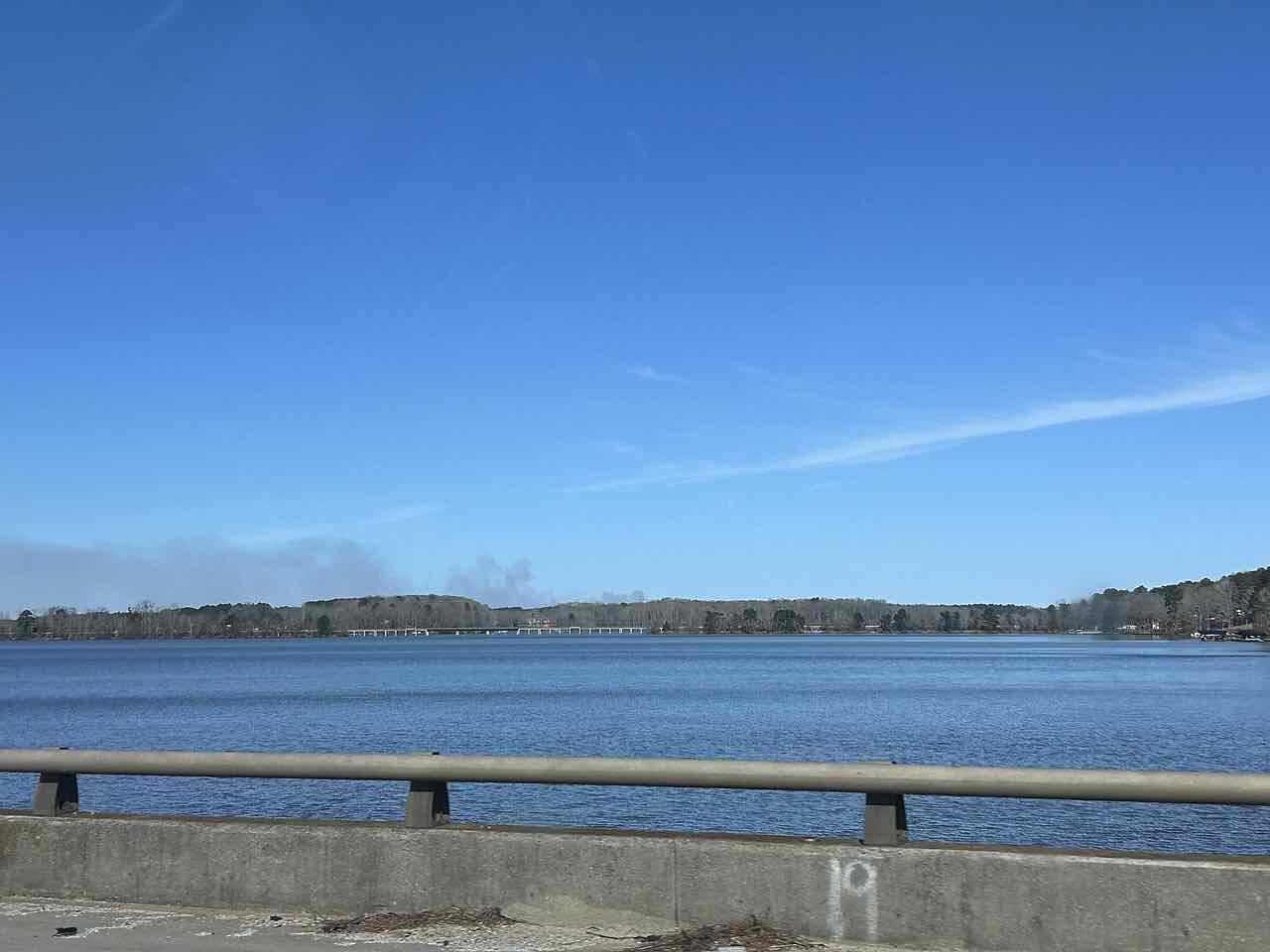

What the lake's record shows an underwriter
- August 17, 2021The Weather Service office in Peachtree City rated an EF1 tornado with peak winds of 90 miles per hour that touched down west of Greensboro and ran northwest along the eastern shoreline of Lake Oconee for 5.6 miles. It snapped and uprooted trees around lakeshore homes, blew in windows at one, destroyed several boathouses, outbuildings and sheds, and did the most damage where trees fell onto houses.
- Who controls the shoreGeorgia Power operates the lake under its federal license and says no work can be done on its property or within its project boundary without its written permit.
- The bufferIts guidelines point owners to Georgia's 25-foot state waters buffer and bar mechanical clearing or changing the land contour on project land without approval.
That 2021 storm is the pattern for this lake: the house usually stands, and the claim is trees, glass, roofs and the structures at the water's edge. Those last items are where policies differ most.
Docks, boathouses and seawalls on Georgia Power land
Georgia Power's Lake Oconee shoreline guidelines allow one shoreline structure per lot, a dock, a boat slip or a combination with a single walkway. New docks are capped at 16 by 20 feet, or 320 square feet, unless a variation applies, and reach no more than 50 feet from shore. Lots platted after 2000 need at least 100 feet of straight-line shoreline for any structure other than a seawall. Rip rap is required on the lake side of any new or replacement seawall.
Three rules decide what happens after a loss:
- Older structuresA previously permitted structure that no longer meets current guidelines may be maintained with minor repairs only. If the work is more than minor, Georgia Power will not issue the permit and will say how the structure must be brought into compliance.
- BoathousesBoathouses are not permitted on Lake Oconee except to original property owners, and only while they or their heirs still own the property.
- TreesGeorgia Power says it is not responsible for damaged, diseased or dead trees on its property; removal is the lessee's job, needs a permit with photos and a replanting plan at one for one, and no part of a downed tree may be left on its land or in the lake.
So a dock or boathouse destroyed in a storm may not come back as it was, or at all. I list each shoreline structure separately, ask whether the house's other-structures limit and the ordinance or law wording reach a dock that must be rebuilt smaller, and check the debris and tree removal limits against a wooded lakefront lot.
The lake and the flood policy
Flood is never part of a Georgia homeowners policy; it is a separate policy. The National Flood Insurance Program's homeowner policy covers up to two hundred fifty thousand dollars on the building and one hundred thousand on contents, which is a first layer on a house with a rebuild cost in the millions. Private or excess flood cover goes above it. I pull the FEMA map panel for the address, ask for an elevation certificate on any house near the shoreline, and look at where the lowest floor and the mechanical equipment sit. My Georgia flood guide covers the maps.
Second homes and the Georgia FAIR Plan
The Georgia Underwriting Association, the state's FAIR Plan, calls itself a last resort, to be used only after the voluntary market has been tried. Its information bulletin caps coverage at two million dollars for any one building, writes homeowners coverage on the named-perils HO-8 form for single-family, owner-occupied stand-alone dwellings, and lists vacant or unoccupied structures as ineligible. A lake house that is larger than the cap, or that sits empty much of the year, has to be placed elsewhere.
That means the admitted high-value companies first. Georgia's surplus lines statute, O.C.G.A. section 33-5-21, allows residential dwelling coverage from a surplus lines insurer only when it cannot be obtained from an authorized insurer, so I keep the admitted market's answers before going further. Admitted versus surplus lines.
The months nobody is home
Most home forms limit or exclude certain losses once a house has been vacant or unoccupied for a stated period, and many tie freeze coverage to keeping heat on or the water shut off and drained. A slow leak found three weeks later is the most common surprise at a lake house. I ask who checks the house and how often, whether there is a water shutoff or leak detection system, and how the form defines occupancy (second home insurance).
A house held in a trust or LLC needs the named insured to match the deed (homes owned by a trust or LLC). A renovation needs the insurer told before work starts. Art, jewelry and wine go on a schedule at agreed values.
Boats, guests and the excess layer
Georgia's Department of Natural Resources says that since July 1, 2014 anyone born on or after January 1, 1998 must complete an approved boater education course before operating any motorized vessel on state waters, with narrow exceptions. When grandchildren and guests take the boat out, I ask who drives it and whether they meet that rule. A home policy covers little or nothing for most powerboats, so the boat needs its own policy (boat insurance), and the umbrella above it should list every boat, personal watercraft and golf cart along with the houses and cars.
Georgia's workers' compensation law does not cover domestic servants, so a caretaker or housekeeper hurt on the property is a liability question for the home policy and umbrella unless voluntary coverage has been bought (Georgia workers' comp rules).
Ways to start
- Have your current policy readUpload the declarations page and get a written second look in about a minute: what it covers, what to double-check and what it leaves out.
- Send everything at onceOwners, business managers and family offices: private client insurance puts every home, flood, earthquake, umbrella and valuables policy on one file.
- Buying, with a closing dateYour real estate agent can send me the address and the closing date, and the evidence of insurance goes to escrow and the lender.
- Check the address and the limitThe address hazard lookup shows the flood zone, wildfire hazard and nearby fires on the public maps, and the rebuild cost estimator checks the dwelling limit.
What I need to quote
The declarations pages for the home, flood, boat and umbrella policies; the latest rebuild estimate or appraisal; year built, square footage, construction, roof type and age; each dock, boathouse and seawall with its Georgia Power permit; an elevation certificate if you have one; how many months a year the house is occupied and who looks after it; how title is held; boats and personal watercraft with their drivers; and a schedule of art, jewelry and wine with appraisal dates.
Common questions
Who insures high-value lake homes at Lake Oconee?
Admitted high-value insurers write most of them. Georgia allows surplus lines coverage on a home only when an authorized insurer will not write it, and the state's FAIR Plan stops at two million dollars per building.
Can I rebuild my boathouse on Lake Oconee after a storm?
It depends on Georgia Power. Its guidelines allow boathouses only to original property owners and heirs who still own the lot, and nonconforming structures may receive minor repairs only, so ask Georgia Power before you count on rebuilding.
Does homeowners insurance cover my dock at Lake Oconee?
Many home forms cover a dock under other structures, often with limits or conditions, and some exclude docks from certain perils. I check the wording and the limit against the dock you actually have.
Will the Georgia FAIR Plan insure my lake house if it's a second home?
Its homeowners program is for owner-occupied single-family houses, and vacant or unoccupied structures are ineligible, so a seasonal house usually needs another insurer.
Is NFIP flood insurance enough for a house on Lake Oconee?
Rarely for a large house. The federal policy covers up to two hundred fifty thousand dollars on the building and one hundred thousand on contents; private or excess flood goes above it.
Who has to take a boating course to drive a boat on Lake Oconee?
Anyone born on or after January 1, 1998 must complete an approved boater education course before operating a motorized vessel on Georgia waters, with a few exceptions.
General information about high-value home insurance at Lake Oconee as of November 2026, not legal advice. The 2021 tornado comes from the National Weather Service office in Peachtree City; shoreline rules are summarized from Georgia Power's Lake Oconee Shoreline Guidelines, and plan and statute summaries from the Georgia Underwriting Association, the Georgia Code and the Georgia Department of Natural Resources as they read in November 2026. Georgia Power's guidelines are subject to revision. Your policy wording controls what is covered. Coverage depends on underwriting and the terms, conditions and exclusions of the policy actually issued.