
Nevada has no FAIR Plan for homes, so a large house the standard market declines goes to a surplus lines insurer, which Nevada law allows only after a diligent effort among authorized insurers. Since January 1, 2026 a property insurer may leave wildfire out of a policy. Flood and earthquake take their own policies, and the federal flood program stops at two hundred fifty thousand dollars on the building.
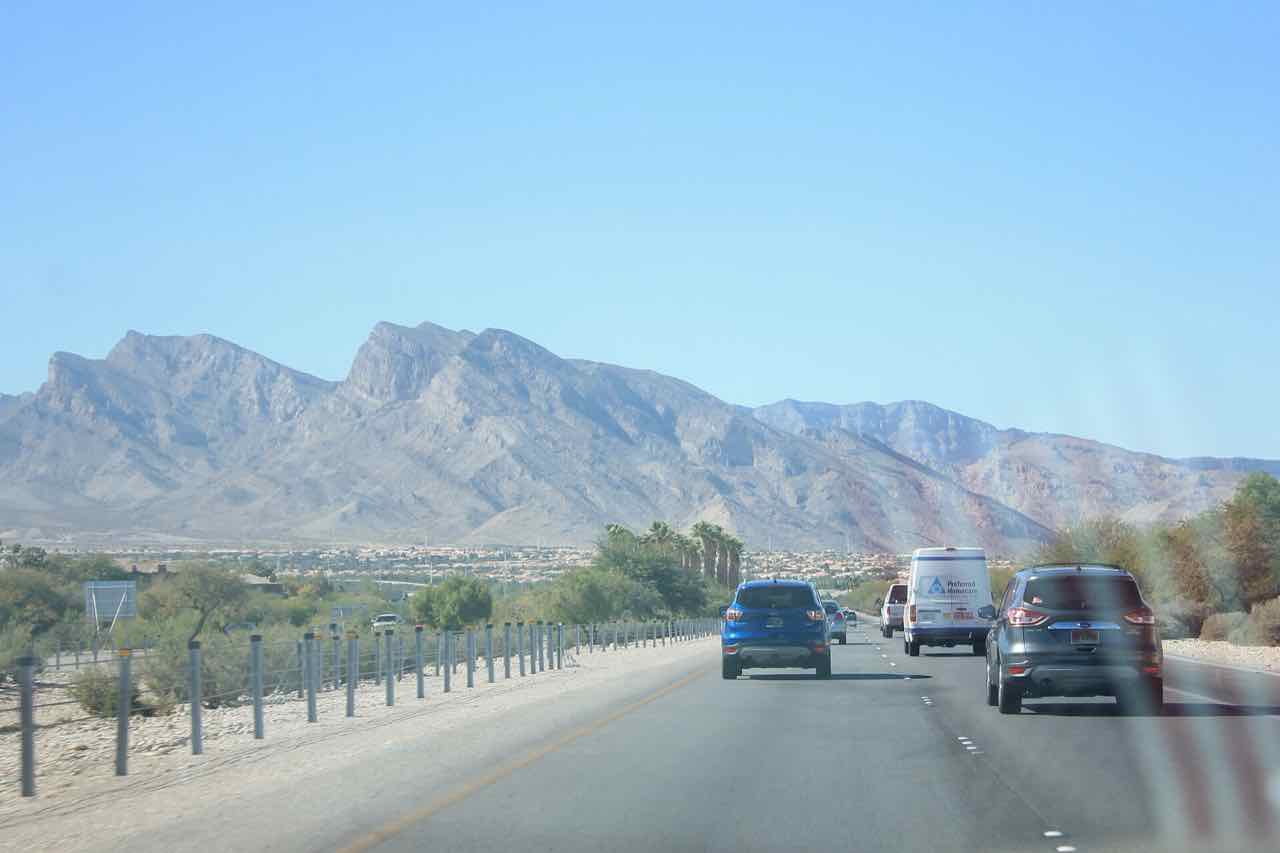

What the valley's record shows an underwriter
- July 8, 1999The National Weather Service office in Las Vegas recorded 1.5 to 3 inches of rain across much of the valley in 60 to 90 minutes, and the President declared a disaster on July 19. The U.S. Geological Survey's fact sheet on the flood says it damaged or destroyed 369 homes. The Weather Service noted that much of the rain fell downstream of the detention basins.
- CalicheThe same Weather Service report explains why so little rain does so much: the alluvial fans around the valley are coated with caliche, which is almost impervious, so nearly all of the rain that falls becomes runoff.
- Flood controlThe Legislature authorized flood control districts in 1985 and Clark County voters approved funding the next year. The Regional Flood Control District says its system in 2026 has 113 detention basins and more than 722 miles of channels and storm drains, and that about 75 percent of the master-planned system is built.
- Lake Las VegasAt an October 2021 meeting of the Las Vegas Wash Coordination Committee, the lake's representative said the Las Vegas Wash passes beneath the lake in two 84-inch pipes that carry about 1,200 cubic feet per second; above that, water backs up into a sedimentation basin. He said the dam's outlets were enlarged in 2014 after an analysis by the flood control district.
- WindThe Weather Service's Las Vegas records list the highest gust as 90 miles per hour, on August 8, 1989, and the highest sustained wind as 60 miles per hour, on July 9, 2018.
- FaultsThe USGS Quaternary fault database describes scarps as much as 30 meters high running through metropolitan Las Vegas, and records a debate over how much of that is tectonic. A Nevada Bureau of Mines and Geology hazard presentation calls the Frenchman Mountain fault fully tectonic.
For a lot near a wash or a detention basin I ask for the flood zone determination from the public works department of the city or county the house is in before I send anything to an insurer.
No FAIR Plan, and what surplus lines means in Nevada
The Nevada Division of Insurance answers the question "does Nevada have a high-risk pool?" by naming two, one for required auto liability and one for workers' compensation. Neither insures a house, and I have found no FAIR Plan or other state insurer of last resort for Nevada homes. A house that authorized insurers decline is therefore exported to surplus lines.
NRS 685A.040 sets the conditions. The full amount of insurance must not be procurable from an authorized insurer after a diligent effort, and coverage may not be exported to get a premium rate lower than an authorized insurer would accept. NRS 685A.090 requires the policy to be stamped with a notice that the insurer is not licensed by or under the supervision of the Division of Insurance and that, if it is found insolvent, a claim is not covered by the Nevada Insurance Guaranty Association Act. I read an exported form against your current policy line by line. More: admitted versus surplus lines.
Two more Nevada rules matter on a large house. Assembly Bill 376 of 2025 added a section to the property insurance chapter that lets an insurer exclude the peril of wildfire, and lets an insurer sell a policy covering wildfire alone, so I check every quote for the word. And under NRS 687B.340 a home insurer must mail or deliver notice at least 30 days before expiration if it will not renew; a late notice means it must provide a policy on identical terms. Thirty days is a short time to place a large house, so send me the notice the day it arrives. The dates are on my Nevada non-renewal rules page.
Hillside lots and what a rebuild has to meet
Clark County's development code, Title 30, has a hillside section (30.04.05K) for land in its jurisdiction. In the edition effective November 20, 2024 it applies to any area larger than 2.5 acres with a contiguous slope steeper than 12 percent, and it exempts single-family dwellings on lots created before July 1, 2000 from the development standards. Where it applies:
- Site disturbanceNo more than 50 percent of the net development may be disturbed on slopes from 12 up to 25 percent, and no more than 35 percent on steeper ground.
- CutsCuts must be backfilled, compacted and re-vegetated or varnished to restore the natural color before final inspection, and compliance is certified by a third party.
- Slopes and wallsSlopes steeper than 33 percent, or as a geotechnical report requires, are stabilized with riprap or sculptured rock that blends with the site. Walls follow the topography and use native materials or earth-tone colors.
Title 30 is the county's code. A lot inside the City of Las Vegas or Henderson falls under that city's own development code, so I ask which jurisdiction issued the permits. For insurance, the point is that a rebuilt hillside house pays for grading, retaining walls and slope work to current rules, not only for the house. The dwelling and other-structures limits should include that work, and the policy needs ordinance or law coverage sized for it. Ask whether the policy pays to rebuild whatever it costs or stops at a percentage above the limit: extended versus full replacement cost.
Flood and earthquake above the standard policy
The Division of Insurance lists flood and earthquake among the standard excluded losses that need a special policy or endorsement. The federal regulation at 44 CFR 61.6 caps a National Flood Insurance Program policy on a single-family dwelling at two hundred fifty thousand dollars for the building and one hundred thousand dollars for contents. On a house with a rebuild cost in the millions that leaves most of the building uninsured for flood unless private flood or excess flood sits above it, and I check that the excess form uses the same definition of flood as the policy beneath it. Earthquake is quoted alongside, with the deductible written out as a figure, not only a percentage.
Staff, the months away, title and collections
NRS 616A.110 excludes "any person engaged in household domestic service" from the definition of employee in Nevada's industrial insurance chapters, except as those chapters otherwise provide. So I do not assume a housekeeper, chef or house manager is covered by workers' compensation. I ask who employs each person, you or an agency, and price voluntary workers' compensation next to the liability policies.
If the house is one of several and stands empty for stretches, the questions are who checks it, whether the water can be shut off or is monitored, and what the policy says about a house left unoccupied (second home insurance). When title is in a trust or an LLC, the named insured has to match the deed (homes owned by a trust or LLC). Art, jewelry and wine go on a schedule at agreed values (fine art insurance), a renovation needs the insurer told before work starts, and the umbrella should list every home, car and boat beneath it.
Ways to start
- Have your current policy readUpload the declarations page and get a written second look in about a minute: what it covers, what to double-check and what it leaves out.
- Send everything at onceOwners, business managers and family offices: private client insurance puts every home, flood, earthquake, umbrella and valuables policy on one file.
- Buying, with a closing dateYour real estate agent can send me the address and the closing date, and the evidence of insurance goes to escrow and the lender.
- Check the address and the limitThe address hazard lookup shows the flood zone, wildfire hazard and nearby fires on the public maps, and the rebuild cost estimator checks the dwelling limit.
What I need to quote
The current declarations pages for the home, flood, earthquake and umbrella policies; any non-renewal or renewal notice with its mailing date; the latest replacement cost appraisal; year built, square footage and construction; the roof's type and the year it was last replaced; whether the lot is on a hillside, with any geotechnical report; the flood zone and distance to the nearest wash, channel or basin; how title is held; how many months a year the house is occupied and who looks after it; household staff and who employs them; and a schedule of art, jewelry and wine with appraisal dates.
Common questions
Who insures multi-million dollar homes in Summerlin and Henderson?
Authorized high-value insurers write many of them and surplus lines insurers take others. Nevada has no FAIR Plan for homes, so there is no state insurer behind those two markets.
Does Nevada have a FAIR Plan for a large house nobody will insure?
I have found none. The Division of Insurance names two pools, for auto liability and workers' compensation, and neither covers a home.
Is a surplus lines home policy in Nevada backed by the guaranty association?
No. NRS 685A.090 requires the policy to say the insurer is not licensed by or supervised by the Division of Insurance and that a claim is not covered by the Nevada Insurance Guaranty Association Act if the insurer is found insolvent.
Do I need flood insurance on a house at Lake Las Vegas or near a wash?
A homeowners policy does not cover flood, and the federal program stops at two hundred fifty thousand dollars on a single-family building. A large house needs private or excess flood above that.
Can an insurer leave wildfire out of my Nevada home policy?
Yes. Since January 1, 2026 Nevada law lets a property insurer exclude the peril of wildfire and sell wildfire as a separate policy, so read each quote and renewal for it.
Is my housekeeper covered by workers' compensation in Nevada?
Not automatically. NRS 616A.110 excludes people engaged in household domestic service from the definition of employee, so ask about voluntary workers' compensation.
General information about high-value home insurance in Summerlin, Henderson and Lake Las Vegas as of November 2026, not legal advice. Flood, wind and fault facts come from the National Weather Service in Las Vegas, the U.S. Geological Survey, the Nevada Bureau of Mines and Geology, the Clark County Regional Flood Control District and the Las Vegas Wash Coordination Committee; statutes, the county code and federal rules are summarized as they read in November 2026. Your policy wording controls what is covered. Coverage depends on underwriting and the terms, conditions and exclusions of the policy actually issued.