
As of November 2026, New York's rule lets a hurricane deductible vary by county, by distance from the coastline measured from mean high water, or both, and it applies only to a storm that the National Weather Service finds made landfall in the state as a hurricane. The state's coastal assistance program reaches 2,500 feet in from the North Shore and is for owner-occupied homes, and its FAIR Plan stops at six hundred thousand dollars on a dwelling. An estate needs more than those programs offer, and flood is a separate policy.

What the record shows an underwriter
- Sandy, October 29, 2012The National Hurricane Center's report puts the highest storm surge measured by a federal tide gauge anywhere in New York at Kings Point, across Manhasset Bay from Sands Point: 12.65 feet above normal tide levels. The storm tide there reached 14.31 feet above mean lower low water, 2.00 feet over the gauge's previous high, set in Irene the year before.
- Isaias, August 4, 2020A tropical storm, not a hurricane, with gusts up to 70 miles per hour. The Long Island Power Authority's task force counted approximately 645,000 customer outages and eight days to full restoration. The Hurricane Center's report describes trees and limbs blown onto homes, businesses and vehicles, and calls it the largest tropical cyclone outage in southeastern New York since Sandy.
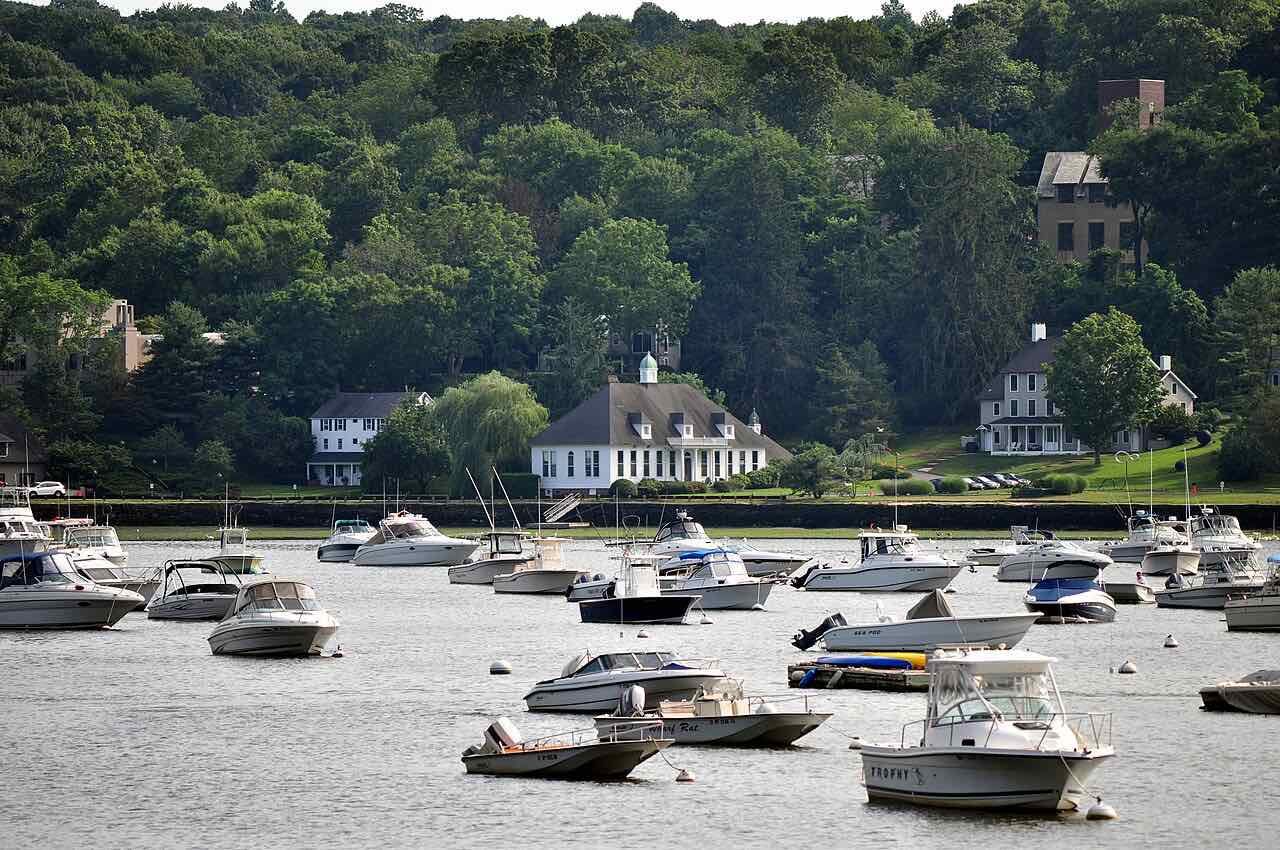
- The Sound sideSands Point's own code calls Long Island Sound a high-energy environment and cites the Federal Emergency Management Agency's designation of Sands Point as a VE flood zone with base flood elevation as great as 23 feet. Its inner harbor shoreline, the code says, is generally better protected and calmer.
Surge on the Sound, trees in a tropical storm and a long outage are three different losses, and they land on three different parts of the insurance program.
The hurricane deductible, read line by line
New York's Insurance Regulation 159, as amended in 2025, sets the terms every insurer has to use. I read them against the declarations page:
- What countsA hurricane is a tropical cyclone with maximum sustained surface wind of 74 miles per hour or higher, as the National Weather Service determines, and landfall means the storm's surface center crossing a coastline. The deductible is triggered only when that landfall is in New York.
- Where you areThe deductible may vary by county, by the property's proximity to the coastline, or both, and the rule measures proximity from mean high water. A house on the bluff and one a few miles inland in the same county may carry different percentages.
- What it touchesThe insurer has to add together all covered losses the hurricane caused when it tests whether the deductible has been met. The deductible does not apply to loss-of-use coverage, the part that pays to live elsewhere. If more than one deductible fits a loss, only one applies, and it may be the higher.
- The dollar lineThe declarations page shows the percentage and the dollar amount, and the required notice explains that the dollar amount moves whenever the dwelling limit is changed.
A tropical storm like Isaias sets off none of this. What applies then is the policy's ordinary deductible, or a windstorm deductible if the policy has one, which the Department of Financial Services describes as triggered by wind of any speed. I tell you which of the two a quote carries. New York hurricane deductibles.
Old estates, outbuildings and village rules
- Old WestburyIn the village's BB Residence District the zoning code allows one family for each two acres of lot area, holds the combined building area of the dwelling and accessory buildings to 8 percent of the lot, and caps building volume by lot size. An accessory building may be lived in only by nonpaying guests or by employees whose duties are on the premises.
- HorsesThe same code lets occupants keep horses for personal use at one horse for each 20,000 square feet of lot area and never more than 30, and it puts stables, barns and sheds under the accessory building rules.
- Oyster Bay landmarksUnder Chapter 143 of the Town of Oyster Bay code, a designated landmark or a building in the historic district may not be altered, repaired, moved or demolished except in compliance with the chapter. The Landmarks Preservation Commission reviews exterior plans before a building permit is granted, repairs are to be consistent with the materials and styles of the building's period, and the owner must keep the exterior in good repair and the building secured.
The incorporated villages keep their own codes, so I check which one governs the lot. Then I list every building: the main house, guest cottage, staff quarters, garage, stable, greenhouse, pool house, boathouse. A standard form gives all other structures together a set fraction of the dwelling limit, which rarely fits an estate, so I ask for each building to be valued and named. Period materials and code upgrades go into the main limit and into ordinance or law coverage. Horses and the liability that comes with them are a separate policy. Equine insurance.
Flood on the Sound and the harbors
Flood is always a separate policy. Federal rules cap National Flood Insurance Program coverage on a single-family house at two hundred fifty thousand dollars for the building and one hundred thousand for contents. The federal dwelling form insures one dwelling; it extends to a detached garage for no more than 10 percent of the dwelling limit, taken out of that limit, and not to a detached garage used as a residence, a business or a farm building. It lists seawalls, bulkheads, piers, docks and swimming pools among property it does not insure.
On a waterfront estate that leaves the cottage, the boathouse, the bulkhead and most of the main house outside the federal policy. I price private or excess flood above it, ask for an elevation certificate, and compare what each form does for the other buildings.
When an insurer steps back
Insurance Law section 3425 gives a personal lines policy a required policy period of three years, and a non-renewal notice has to go out at least 45 and not more than 60 days before the period ends. A covered policy includes residential real property of not more than four dwelling units.
The Department of Financial Services lists the fallbacks. The Coastal Market Assistance Program is for owner-occupied homes, generally within 2,500 feet of the shore on the North Shore, which takes in waterfront Sands Point but not an inland village like Old Westbury. The New York Property Insurance Underwriting Association, the state FAIR Plan, publishes a six hundred thousand dollar limit on a one- to four-family dwelling and offers no liability, flood or theft coverage. An excess line insurer may be used only after at least three admitted insurers have declined, and its policies sit outside the state's security fund. I work admitted high-value insurers first and keep the declinations on file. New York non-renewal rules.
Staff, outages, collections and title
New York's Workers' Compensation Law, section 3, Group 12, lists domestic workers, other than those employed on farms, who work for the same employer a minimum of forty hours a week. A full-time housekeeper, chef or caretaker living in the cottage is in that group. Workers' comp in New York.
Eight days without power is its own loss. I ask whether there is a standby generator and what it runs, because sump pumps, heat, alarms and a wine room all stop with the grid, and I check the form's wording on spoilage, water backup and freezing. If the family is away for the winter, the standard fire policy in Insurance Law section 3404 suspends coverage once a building has been vacant or unoccupied beyond sixty consecutive days unless the policy says otherwise in writing, so the form has to fit how the house is used. Second home insurance.
Art, jewelry and wine go on a schedule at agreed values. When title is in a trust or an LLC, the named insured has to match the deed, with the family added for their liability and belongings. Restoration work needs the insurer told before it starts, and often a builders risk policy. Over all of it sits the excess liability policy. Homes held in a trust or LLC.
Ways to start
- Have your current policy readUpload the declarations page and get a written second look in about a minute: what it covers, what to double-check and what it leaves out.
- Send everything at onceOwners, business managers and family offices: private client insurance puts every home, flood, earthquake, umbrella and valuables policy on one file.
- Buying, with a closing dateYour real estate agent can send me the address and the closing date, and the evidence of insurance goes to escrow and the lender.
- Check the address and the limitThe address hazard lookup shows the flood zone, wildfire hazard and nearby fires on the public maps, and the rebuild cost estimator checks the dwelling limit.
What I need to quote
The address, the village or town, and how title is held; the current home, flood and umbrella declarations pages; any non-renewal notice; the latest rebuild estimate or appraisal; a list of every building on the grounds with its use, size and who lives in it; year built, construction and roof of each; distance from the main house to mean high water and an elevation certificate if you have one; whether the property is a designated landmark; the generator and what it powers; alarms; horses kept on the property; household staff and weekly hours; the months the house is closed and who checks it; and a schedule of art, jewelry and wine with appraisal dates.
Common questions
Who insures estates in Old Westbury and Sands Point?
Admitted insurers that specialize in high-value homes write many of them, and excess line insurers take others once three admitted insurers have declined. The state FAIR Plan's six hundred thousand dollar dwelling limit is far below what a large house costs to rebuild.
Does my hurricane deductible apply to a tropical storm on Long Island?
No. Under New York's Regulation 159 a hurricane deductible is triggered only when a storm with sustained wind of 74 miles per hour or higher makes landfall in New York. A separate windstorm deductible, if your policy has one, applies to wind of any speed.
Is my hurricane deductible higher because I am close to Long Island Sound?
It can be. The regulation lets the deductible vary by county, by proximity to the coastline measured from mean high water, or both, and the declarations page has to show it as a percentage and in dollars.
Are the guest cottage and stable on my estate covered by my homeowners policy?
They fall under the other structures limit, which on a standard form is a set fraction of the dwelling limit for all of them together. On an estate I ask for each building to be valued and named, and I tell the insurer who lives in each one.
Does flood insurance cover my boathouse, dock or bulkhead in Sands Point?
Not under the National Flood Insurance Program. Its dwelling form insures one dwelling, extends to a detached garage for up to 10 percent of the dwelling limit, and lists bulkheads, piers, docks and seawalls as property not insured.
Can I repair a landmark house in Oyster Bay the way I want after a fire?
Under the Town of Oyster Bay's landmarks chapter, repairs to a designated landmark go to the Landmarks Preservation Commission for exterior review before a building permit, and are to be consistent with the materials and styles of the building's period. The incorporated villages have their own codes.
Do I need workers' comp for a live-in caretaker on the North Shore?
New York's Workers' Compensation Law lists domestic workers who work for the same employer at least forty hours a week. A full-time caretaker or housekeeper is in that group, so the policy should be in place before they start.
General information about high-value home insurance on the North Shore of Nassau County, New York, as of November 2026, not legal advice. Storm figures come from the National Hurricane Center's reports on Sandy and Isaias and the Long Island Power Authority's Isaias task force; village and town codes, statutes, regulations and policy forms are summarized as they read in November 2026. Your policy wording controls what is covered. Coverage depends on underwriting and the terms, conditions and exclusions of the policy actually issued.