
As of November 2026, the federal flood program sells no building coverage on a co-op shareholder's apartment, only contents coverage. New York's FAIR Plan stops at six hundred thousand dollars on a one- to four-family dwelling and carries no liability, theft or flood coverage. The Landmarks Preservation Commission must permit work that affects the exterior of a designated building, and a full-time household employee has to be covered for workers' compensation. Flood is always a separate policy.
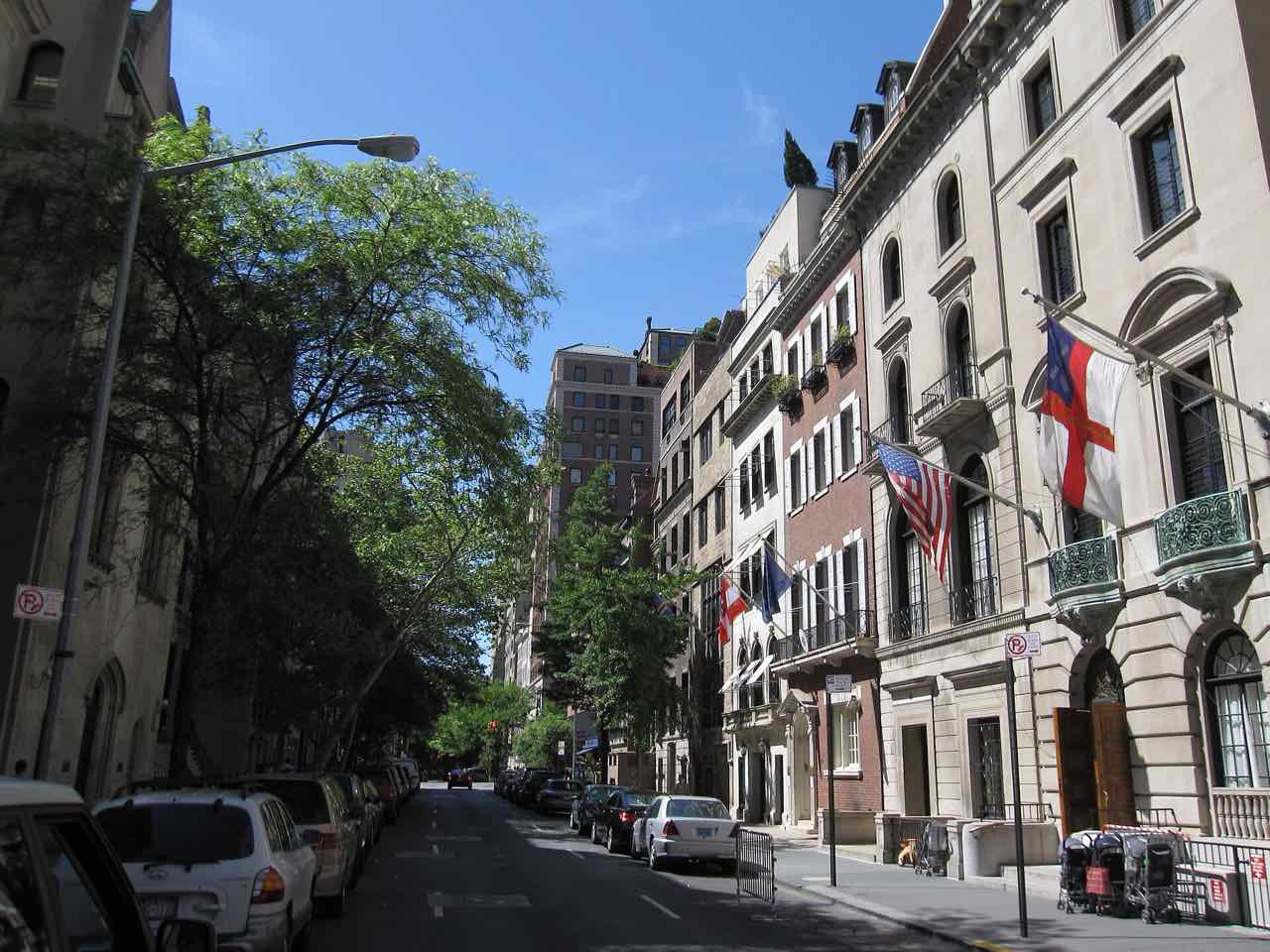

Three kinds of ownership, three policies
- TownhouseYou own the building, so the policy carries the whole rebuild: party walls, the facade, the cellar and its mechanical equipment, and your liability for the sidewalk and the stoop.
- CondominiumReal Property Law section 339-bb has the board of managers insure the building against fire and other hazards when the declaration, the by-laws or a majority of unit owners require it, and it keeps each owner's right to insure his own unit. The Department of Financial Services describes a condominium owner's policy as covering alterations, appliances, fixtures, improvements and interior walls within the unit.
- Co-opYou hold shares and a proprietary lease, not real estate. The Department groups cooperative policies with tenants' policies: they insure the contents of the unit and your personal liability. Who repairs the floors, kitchen and built-ins after a loss is set by the lease and the corporation's policy.
Before I quote an apartment I ask for the building's insurance certificate and the pages of the by-laws or proprietary lease on repairs. They tell me where the master policy stops, how large its deductible is and whether that deductible can be charged back to you. That sets the improvements limit and the loss assessment coverage on your own policy. Condo and co-op unit policies.
Water: the apartment above, the apartment below
In a stacked building the loss I plan for first is water. A supply line fails upstairs and your ceilings, floors and millwork are wet; your washing machine hose fails and the damage is in three apartments below you. The first is a claim on your improvements and contents limits. The second is a liability claim, and the reason the personal liability limit and the umbrella are sized to the building you live in. Tell me about leak sensors and automatic shutoff valves, and I ask each insurer whether it credits them. In a townhouse, water that backs up through a cellar drain is usually its own endorsement. Sewer backup coverage.
Sandy and Ida, and what flood insurance does for an apartment
- Sandy, October 29, 2012The National Hurricane Center's report records a storm surge of 9.40 feet at the Battery, water 4.7 feet above ground at One World Trade Center, floodwaters reaching the corner of Canal and Hudson streets and parts of the East Village, and hundreds of buildings flooded in Manhattan.
- After the waterThe City's own report says the surge came one and two blocks inland along Southern Manhattan, an area it draws to include Tribeca and the West Village, and that power was out across nearly all of Manhattan south of 34th Street and not fully restored for about four days. It notes that 90 percent of the area's buildings went up before 1983, when flood standards entered the Building Code.
- Ida, September 1, 2021This one was rain. The City's report puts the peak at 3.15 inches an hour against a sewer system built for 1.5 to 2 inches an hour. With no room left in the sewers, the water stayed in the streets.
- The mapsThe City's flood maps site says FEMA agreed in October 2016 to revise its preliminary maps, which the Building Code applies to new and substantially improved buildings until new ones are adopted.
Federal flood insurance fits a townhouse badly and an apartment worse. On a single-family house the National Flood Insurance Program stops at two hundred fifty thousand dollars for the building and one hundred thousand for contents. A condominium association can insure its building for up to two hundred fifty thousand times the number of units. A co-op building is insured as a whole on the program's general property form, the federal limit for a residential building that is not a condominium is five hundred thousand dollars, and FEMA's manual says the program does not provide building coverage for shareholder units: a shareholder can buy contents coverage and apply ten percent of it to improvements. For a low-floor apartment or a townhouse with a finished cellar I price private or excess flood and compare the forms.
Landmarked townhouses and the cost to put one back
The Landmarks Preservation Commission counts more than 38,000 landmark properties in the city, most of them inside 157 historic districts and extensions. The Greenwich Village Historic District dates from 1969, the Upper East Side Historic District from 1981 and Tribeca West from 1991. The Landmarks Law requires a permit from the Commission before work that affects the exterior, and in some cases the interior, of a designated property.
For insurance that means a repair after a fire is reviewed work: the stone, the windows, the ironwork and the cornice go back in materials the Commission accepts. I set the dwelling limit from a rebuild estimate for this building and size the ordinance or law coverage and the living-expense period for a slower job. High-value forms can pay the full rebuild even when it runs past the dwelling limit, or add a set cushion above it. How the replacement cost forms differ.
Local Law 11, if you own the whole building
The Department of Buildings' facade program, still called Local Law 11, applies to properties higher than six stories. Their owners must have the exterior walls and appurtenances inspected every five years and file a technical report that classes the facade Safe, Safe With a Repair and Maintenance Program, or Unsafe. On an Unsafe filing the owner must immediately install protection such as a sidewalk shed, and the Department says unsafe conditions are to be repaired within 90 days of the filing.
For a co-op or condo owner this arrives as an assessment. Facade work is upkeep, not a covered loss, so I read the loss assessment wording with the board's notice in hand before anyone counts on it. If your family owns a taller building outright, send me its last filing.
Renovations and the alteration agreement
Send me the building's alteration agreement before you sign it. It sets the insurance your contractor has to carry and what you take on yourself. New York's Labor Law, in sections 240 and 241, puts scaffold and site-safety duties on all contractors and owners and their agents, and both sections make one exception: owners of one- and two-family dwellings who contract for but do not direct or control the work. Ask your attorney how that reads for your home.
On the insurance side I want the contractor's liability policy to name you as an additional insured, proof of the contractor's workers' compensation, your own insurer told before demolition starts, and a builders risk policy or renovation endorsement when the work is large. Renovation insurance checklist.
Staff, collections, title and the empty months
- Household staffWorkers' Compensation Law section 3 covers domestic workers, other than those on farms, employed by the same employer for a minimum of forty hours a week. Section 202 separately makes a household a covered employer under the disability benefits article four weeks after it employs a domestic worker for at least twenty hours a week. Workers' comp in New York.
- Art and jewelryScheduled piece by piece at an agreed value, with current appraisals and a note on what travels between homes. Fine art and collections.
- Trusts and LLCsThe named insured has to match the deed or the stock certificate. Homes held in a trust or LLC.
- A pied-a-terreNew York's standard fire policy, in Insurance Law section 3404, suspends coverage while a building is vacant or unoccupied beyond sixty consecutive days unless the policy says otherwise in writing.
Where the state's fallback programs stop
The New York Property Insurance Underwriting Association, the state's FAIR Plan, publishes a limit of six hundred thousand dollars on an occupied one- to four-family dwelling, and the Department of Financial Services says its policies do not include liability, flood or theft coverage. The Department's Coastal Market Assistance Program lists the Bronx, Brooklyn, Queens, Staten Island, Nassau, Suffolk and Westchester; Manhattan is not on that list. Excess line insurers are open through an excess line broker only after at least three admitted insurers decline, and the Department notes those policies are not protected by the state's security fund.
So I go to admitted insurers that write high-value homes first and to the excess line market after the declinations are on file. The Department also says some insurers require hurricane deductibles in all five boroughs. New York hurricane deductibles.
Ways to start
- Have your current policy readUpload the declarations page and get a written second look in about a minute: what it covers, what to double-check and what it leaves out.
- Send everything at onceOwners, business managers and family offices: private client insurance puts every home, flood, earthquake, umbrella and valuables policy on one file.
- Buying, with a closing dateYour real estate agent can send me the address and the closing date, and the evidence of insurance goes to escrow and the lender.
- Check the address and the limitThe address hazard lookup shows the flood zone, wildfire hazard and nearby fires on the public maps, and the rebuild cost estimator checks the dwelling limit.
What I need to quote
The address and how title is held; your current home, flood and umbrella declarations pages; for an apartment, the building's insurance certificate, the repair pages of the by-laws or proprietary lease and any alteration agreement; for a townhouse, the year built, square footage, stories, landmark status, a rebuild estimate and what is finished below grade; the age of the roof, wiring, plumbing and heating; leak detection and alarms; planned renovations; household staff and weekly hours; how many weeks a year the home is empty; and a schedule of art and jewelry with appraisal dates.
Common questions
Who insures a Manhattan townhouse that would cost millions to rebuild?
Admitted insurers that specialize in high-value homes write many of them, and excess line insurers take others once three admitted insurers have declined. The state FAIR Plan's limit of six hundred thousand dollars is far below a townhouse rebuild.
What does my co-op or condo building's master policy cover, and what do I insure myself?
The building's policy generally covers the structure and common areas; your policy covers your improvements, belongings, liability and assessments. The exact line is in the by-laws or proprietary lease, so send those pages with the building's insurance certificate.
Can I buy flood insurance on my co-op apartment in Tribeca or the West Village?
Not building coverage from the federal program. FEMA's manual says the program does not provide building coverage for shareholder units; you can buy contents coverage and apply ten percent of it to improvements, and private flood insurers can cover the rest.
Do I need workers' comp for a housekeeper or nanny in Manhattan?
Yes once a domestic worker is employed by you for at least forty hours a week, under Workers' Compensation Law section 3. A separate section makes a household a covered employer for disability benefits at twenty hours a week.
Does Local Law 11 apply to my townhouse?
The Department of Buildings applies its facade inspection program to properties higher than six stories. A townhouse of six stories or fewer is not in that five-year filing cycle.
Do I need Landmarks approval to repair my townhouse after a fire?
If the house is a landmark or sits in a historic district, the Landmarks Law requires a permit before work that affects the exterior and, in some cases, the interior. Plan the living-expense limit for that review.
Am I responsible if a worker is hurt renovating my apartment?
Labor Law sections 240 and 241 put safety duties on owners and contractors, with an exception for owners of one- and two-family dwellings who contract for but do not direct or control the work. Ask your attorney how it applies, and have the contractor's liability policy name you as an additional insured.
General information about high-value home insurance for townhouses, co-ops and condominiums in Manhattan (New York County), New York as of November 2026, not legal advice. Storm figures come from the National Hurricane Center and the City of New York's own reports; statutes, agency rules, federal flood limits and program limits are summarized as published in November 2026. Flood is a separate policy, and your policy wording and your building's documents control what is covered. Coverage depends on underwriting and the terms, conditions and exclusions of the policy actually issued.