
As of November 2026, Washington's FAIR Plan places at most one million five hundred thousand dollars on one property at one location and generally will not insure a vacant house, which rules it out for most large island homes. They are written in the standard high-value market or, after a diligent search, by a surplus lines insurer. Earthquake and flood are separate purchases, and San Juan County treats the whole county as subject to its geologic hazard rules.

Fire risk when help comes by water
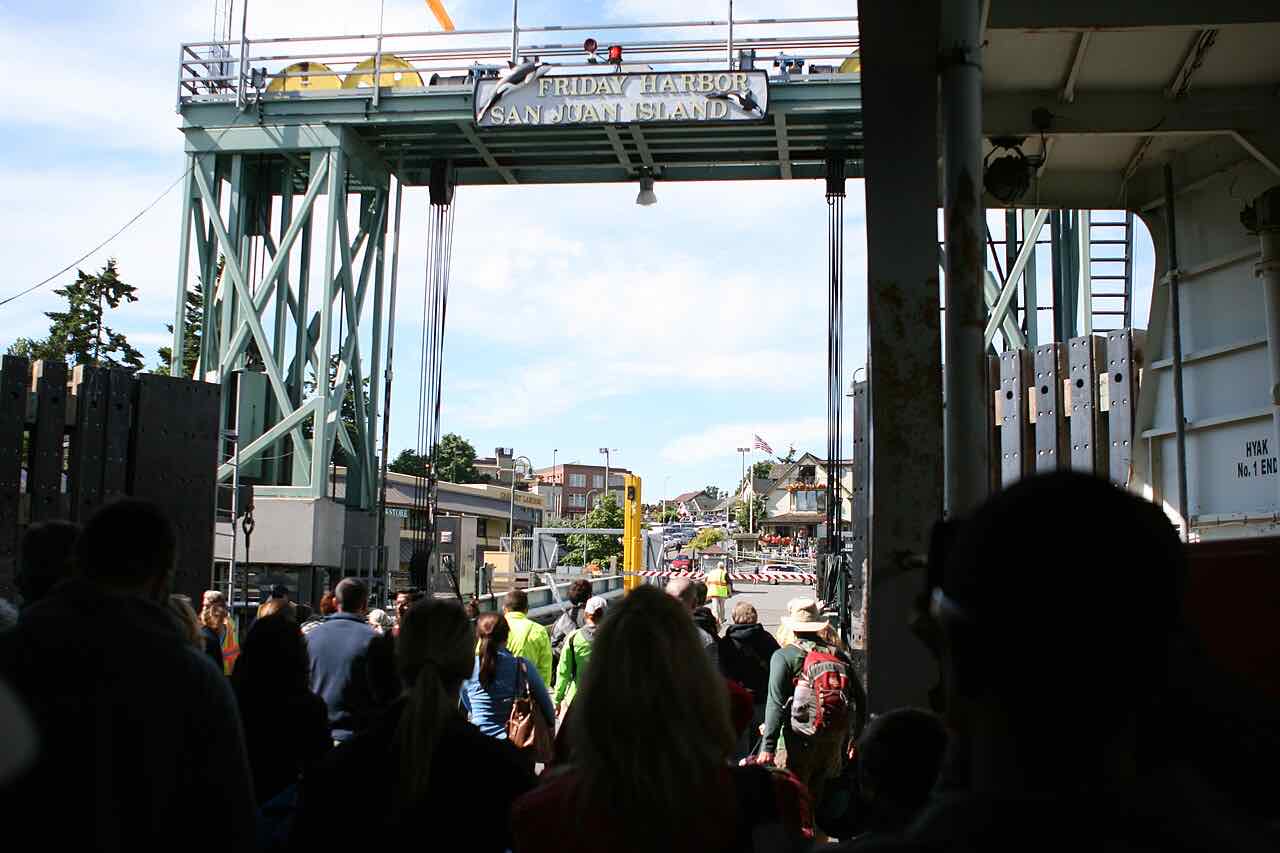
In an open letter posted August 23, 2023, San Juan County said nearly all fires in the islands start from human activity and that tall dry grass becomes a hazard quickly once summer rain stops. It said decades without fire or grazing have left forests more densely stocked and an increasing fire risk, especially with more homes in the landscape, and that rare drier easterly air reaches the islands about every 10 years. On the outer islands, it warned, firefighting resources will take some time to arrive, and it named evacuating many people through a single ferry landing as a concern.
That is how an island house is underwritten: distance to the nearest staffed station, the water supply on site, the driveway a fire engine has to climb, and the clearing around the house. Defensible space, firewood kept away from the walls in summer and clean gutters are the county's own advice, and I put each one on the application. I have found no Washington statute that requires a wildfire-mitigation discount for that work as of November 2026; Senate Bill 5928 on wildfire risk scores passed the Senate but was returned to Senate Rules in March without becoming law.
Earthquake and tsunami in the bays
San Juan County says that because of earthquake risk the whole county is subject to its regulations for geologically hazardous areas, though for most sites that means following adopted building codes. Structures are not allowed on slopes over 80 percent, and other development in a hazard area needs a qualified professional's report on site stability. The county lists tsunami risk on low-lying shores as higher on the north, west and south sides of the county and in East Sound, West Sound and Lopez Sound, from a Cascadia earthquake, an underwater landslide in the Fraser River delta, or a fault south of Lopez Island.
NOAA's 2020 modeling of a Cascadia tsunami for the islands found the first wave peak reaching the southern coast more than an hour and a quarter after the earthquake, flow depths above three meters at some coastal areas, and high currents in the channels between islands. The Insurance Commissioner's office says an earthquake policy might not cover floods, tidal waves or tsunamis even when an earthquake causes them. I read the earthquake and flood forms together for a shoreline house so the wave is not left to neither.
Bluffs, bulkheads and flood
For marine shorelines that are not bedrock, the county requires a geologic assessment with each permit application that sets the house back far enough for natural erosion to proceed for the life of the structure, at least 75 years, without a bulkhead. A new seawall or bulkhead that harms neighboring property or habitat needs mitigation, and building within 200 feet of a mapped geologic hazard area brings added review. Low areas fall under the county's flood hazard rules in SJCC Chapter 15.12 and FEMA's flood maps.
For the owner, that means the county expects a soft bluff to keep retreating and writes its rules to avoid new bulkheads, so the setback, not armor, is the protection. Homeowner insurance usually leaves out land movement, and the state points to a difference in conditions policy for it. Flood is a separate policy; the federal program stops at two hundred fifty thousand dollars on the building and one hundred thousand dollars on contents, so a large shoreline house needs excess flood above it. Ordinance or law coverage pays for rebuilding to the setback in force at the time.
Outflow winds, boats and long outages
The National Weather Service's Storm Data for the San Juan zone records that in the storm of December 14 and 15, 2006, several boats sank or washed ashore in Fisherman Bay on Lopez Island, with gusts estimated at 100 mph. On February 18, 2018, strong Fraser River outflow brought high north winds and a 62 mph gust on Lopez. On December 17, 2018, a spotter at Cattle Point on San Juan Island measured a 72 mph gust, and the storm of December 20, 2018 was the strongest of that season in the northwest interior, with some outages lasting nearly a week. On November 26 and 27, 2006, four to 14 inches of snow downed trees and power lines.
For a house that sits empty, the outage is the threat: no heat, a frozen pipe and water running for days before anyone notices. I check the home form's vacancy and freeze terms, and list a monitored temperature alarm, an automatic water shutoff and a standby generator on the application. The boat goes on its own boat or yacht policy, listed under the umbrella.
Placing a house the FAIR Plan will not take
Beyond its per-location ceiling, the FAIR Plan offers no liability or theft cover and no cover for most water losses, and the Plan says vacant structures are generally not eligible, with exceptions considered for homes under repair. When no authorized insurer will write the house, RCW 48.15.040 lets a surplus line broker place it after a diligent effort among a majority of the authorized insurers for that coverage, not to undercut their prices, and the broker certifies the search to the Commissioner. Under WAC 284-15-030 the policy must state on its face that it is not protected by any Washington guaranty association law. A renewing insurer that drops the house owes at least 60 days' written notice with its actual reason. Washington claims and non-renewal.
Caretakers, staff, collections and ownership
Island houses often depend on a caretaker, a gardener or a handyman. RCW 51.12.020 excludes from Washington's mandatory workers' compensation anyone employed for gardening, maintenance or repair in or about the employer's private home, and a domestic servant where the employer has fewer than two employees regularly working forty or more hours a week in that work. If one of them is hurt on the property, I want to know how the home policy and the excess layer above it respond, and whether the caretaker is your employee or a business you hire.
Some high-value forms pay to rebuild beyond the dwelling limit or offer cash in place of rebuilding; see extended versus full replacement cost. Art, jewelry and wine belong on a schedule at agreed values: fine art and collections. A house titled to a trust or LLC needs that owner as named insured, with the family covered for personal liability. A summer house needs its occupancy stated honestly; see second home insurance and vacant home insurance. A new build or major remodel goes on builder's risk.
Ways to start
- Have your current policy readUpload the declarations page and get a written second look in about a minute: what it covers, what to double-check and what it leaves out.
- Send everything at onceOwners, business managers and family offices: private client insurance puts every home, flood, earthquake, umbrella and valuables policy on one file.
- Buying, with a closing dateYour real estate agent can send me the address and the closing date, and the evidence of insurance goes to escrow and the lender.
- Check the address and the limitThe address hazard lookup shows the flood zone, wildfire hazard and nearby fires on the public maps, and the rebuild cost estimator checks the dwelling limit.
What I need to quote
Current declarations for the home, earthquake, flood, boat and umbrella policies; the latest rebuild appraisal or builder's estimate; the island, year built, square footage, construction and roof; distance to the nearest fire station and the water source on site, such as a well, tank or pond; clearing around the house; distance to the top of any bluff and any geologic assessment; how many months a year the house is occupied and who checks it; temperature alarm, water shutoff and generator; staff or caretaker arrangements; how title is held; and a schedule of art, jewelry and wine with appraisal dates.
Common questions
Who insures a high-value home on Orcas Island or San Juan Island?
Standard high-value insurers write many island homes, and surplus lines insurers take those they decline after Washington's diligent search. The FAIR Plan is capped at one million five hundred thousand dollars per location and generally will not insure a vacant house.
Is my San Juan Islands summer home covered if a pipe freezes while I'm away?
That depends on the policy's vacancy and freeze terms, which often require heat to be kept on or the water shut off. A monitored temperature alarm and automatic water shutoff help with both the underwriting and the claim.
Do I need earthquake insurance in the San Juan Islands?
Earthquake is a separate purchase, and San Juan County subjects the whole county to its geologic hazard rules because of earthquake risk. The state says an earthquake policy might not cover a tsunami even when an earthquake causes it.
Can I build a bulkhead to protect my house on a San Juan bluff?
The county requires shoreline houses on non-bedrock shores to be set back far enough to allow natural erosion for at least 75 years without a bulkhead, and new bulkheads that harm neighbors or habitat need mitigation.
Why is wildfire a question for a house in the San Juans?
The county says denser forests and more homes are an increasing fire risk, tall grass dries quickly in summer, and on outer islands firefighting resources take time to arrive.
Does my caretaker need workers' comp in Washington?
State law excludes people hired for gardening, maintenance or repair around the employer's private home from mandatory coverage, so injuries to them fall back on how your home and excess policies respond.
General information about high-value home insurance in the San Juan Islands as of November 2026, not legal advice. San Juan County rules and guidance, Washington statutes and rules, FAIR Plan terms and federal flood limits are summarized as they read in November 2026; tsunami modeling comes from NOAA's Pacific Marine Environmental Laboratory, storm records from the National Weather Service's Storm Data, and wildfire observations from San Juan County. Your policy wording controls what is covered. Coverage depends on underwriting and the terms, conditions and exclusions of the policy actually issued.