
A debris flow study submitted to the Town of Telluride in 2009 says the town occupies the alluvial fan of Cornet Creek, and that the creek has been responsible for the majority of Telluride's historic flooding problems, mostly as mud and debris flows. Flood and earth movement are the two things a standard homeowners form leaves out, which is why they come first on a Telluride house.
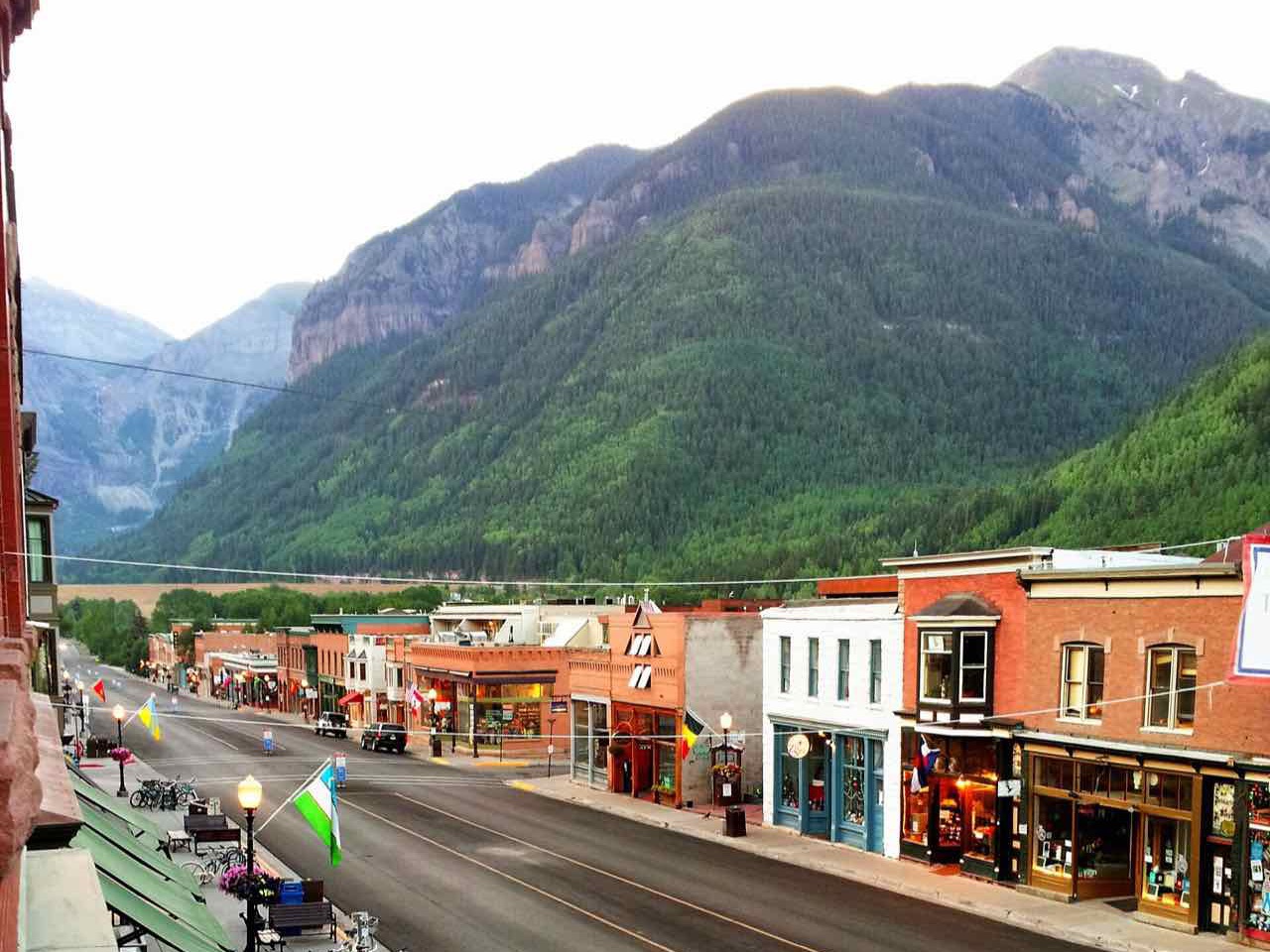

What the record shows on Cornet Creek
- July 27, 1914The study records a mudflow out of Cornet Creek canyon that killed one person and injured many others, moved boulders estimated at more than 20 tons, and left deposits of about eight feet near the canyon mouth and two to four feet at Colorado Avenue, mainly on the east side of the fan.
- August 1, 1969The second documented mudflow came after a wet summer and laid its sediment mostly along the western side of the fan.
- July 23, 2007The most recent flood in the study blocked culvert and bridge crossings and damaged property on the north side of town.
- Flood zonesThe Town's floodplain and geologic hazard permit form lists two Cornet Creek shallow-flooding zones and the San Miguel River 100-year floodplain.
Flood is always a separate policy. The National Flood Insurance Program's limits for a single-family house are two hundred fifty thousand dollars on the building and one hundred thousand dollars on contents, so a house on the fan with a finished lower level needs private or excess flood above them. I also read how each flood form defines mudflow, because that definition decides whether a Cornet Creek event is a flood claim at all.
The Town's geologic hazard map
Telluride's Land Use Code adopts an Official Geologic Hazard Area Map whose identified conditions include active debris fans, avalanches, landslides, potentially unstable slopes, rockfall hazard areas, slopes over thirty percent and talus rockfall sources. Development inside a mapped area needs a permit backed by a geologist's or geotechnical engineer's report, and approval requires that the hazard and the mitigation work be disclosed before sale and attached to deeds and recorded documents that transfer the land.
Three rules matter to an owner. In avalanche areas the applicant has to show the site is free from avalanche danger or adequately protected by defenses or structural provisions, and artificial release by explosives is not accepted as mitigation where people may live. In Rockfall Hazard Zone A, new habitable structures and substantial improvements need site and structure-specific rockfall studies and designs based on them. And a nonconforming structure damaged or destroyed to at least fifty percent of its appraised value is treated as a new use when it is rebuilt, subject to the whole division. After a large loss that can mean new studies and engineered mitigation the old house never had. That cost belongs under ordinance or law coverage, and I set that limit with the hazard map open.
Rebuilding inside the historic district
The National Park Service lists the Telluride Historic District as a National Historic Landmark, designated July 4, 1961. The Town's Historic Preservation Overlay District covers everything inside the municipal boundaries, and no structure in it may be erected, altered, added to, demolished or relocated without a Certificate of Appropriateness. The Town tells owners to file an application with the Historic and Architectural Review Commission for all exterior changes, doors and windows included, before applying for a building permit.
Demolition of a rated structure is approved only if the commission finds every listed standard met, among them that the structure cannot be rehabilitated or reused on site and is structurally unsound despite the owner's upkeep; for a contributing or supporting primary structure it takes five affirmative votes. The code also bars demolition by neglect, and after a conviction for unauthorized demolition the commission may impose a ten-year moratorium on building permits for the property.
For insurance this means a damaged contributing house is repaired to the Town's design guidelines, with review before permits. The dwelling limit has to price period materials and craft, and the additional living expense limit has to carry the review calendar as well as the construction. Extended versus full replacement cost.
Mountain Village: forest, roofs and review
The Town of Mountain Village requires new construction to have a wildfire mitigation plan under its Community Development Code, and its Planning and Forestry Department reviews proposed development for fire mitigation and forest health. For existing homes the Town and the owners association run two incentive programs: one for creating defensible space after a site assessment by the Town forester, and one that waives building permit fees when a cedar shake roof is replaced with Town-approved fire-rated roofing, which starts with a Design Review Process application.
In 2014 the West Region Wildfire Council and the Telluride Fire Protection District assessed wildfire risk at more than 1,900 homes inside the fire district. The Town's wildland fire plan provides for voluntary or mandatory evacuation when an uncontrolled fire is inside town limits or within three miles of them. I send the forester's scope-of-work report and the roof replacement record with a Mountain Village application, because they answer the first two questions an underwriter asks.
Colorado rules that bite on a large house
When admitted insurers decline, Colorado law allows a surplus lines insurer after a diligent effort in the admitted market fails to produce the full amount of insurance. The Colorado FAIR Plan's residential limit is capped by statute at seven hundred fifty thousand dollars, so on a house here it is a first layer under excess coverage, not a whole answer. Colorado's mitigation-discount law is covered in wildfire scores and mitigation discounts.
If an owner-occupied residence is a total loss in a wildfire disaster the governor declares, state law gives the owner at least thirty-six months from the first actual cash value payment to collect full replacement cost, with two six-month extensions for permit, material or contractor delays, and at least twenty-four months of additional living expense coverage. Payments for other structures may be put toward the house when the dwelling limit runs short. The statute's definition excludes property insured on a commercial policy, so how a rented house is written matters. An insurer must mail sixty days' notice before non-renewing a homeowner's policy.
Staff, the empty months and title
Under Colorado's workers' compensation act, people doing domestic work or maintenance at a private home are outside the act unless regularly employed full time, meaning forty hours or more a week or five days or more a week. A year-round caretaker meets that, and an exempt employer may elect coverage.
Most of these houses are empty for part of the year. I ask how many weeks, who walks the house, and whether there is a water shutoff and a low-temperature alarm, because vacancy and freeze conditions differ from form to form. Second home insurance. A house titled to a trust or an LLC needs that name as the insured. Art, jewelry and wine go on a schedule at agreed values, with an excess liability policy over the home and cars, and a restoration needs course-of-construction coverage before work begins.
Ways to start
- Have your current policy readUpload the declarations page and get a written second look in about a minute: what it covers, what to double-check and what it leaves out.
- Send everything at onceOwners, business managers and family offices: private client insurance puts every home, flood, earthquake, umbrella and valuables policy on one file.
- Buying, with a closing dateYour real estate agent can send me the address and the closing date, and the evidence of insurance goes to escrow and the lender.
- Check the address and the limitThe address hazard lookup shows the flood zone, wildfire hazard and nearby fires on the public maps, and the rebuild cost estimator checks the dwelling limit.
What I need to quote
The current declarations pages for the home, flood, valuables and umbrella policies; the insurer's latest reconstruction cost estimate or an appraisal; year built, square footage and construction; roof covering and age; whether the house is rated contributing or supporting in the historic district; any geologic hazard permit, rockfall or avalanche study and elevation certificate; for Mountain Village, the defensible space report and roof replacement record; weeks occupied each year and who looks after the house; household staff and their weekly hours; how title is held; and a schedule of art, jewelry and wine with appraisal dates.
Common questions
Who insures high-value homes in Telluride and Mountain Village?
Admitted insurers that specialize in large homes write many of them, and a surplus lines insurer can be used after a diligent effort in the admitted market. The Colorado FAIR Plan's seven hundred fifty thousand dollar residential cap makes it one layer at most.
Does homeowners insurance cover a Cornet Creek mudflow in Telluride?
A standard homeowners form excludes flood and earth movement. Mudflow as a flood policy defines it is a flood peril, so the cover comes from a separate flood policy, and the federal program's building limit is two hundred fifty thousand dollars.
Can I rebuild my historic Telluride house the way it was after a fire?
Any erection, alteration or demolition in the town's Historic Preservation Overlay District needs a Certificate of Appropriateness, and the Town reviews exterior work against its design guidelines. Set the dwelling and living-expense limits for that process.
What happens if my Telluride home in a mapped hazard area is badly damaged?
Under the Land Use Code a nonconforming structure damaged or destroyed to at least fifty percent of its appraised value is treated as a new use when rebuilt, so the geologic hazard rules apply to the reconstruction.
Does Mountain Village require wildfire mitigation?
New construction must have a wildfire mitigation plan under the Community Development Code. For existing homes the Town encourages the same standards and offers defensible space and cedar shake roof replacement incentives.
Do I need workers' comp for a caretaker at my Telluride home?
Colorado exempts domestic and home maintenance workers unless they are regularly employed full time, defined as forty hours or more a week or five days or more a week.
How long do I have to rebuild after a declared wildfire in Colorado?
For a total loss of an owner-occupied residence in a declared wildfire disaster, at least thirty-six months from the first actual cash value payment, with two six-month extensions for delays outside your control.
General information about high-value home insurance in Telluride, Mountain Village and San Miguel County as of November 2026, not legal advice. Debris flow history is from the Cornet Creek Watershed and Alluvial Fan Debris Flow Analysis submitted to the Town of Telluride in May 2009; Land Use Code sections, Mountain Village programs and Colorado statutes are summarized as they read in November 2026 and change. I have found no official statement on construction costs or contractor availability in the Telluride region, so none is given here. Your policy wording controls what is covered. Coverage depends on underwriting and the terms, conditions and exclusions of the policy actually issued.