
As of November 2026, the Ohio FAIR Plan's ceiling is two million dollars per location for building and contents combined, and Ohio lets a surplus lines policy be placed only after due diligence among at least five authorized insurers. For a house with a rebuild cost in the millions, the decisions are the rebuild estimate, the outbuildings and trees, the ground under a hillside lot, and how household staff are covered under Ohio's state fund.
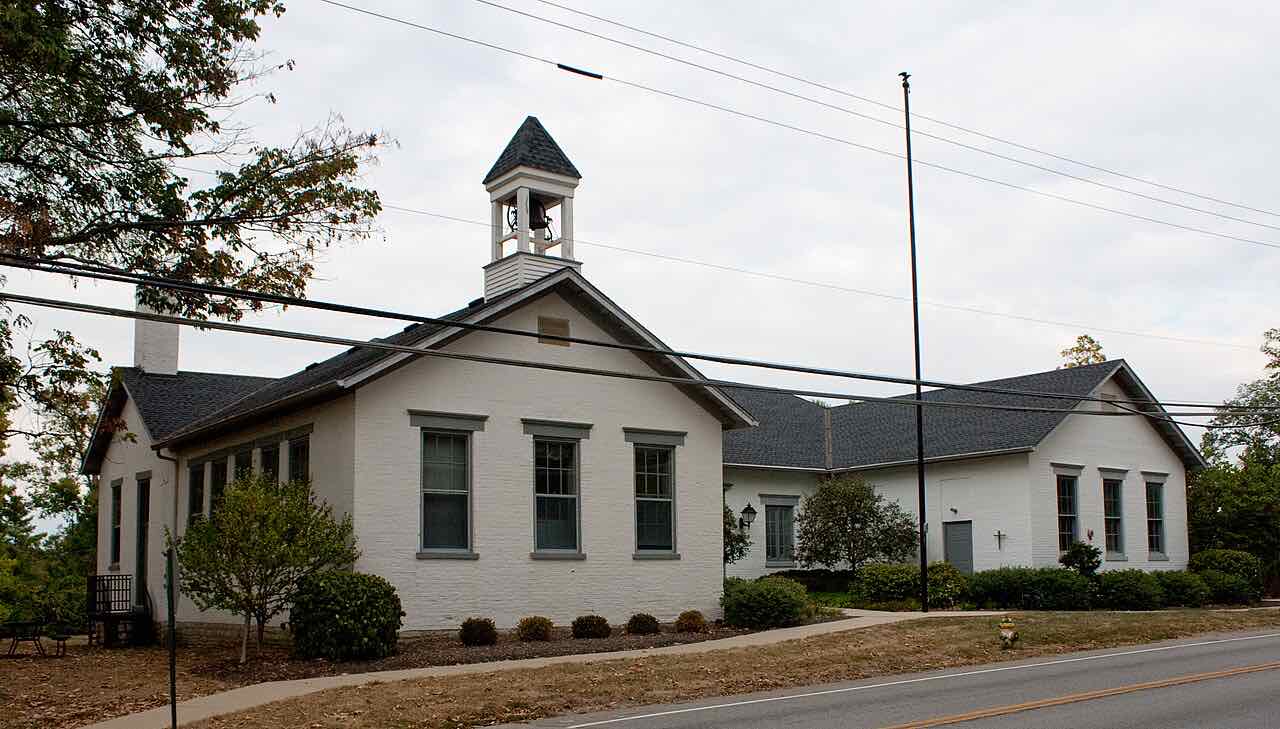

April 8, 2020: a tornado through Indian Hill
The National Weather Service office in Wilmington, Ohio confirmed an EF-0 tornado in the Indian Hill area of eastern Hamilton County at 10:37 p.m. on April 8, 2020. Its survey gives a path of about 3.3 miles, a width of up to 350 yards and estimated winds around 85 miles an hour. The track began along Keller Road and ran southeast past Blome Road and the intersection of Drake and Camargo roads, where numerous trees came down, to Given Road, where the Weather Service found damage to trees and barns and downed power poles, before ending along Park Road. It attributed separate damage in Madeira, Silverton and Amberley to straight-line winds of 70 to 80 miles an hour.
That is the Indian Hill loss pattern in one night: trees across drives and roofs, outbuildings, fences and long power outages. Standard forms put small limits on trees and on debris removal, and they treat barns, guest houses and pool structures as other structures with a limit set as a share of the house. I list each outbuilding with its own value and read what the form pays for trees when several fall at once (who pays when a tree falls).
Septic, village water and the fire district
The Village of Indian Hill says it has an ordinance regulating household sewage disposal systems that mandates an annual inspection of each system, performed by Hamilton County Public Health, and that all septic service and pumping must be done by a provider registered with Hamilton County. A failing system or a sewage backup is a maintenance and exclusion question on most home forms, so the inspection record is worth sending with an application.
- WaterThe Indian Hill Water Works is owned and operated by the Village, was established in 1949 and pumps from wells on the Little Miami aquifer. It also serves Terrace Park, Camp Dennison and parts of neighboring communities.
- FireThe Madeira and Indian Hill Joint Fire District, established in 1985, runs two stations. Station 64, on Drake Road in Indian Hill, is the district headquarters. The district also offers reflective address signs for residences.
Underwriters rate fire response on distance to the station and to a hydrant, so I give them both for the house, along with the length of the drive, whether a fire truck can turn at the house, and whether the house has a monitored fire and low-temperature alarm.
Hyde Park and Cincinnati's hillside rules
Inside the City of Cincinnati, the Department of Buildings and Inspections' handout on landslide areas says some are mapped as landslide susceptibility areas and some lie in Hillside zoning overlay districts. It requires a geotechnical engineer to submit a soils report and supervise the earthwork on sites with active landslides, sites with slopes steeper than three horizontal to one vertical, excavations deeper than 12 feet or next to an existing structure that could be undermined, structural fill of more than five feet, earthwork over two acres, and any project in the Hillside overlay. The City Planning department's Hillside Initiative is reassessing those rules to address landslide and erosion risk.
For a Hyde Park house on or below a slope, a rebuild can mean soils work and engineered retaining walls before the house itself, and most home forms exclude earth movement. I set ordinance or law coverage and the dwelling limit from an estimate that includes the site, and I ask each insurer in writing what it will add for earth movement.
When the sewer backs up
The Metropolitan Sewer District of Greater Cincinnati reimburses eligible damage from backups caused by inadequate capacity or negligent maintenance or operation of its public sewer. It does not cover overland or street flooding or backups from a private building sewer. The backup has to be reported to the District within 48 hours of discovery, and the claim received within two years. The District says Ohio law requires it to deduct whatever private insurance pays, and its claim form asks for your homeowners insurance. A water backup endorsement on the home policy is therefore the first payer, and I size it to the finished lower level.
River and surface water are flood, which a home policy excludes. Under 44 CFR 61.6 the National Flood Insurance Program stops at two hundred fifty thousand dollars for a single-family building and one hundred thousand dollars for contents, so a large house near the Little Miami or a creek needs private or excess flood above it.
The FAIR Plan, surplus lines and the tax
Ohio Administrative Code 3901-1-18 sets the Ohio FAIR Plan's maximum for real and personal property at two million dollars per location, building and contents together. A large Indian Hill estate outgrows that before the outbuildings and collections are counted. Under section 3905.33 of the Revised Code, a surplus lines broker may place a home with an unauthorized insurer only after due diligence: contacting at least five authorized insurers that customarily write the coverage, or all of them if the agent represents fewer, with a non-response after ten days treated as a decline. Section 3905.36 then sets a tax of five percent of the gross premium. Admitted and surplus lines policies compared; notice rules are on my Ohio non-renewal page.
Staff, collections, title and a second home
Ohio's workers' compensation law, in section 4123.01 of the Revised Code, counts household workers who earn one hundred sixty dollars or more in cash in a calendar quarter from a single household as employees, and the employer pays premiums into the state insurance fund. A house manager, groundskeeper or housekeeper you employ directly is covered there, not on the home policy, so I ask who works at the house and whether a state fund account is open (Ohio's BWC explained).
Art, jewelry, silver and wine belong on a schedule at agreed values (fine art and collections). When the house is held in a trust or an LLC, the named insured must match the deed (trust and LLC ownership). A family that winters elsewhere should tell me the months and who checks the house (second homes and vacancy). A renovation needs the insurer told before work starts, and often course-of-construction coverage, and the umbrella should sit over every home and car.
Ways to start
- Have your current policy readUpload the declarations page and get a written second look in about a minute: what it covers, what to double-check and what it leaves out.
- Send everything at onceOwners, business managers and family offices: private client insurance puts every home, flood, earthquake, umbrella and valuables policy on one file.
- Buying, with a closing dateYour real estate agent can send me the address and the closing date, and the evidence of insurance goes to escrow and the lender.
- Check the address and the limitThe address hazard lookup shows the flood zone, wildfire hazard and nearby fires on the public maps, and the rebuild cost estimator checks the dwelling limit.
What I need to quote
The address, and whether it is in Indian Hill or inside the city; how title is held; the current home, flood and umbrella declarations pages; the latest rebuild estimate or appraisal; year built, square footage, construction and roof age; a list of barns, guest houses, pools and other structures with values; the septic inspection record or sewer connection; the drive length and the nearest hydrant; for a hillside lot, any soils report or retaining wall work; whether the lower level is finished; household staff and their hours; and a schedule of art, jewelry and wine with appraisal dates.
Common questions
Who insures high-value homes in Indian Hill, Ohio?
Admitted insurers that specialize in high-value homes write many of them, and surplus lines insurers take others once due diligence among at least five authorized insurers (or all the agent represents, if fewer) is done. The Ohio FAIR Plan stops at two million dollars per location for building and contents.
Has a tornado hit Indian Hill?
Yes. The National Weather Service confirmed an EF-0 tornado in the Indian Hill area on April 8, 2020, with winds around 85 miles an hour over a path of about 3.3 miles that downed trees and power poles and damaged barns.
Does home insurance cover my barn and guest house in Indian Hill?
They are usually other structures, with a limit set as a share of the house. On an estate I list each building with its own value so the limits match.
Will the sewer district pay for a basement backup in Hyde Park?
The Metropolitan Sewer District reimburses eligible damage from backups caused by its public sewer if you report within 48 hours, but Ohio law requires it to deduct what your own insurance pays. It does not cover street flooding or backups from your private building sewer.
Do I need a geotechnical engineer to rebuild on a hillside in Cincinnati?
The city requires one for projects in the Hillside overlay, on slopes steeper than three to one, and for deep excavation next to an existing structure, among other cases. That work belongs in the rebuild estimate.
Do I need workers' comp for my housekeeper in Ohio?
Ohio counts a household worker who earns one hundred sixty dollars or more in cash in a calendar quarter from one household as an employee, and coverage comes from the state insurance fund rather than the home policy.
Why is there a tax on a surplus lines home policy in Ohio?
Section 3905.36 of the Ohio Revised Code sets a tax of five percent of the gross premium on surplus lines insurance.
General information about high-value home insurance in Indian Hill and Hyde Park, Hamilton County, Ohio, as of November 2026, not legal advice. Storm facts come from the National Weather Service in Wilmington; local services from the Village of Indian Hill, the Madeira and Indian Hill Joint Fire District, the City of Cincinnati and the Metropolitan Sewer District; state rules from the Ohio Revised Code and Administrative Code. Your policy wording controls what is covered. Coverage depends on underwriting and the terms, conditions and exclusions of the policy actually issued.