
The Rancho Santa Fe Fire Protection District's Witch Creek damage list, dated November 4, 2007, counts 21 destroyed and 10 damaged in the Covenant. Since January 1, 2026 the district's codes require sprinklers in all new buildings and at least Class A roofing on any new roof covering, so a rebuild here is a code-upgrade project, and the limits for the house, the outbuildings and code upgrades have to be set that way.
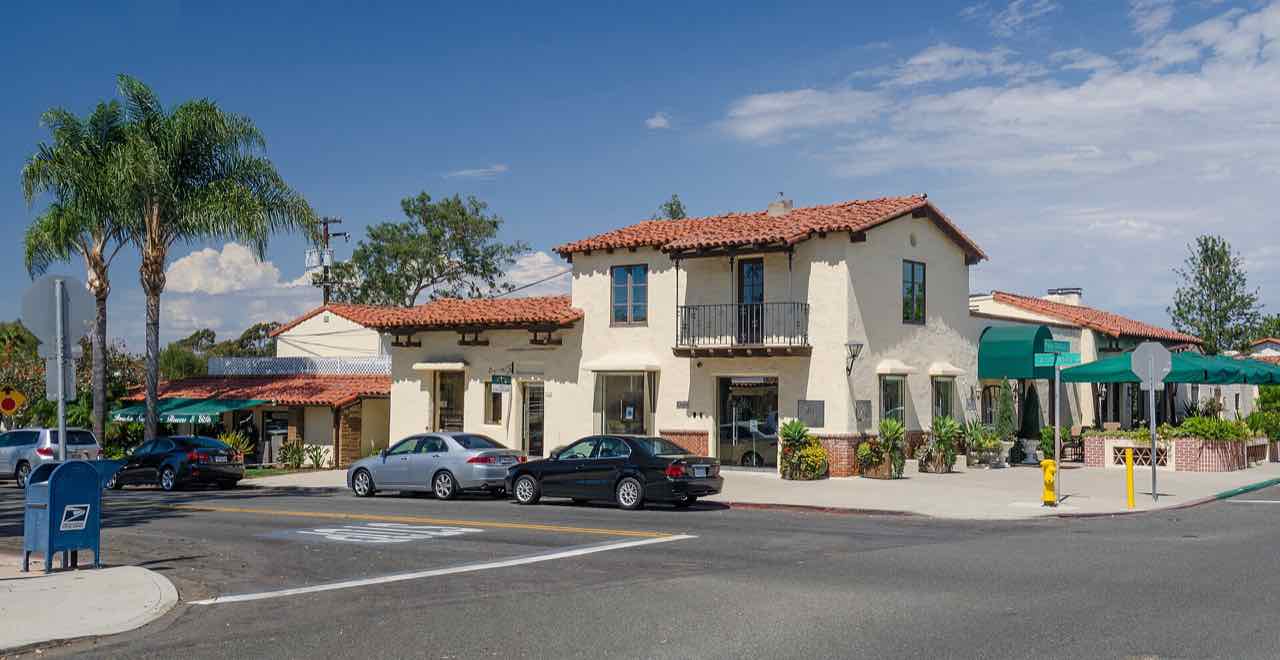

What the Witch Creek Fire did inside the district
The district's incident archive records that the fire broke out shortly after noon on October 21, 2007 near Ramona, reached the district around 1:30 a.m. the next day, and that the entire district population was evacuated at 10:30 that morning. Inside the district boundaries about 6,000 acres burned, 61 homes and outbuildings were destroyed and 23 damaged, and 21,000 people were evacuated, with no significant injuries or deaths. Its damage assessment by area, as of November 4, 2007, lists 21 destroyed and 10 damaged in the Covenant and 2 destroyed and 4 damaged in Fairbanks Ranch.
The archive counts homes and outbuildings together, and on an estate that is the point. A guest house, barn or studio lost with the main house is paid from the other structures limit, and California's required disclosure notes that this limit is usually a share of the dwelling limit, a figure that has nothing to do with what those buildings cost to rebuild. I price each building on its own instead.
The district's 2026 codes and what they add to a rebuild
- SprinklersThe district's 2025 fire code ordinance, in effect January 1, 2026, requires automatic sprinklers in all new buildings and treats buildings less than ten feet apart as one. The exception is a detached Group U building of no more than 1,200 square feet, more than ten feet from other buildings and the property line. The California Building Code puts barns, stables, sheds and private garages in Group U, so a new barn larger than that, or one built within ten feet of another building, is sprinklered. An addition of more than half the existing building brings sprinklers throughout, and the fire code official may require them in a reconstruction that significantly changes the interior or roof.
- Roofs and ventsUnder the district's wildland-urban interface code, also in effect January 1, 2026, a roof that is replaced, or half or more replaced within twelve months, takes the covering required for new construction; any roof covering applied in an addition, alteration or repair must be at least Class A; and non-compliant vents are retrofitted when an addition, alteration or roof modification takes place.
- Water and accessA waterline extension and hydrant are required when a water main is within 1,500 feet of the property line; a private fire-water tank is allowed only where the fire code official approves it, with a letter from the water district saying it cannot provide fire flow. A driveway serving no more than two residential parcels needs at least 16 feet of unobstructed width, with a turnout on a driveway longer than 150 feet.
Each of those is a cost the old house never carried. The state's disclosure calls the coverage that pays it building code upgrade, or ordinance and law, coverage, with its limit set in the policy or endorsement, so I size that limit to these rules. Ordinance or law coverage.
Barns, horses and the people who work the property
Before I quote, I ask who owns each horse, whether anyone boards, trains or takes lessons, and who works in the barn. A private barn needs its own other-structures limit, and the horses themselves are a separate equine question. Boarding, training or lessons make it a business, written on commercial equine or farm coverage with care, custody and control for other people's horses.
Workers' comp follows the same line. Labor Code section 3351(d) makes a household employee of anyone the owner or occupant hires for work tied to owning, keeping up or using the home, or for personal work outside the owner's trade or business; section 3352(a)(8) drops only those under 52 hours, or at one hundred dollars or less in wages, over the 90 days before an injury. For a groom, I write out the duties and hours and ask the carrier how it will treat the job. Grooms, riders and barn managers on a boarding or training operation work for a business, and that business needs its own workers' comp policy. Household employees and workers' comp.
Living expenses and contents after a declared disaster
Moving a household, and sometimes its horses, out of an estate for a rebuild takes a long time, and the statutes set minimums, not budgets. After a covered loss tied to a declared state of emergency, Insurance Code section 2060 keeps living-expense coverage running for no fewer than 24 months, counted from when the loss began and subject to the policy's other terms; it adds up to 12 further months when the rebuild is held up by permits, materials or contractors, and then six months at a time for good cause. Under section 2061 you can ask for an advance of at least four months of living expenses after a total loss.
For contents, section 10103.7 has the insurer offer, after the total loss of a furnished primary dwelling, an upfront payment of 60 percent or more of the personal property limit, capped at three hundred fifty thousand dollars, with no itemized list; the rest is claimed piece by piece, and scheduled valuables follow their own schedule. When an estate's contents run past that cap, an inventory, photographs and appraisals kept off the property are what get the balance paid. Replacement cost itself has a 36-month floor under section 2051.5, counted from the first actual cash value payment.
Del Mar: the beachfront flood map and the fault offshore
The City of Del Mar says FEMA's 2017 coastal study produced a new flood insurance rate map, effective December 21, 2019, that maps beachfront properties from north of 18th Street to the San Dieguito Lagoon river mouth as Special Flood Hazard Area because of wave action, extending the VE zone past existing seawalls onto private property. The map models wave run-up and seawall overtopping but not projected sea-level rise, and owners there with a federally backed mortgage must carry flood insurance. Federal law caps NFIP building coverage on a one-to-four family building at two hundred fifty thousand dollars, which is why a beachfront house is usually written with private or excess flood above it.
Offshore, the U.S. Geological Survey's fault database maps the Del Mar section of the Newport-Inglewood-Rose Canyon fault zone from off Carlsbad to La Jolla, 25 kilometers of a zone 209 kilometers long, and notes that the Rose Canyon fault comes onshore at La Jolla.
Earthquake cover on a tile-and-plaster estate
A California Earthquake Authority policy can be bought only by owners whose home insurer takes part in the program, and its homeowners form has exclusions that land hard on older estates. It does not cover decorative or artistic features that are artisan-crafted or cannot be replaced with an identical commercially made item, naming murals, stained or leaded glass, chandeliers, mosaics, statuary, carvings, inlays and fountains; exterior masonry veneer; plaster beyond the cost of replacing it with drywall; or structures other than the dwelling, which takes in guest houses, barns and detached garages. When the house itself is the craftsmanship, I price a private earthquake policy next to the CEA form and go through both with you before you choose. Earthquake insurance in California.
Collections, the excess layer and the second home
Insurance Code section 412's valued policy, one that names the agreed value of the insured item on its face, is the model for a wine cellar, a car collection, art and jewelry: each piece listed with its appraisal before a loss, not argued over after one. Fine art and collections; collector cars.
The umbrella sits over the home, the cars and any truck and horse trailer. Because section 11580.2 leaves out policies that write auto liability purely as excess or umbrella coverage, uninsured and underinsured motorist protection at that level has to come from the form itself. If the Del Mar or Rancho Santa Fe house is a second home, the contents advance in section 10103.7 and the inventory rules in section 2061 speak of a primary dwelling or residence; I write that policy around how often the house is actually lived in.
Ways to start
- Have your current policy readUpload the declarations page and get a written second look in about a minute: what it covers, what to double-check and what it leaves out.
- Send everything at onceOwners, business managers and family offices: private client insurance puts every home, flood, earthquake, umbrella and valuables policy on one file.
- Buying, with a closing dateYour real estate agent can send me the address and the closing date, and the evidence of insurance goes to escrow and the lender.
- Check the address and the limitThe address hazard lookup shows the flood zone, wildfire hazard and nearby fires on the public maps, and the rebuild cost estimator checks the dwelling limit.
What I need to quote
The declarations pages for every policy on the property; a current replacement-cost estimate or appraisal; a site plan or list of every building with its size and use; roof and vent details; any fire district plan review or inspection letters; the water source and the distance to the nearest hydrant; the horses and who owns them; staff and their weekly hours; a schedule of art, jewelry, wine and cars; and for a Del Mar home, the elevation certificate.
Common questions
Do I have to add fire sprinklers if I rebuild in Rancho Santa Fe?
For a new building, yes: since January 1, 2026 the fire district's code requires them in all new buildings, with a narrow exception for small detached accessory buildings. A reconstruction that significantly changes the interior or roof can trigger them too.
Does earthquake insurance cover my guest house and barn in Rancho Santa Fe?
A CEA homeowners policy will not: its form excludes structures other than the dwelling, including outbuildings and detached garages. A private earthquake policy is where to look for that cover.
How long will insurance pay living expenses after a declared wildfire in California?
Insurance Code 2060 sets a floor of 24 months from the start of the loss, subject to the policy's terms, with up to 12 further months for delays you could not control and six-month extensions after that for good cause.
Will my insurer pay for contents without an inventory after a total loss?
After a declared disaster destroys a furnished primary home, the insurer has to offer 60 percent or more of the contents limit, capped at three hundred fifty thousand dollars, with no itemized list. The balance is claimed item by item.
Do I need flood insurance on a Del Mar beachfront home?
If the home is in the Special Flood Hazard Area on the map in effect since December 21, 2019 and has a federally backed mortgage, yes. Homeowners policies leave flood out, so it is worth pricing either way.
Is my groom covered as a household employee in Rancho Santa Fe?
It depends on the work. Labor Code 3351(d) covers people hired for work tied to owning, keeping up or using the home, or for personal work outside the owner's trade or business; staff of a boarding or training operation work for a business that needs its own workers' comp policy. I send the carrier the groom's duties and hours before you bind.
General information about high-value home insurance in Rancho Santa Fe and Del Mar as of November 2026, not legal advice. Fire figures are the Rancho Santa Fe Fire Protection District's own; district codes are its 2025 ordinances in effect January 1, 2026; statutes and policy forms are summarized as they read in November 2026. Your policy wording controls what is covered. Coverage depends on underwriting and the terms, conditions and exclusions of the policy actually issued.