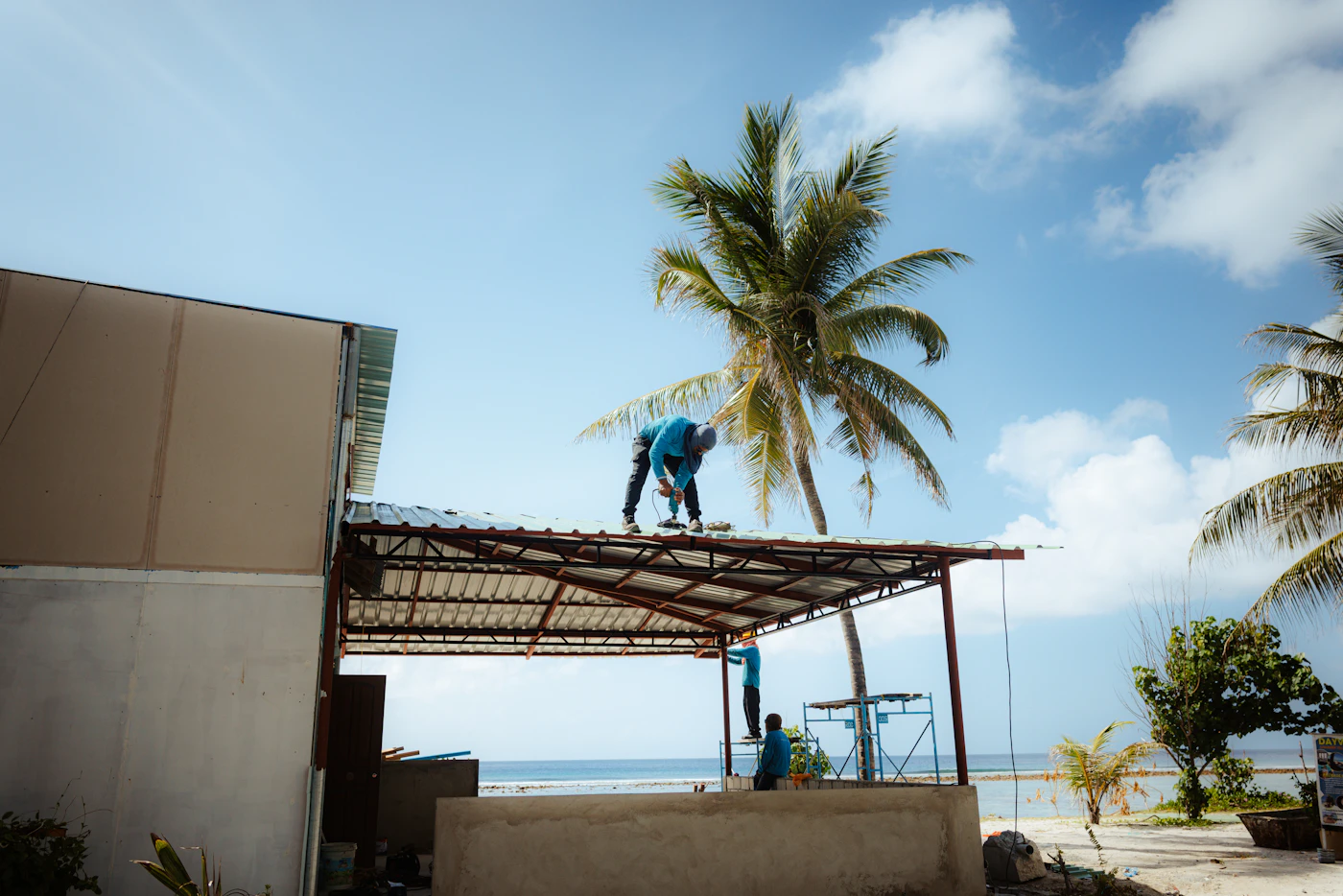
The commercial property policy on your shop covers what’s at the shop. The moment a compressor goes on the trailer, a cabinet order sits in a customer’s garage waiting to be hung, or a pallet of someone else’s goods is in your truck, you are outside what that form was built for. Inland marine fills that space. It is a family of policies, many of them called floaters, that follow property wherever it goes: contractors equipment, installation, builders risk, motor truck cargo, bailee’s customers, fine arts and computer equipment. Regulators describe the line in the NAIC’s Nationwide Inland Marine Definition, and the thread through its list is movement: property that is movable, in transit or tied to transportation. If your business is a truck full of gear, this is the line that insures the gear.
Why it’s called marine
Inland marine grew out of ocean marine insurance, the cover for goods crossing the ocean, and kept the name on land. It has been about movement ever since: property in transit over land, movable property with no fixed address, bailees’ liability for other people’s goods, and the bridges, towers and pipelines that carry goods and signals.
The NAIC adopted its Nationwide Inland Marine Definition in 1933 and has amended it twice since. It describes risks a state may classify as inland marine and says it is not a complete list. Its classes are imports, exports, domestic shipments, instrumentalities of transportation and communication, and personal and commercial property floaters; the thread is property that is movable, in transit or tied to transportation or communication. It also keeps out furniture and fixtures, goods still in manufacture on the manufacturer’s premises, and ordinary storage of your own merchandise.
What a commercial property policy leaves out
The standard commercial property form, ISO’s CP 00 10, pays for loss to covered property at the premises described in the declarations, plus coverage extensions. The one that matters is Property Off-Premises: covered property temporarily at a location you don’t own, lease or operate, in storage at a location you lease, or at a fair or trade show. In the 2012 edition, CP 00 10 10 12, the most it pays under that extension is $10,000, and it does not apply to property in or on a vehicle.
The form also lists what is not covered property: vehicles or self-propelled machines registered for use on public roads or operated principally away from the described premises. A backhoe that lives on job sites fits that description. Its starting point for valuation is actual cash value; replacement cost is an option that has to be shown on the declarations. Inland marine forms pick up the rest, property on a truck, a job site or a customer’s building, and as a group they are generally broader than property forms in perils and places.
The common inland marine forms
- Contractors equipment floater. Identified machinery, tools and equipment of a mobile nature, wherever it goes. The marine definition’s equipment floater class excludes motor vehicles designed for highway use and the trailers they haul, so the pickup and the lowboy belong on commercial auto; the excavator riding on the lowboy does not. Tools and equipment coverage, in detail.
- Installation floater. Machinery, equipment and materials you install: HVAC units, switchgear, cabinets. Covered where the work is performed, in transit and in temporary storage, until the work is completed and accepted or your interest ends. A specialized builders risk, often on the same form.
- Builders risk. A structure during construction or renovation. No single standard form exists; most are written as inland marine on an all-risks basis, with the estimated completed value as the limit and property at the site, off-site and in transit inside.
- Motor truck cargo. Property in the course of transit, by common carrier or on your own trucks depending on the form. More on cargo coverage.
- Bailee’s customers coverage. Other people’s property in transit to and from you and while it is in your custody. It does not cover your own property at your premises.
- Fine arts, instruments and computers. Fine arts policies for businesses and galleries, electronic data processing policies, physicians’ and surgeons’ instrument floaters and mobile equipment floaters are all on the NAIC list; in practice, cameras, diagnostic gear and laptops.
Scheduled vs. blanket, and how losses are valued
Two choices shape the quote. Scheduled coverage sets a separate limit for each type of property or each listed item; underwriters want make, model, serial number and value for anything scheduled. Blanket coverage sets one limit over more than one type of property or location, which suits hand tools and jobsite material. A contractor’s program can mix the two: big iron on a schedule, smaller gear under a blanket limit.
Then valuation. Actual cash value takes depreciation off; replacement cost, in the ISO property form’s words, pays “without deduction for depreciation” for property of comparable material and quality. That form’s replacement cost option does not apply to works of art, antiques or rare articles; fine arts policies are their own class on the NAIC list. Underwriters ask for an equipment list with values, where it sleeps at night, how it travels, theft controls and loss history. Rented equipment gets its own line; the rental agreement says who carries the loss while you have the machine, so send it along with any certificate requests.
Who needs it
- Contractors: an equipment floater for owned and rented gear, an installation floater for job material, builders risk when you put up the structure. Contractor insurance is packaged around general liability; inland marine follows the tools.
- Photographers, mobile services and field crews: anyone whose business is a van full of cameras, lights or diagnostic gear, which the property form’s off-premises extension does not reach while it is in the van.
- Truckers and carriers: motor truck cargo for the freight, and an equipment floater for the straps, tarps and tools that ride on the truck. Trucking insurance explains how cargo fits with liability and physical damage.
What counts as inland marine on paper varies by state. Florida’s code defines it by the general custom of the insurance business and the rules of its commission; Kentucky writes the NAIC list into KRS 304.5-080. The label is a regulatory matter; what a floater does is cover the property without regard to where it is.
Common questions
Is inland marine the same as an equipment floater?
A floater is one kind of inland marine policy. Inland marine is the line; equipment floaters, installation coverage, builders risk, motor truck cargo and bailee forms are policies written within it.
Does inland marine cover my truck or van?
No. The marine definition’s equipment floater class excludes motor vehicles designed for highway use, and trailers and semi-trailers hauled by highway tractors; those belong on a commercial auto policy. The equipment and freight riding on the truck are what inland marine is for.
Does my commercial property policy cover tools on a job site?
Only in a limited way. ISO’s CP 00 10 extends a capped amount, $10,000 in the 2012 edition, to covered property temporarily off-premises, and that extension does not apply to property in or on a vehicle. Vehicles and self-propelled machines operated principally away from the premises are not covered property under the form at all.
What is the difference between an installation floater and builders risk?
Builders risk covers the structure while it is being built or renovated. An installation floater covers the specific machinery, equipment or materials a contractor is installing, from transit through completion and acceptance. The NAIC definition lists them as one class, and they are often written on the same form.
Do I need inland marine if I rent equipment?
Read the rental agreement first; it says who is responsible for the machine while you have it. When that is you, an equipment floater written to include equipment you rent or lease is the usual answer. Send the agreement with your quote request.
Sources
- NAIC Model 701, Nationwide Inland Marine Definition (title; purpose and ‘does not include all’ language; classes A–F incl. F(2), F(9), F(10), F(11), F(18), F(23); Section 3 exceptions; 1933/1953/1977 chronology)
- ISO CP 00 10 10 12, Building and Personal Property Coverage Form, full text (premises described in the declarations; Property Off-premises extension, vehicle carve-out and $10,000 cap; Property Not Covered p.; Valuation 7.a; Replacement Cost option incl. works-of-art carve-out and ‘comparable material and quality’)
- IRMI glossary: building and personal property coverage form (CP 00 10 form number; coverage extensions incl. off-premises property)
- IRMI glossary: inland marine coverage (ocean marine roots; transit, movable property, instrumentalities, bailees; floaters cover without regard to location; generally broader than property forms)
- IRMI glossary: builders risk policy (no single standard form; inland marine; all risks; site, off-site storage, transit; completed value as limit)
- IRMI glossary: installation floater (specialized type of builders risk, often on the same form)
- IRMI glossary: motor truck cargo (in course of transit, by common carrier or on own vehicles)
- IRMI glossary: scheduled limits (separate limits per type of property or location) vs. blanket limit
- Florida Statutes § 624.607(3): inland marine insurance as established by general custom and rule of the commission
- Kentucky Revised Statutes 304.5-080: the NAIC classes written into state law
General information about inland marine insurance as of October 2026, not legal or tax advice; your policy forms, the NAIC Nationwide Inland Marine Definition and each state’s insurance code control. Coverage depends on underwriting and the terms, conditions and exclusions of the policy actually issued.