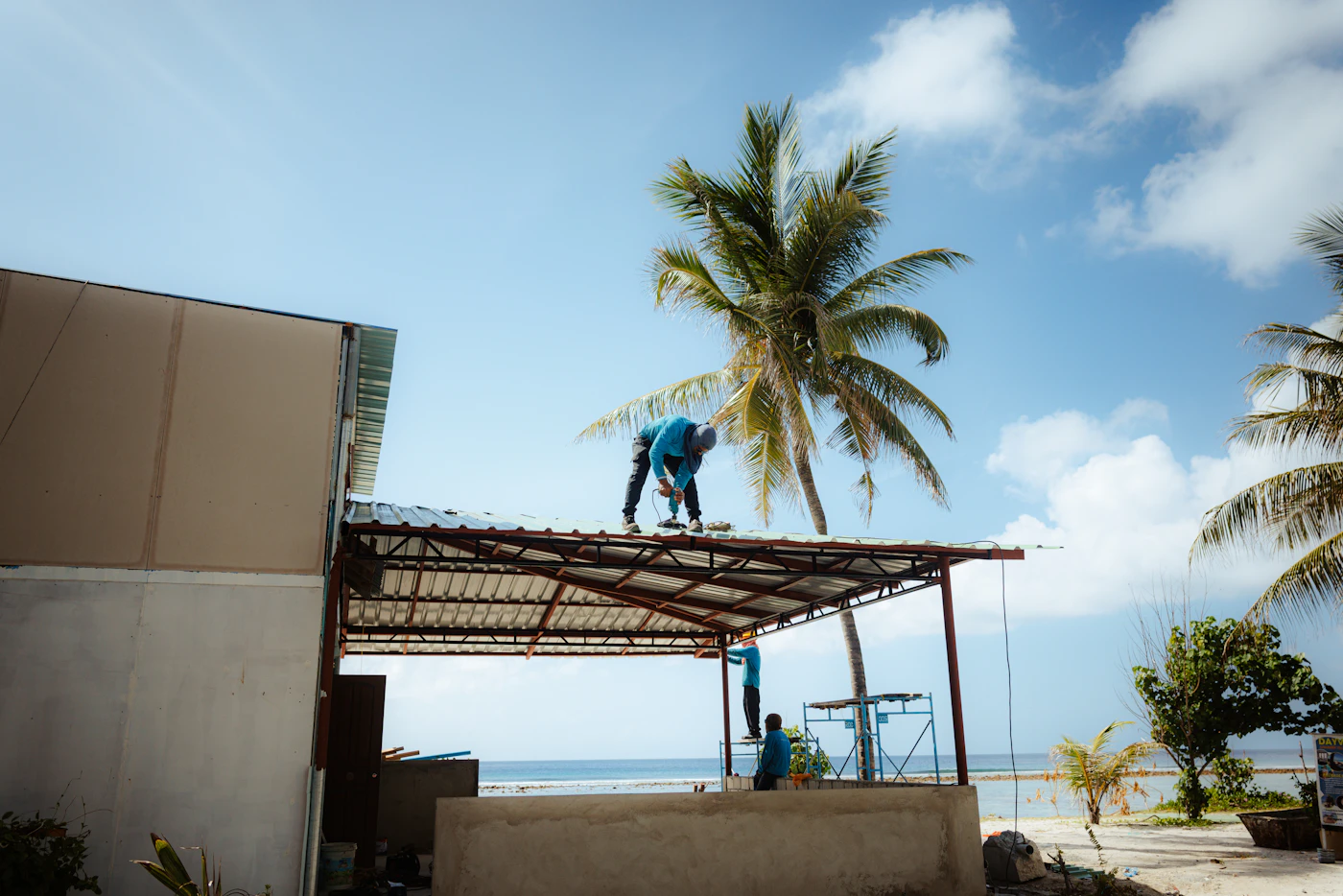
You finish a deck, a roof or a tenant improvement, get paid and move on. If that work later fails and someone is hurt or property is damaged, the claim falls under completed operations, not the coverage for work in progress. On an occurrence policy, the injury or damage has to happen during the policy period, so letting coverage lapse after a job ends can leave that work with no policy to respond. General contractors and owners often require subcontractors to name them as additional insureds for completed work too, on a separate endorsement such as CG 20 37.
What the policy means by completed work
In ISO’s standard occurrence CGL form, CG 00 01, the “products-completed operations hazard” includes bodily injury and property damage that happens away from premises you own or rent and arises out of “your product” or “your work.” Work that isn’t yet completed or abandoned is left out; while you’re still on the job, the rest of Coverage A applies.
The form spells out when your work counts as completed, at the earliest of these times:
- Contract finished. All the work called for in your contract is done.
- Site finished. All the work at one job site is done, if your contract covers more than one site.
- Put to use. That part of the work has been put to its intended use by anyone other than another contractor or subcontractor working on the same project.
Work that may still need service, maintenance, correction, repair or replacement, but is otherwise complete, is treated as completed.
Its own aggregate limit
Section III of CG 00 01 sets a Products-Completed Operations Aggregate Limit, shown on the declarations, as the most the insurer pays under Coverage A for bodily injury and property damage in that hazard. The General Aggregate applies to the rest of Coverage A plus Coverages B and C, and specifically leaves out completed operations damages, so the two don’t draw from the same pool. One exception: for some classifications, the declarations or a policy schedule state that products-completed operations are subject to the General Aggregate instead.
Damage to your own finished work is handled separately. The “Damage to Your Work” exclusion removes property damage to your completed work arising out of it, but it doesn’t apply when the damaged work, or the work the damage came from, was done for you by a subcontractor. When I review a contractor’s quote, I check both aggregates and whether any classification folds completed operations into the general aggregate.
Why claims show up years after the job
The CG 00 01 occurrence form applies only if the bodily injury or property damage occurs during the policy period. The date you did the work doesn’t control; the date the injury or damage happens does. A deck you built years ago that collapses next month is a question for the policy in force next month.
Construction defect claims follow the same pattern. In one case discussed in IRMI commentary, residents sued the developer-general contractor for property damage from alleged construction defects seven years after the project was completed. How long a claim can be brought is set by state statutes of limitation and repose, and they vary by state:
- California bars actions over latent construction deficiencies, and property damage from them, more than 10 years after substantial completion of the improvement. The bar doesn’t apply to actions based on willful misconduct or fraudulent concealment (Code of Civil Procedure 337.15).
- Florida gives 4 years to bring an action founded on the design, planning or construction of an improvement to real property, running from the earliest of a temporary certificate of occupancy, certificate of occupancy, certificate of completion or abandonment of construction, or from discovery for a latent defect. In any event, the action must be brought within 7 years of that earliest date (Florida Statutes 95.11(3)(b)).
Additional insured for completed work
Owners and general contractors usually ask subcontractors to add them as additional insureds. The common ongoing operations endorsement, CG 20 10, covers the additional insured for your ongoing operations at the scheduled location. Its 04 13 edition excludes injury or damage that occurs after all work on the project is completed, or after your part of the work has been put to its intended use.
That gap is why the GC also asks for CG 20 37. It adds the scheduled person or organization as an additional insured for bodily injury or property damage caused, in whole or in part, by your work at the scheduled location and included in the products-completed operations hazard. Both endorsements hold the additional insured to what your contract requires, up to the lesser of the contract amount or your available limits. Contracts may require this status for a set period after the work is done, and a 2006 IRMI article called CG 20 37 notoriously difficult to obtain because many insurers didn’t want to provide it, so check before you sign. How additional insured status works on a contractor policy and what a certificate of insurance shows.
Retiring, closing or switching to claims-made
Because an occurrence policy responds only to injury or damage during the policy period, cancelling coverage when you retire or close leaves past jobs without a policy for injury or damage that happens afterward. The Independent Insurance Agents & Brokers of America describes a retired builder whose deck collapsed during a party two years after he retired and let his coverage go; the carrier denied the claim because the injuries happened after the policy ended.
Claims-made policies work differently. They’re triggered by a claim made during the policy period; if the policy has a retroactive date, the act behind the claim must have taken place on or after it. An extended reporting period is the window after expiration when a claim can still be made as if it came in during the policy. Discontinued operations coverage is written for businesses that have shut down but still carry a completed operations exposure, and not every insurer offers it. If you’re winding down, go over your past work before you let a general liability policy lapse.
Common questions
Is completed operations coverage part of general liability?
In ISO’s standard occurrence CGL form, yes. It falls under Coverage A as the products-completed operations hazard, with its own aggregate limit, unless a classification shown in your declarations or a policy schedule puts completed operations under the general aggregate.
When is my work considered completed?
At the earliest of: all the work in your contract is done, all the work at one site is done on a multi-site contract, or that part of the work is put to its intended use by someone other than another contractor on the project. Work that only needs repair or correction counts as completed.
What’s the difference between CG 20 10 and CG 20 37?
CG 20 10 makes someone an additional insured for your ongoing operations, and its 04 13 edition excludes injury or damage after the work is completed. CG 20 37 makes them an additional insured for your completed work at the scheduled location.
Does an occurrence policy respond to old jobs after I cancel it?
Not for injury or damage that happens after it ends. The occurrence form applies to bodily injury or property damage that occurs during the policy period, which is why discontinued operations coverage exists.
How long can I be sued after a job?
It depends on your state’s statutes of limitation and repose. California bars latent-deficiency actions more than 10 years after substantial completion; in Florida the outer limit is 7 years from the earliest certificate of occupancy (including a temporary one), certificate of completion or abandonment of construction.
Sources
- ISO Commercial General Liability Coverage Form CG 00 01 04 13 (copy hosted by Cooper & Scully)
- ISO CG 20 10 04 13, Additional Insured – Owners, Lessees or Contractors – Scheduled Person or Organization (City of New York sample, NYC Department of Cultural Affairs)
- ISO CG 20 37 12 19, Additional Insured – Owners, Lessees or Contractors – Completed Operations (copy hosted at iiat.org)
- IRMI glossary: products-completed operations
- IRMI, Craig Stanovich: The Hazards of Products and Completed Operations: Understanding the Fundamentals (March 2019)
- IRMI, Craig Stanovich: Additional Insured Endorsements—A Potential Minefield—Part 3 (March 2006)
- IRMI, Jeffrey Woodward: Additional Insureds and Completed Operations (January 2001)
- IRMI glossary: claims-made policy
- IRMI glossary: extended reporting period
- California Code of Civil Procedure § 337.15 (California Legislative Information)
- Florida Statutes § 95.11 (2026 Florida Statutes, Online Sunshine)
- Independent Insurance Agents & Brokers of America, Big “I” Virtual University, Bill Wilson: Discontinued Operations (2012, updated February 2023)
General information about completed operations coverage under ISO commercial general liability forms as of October 2026, not legal advice; your policy’s forms and endorsements and your state’s law control. Coverage depends on underwriting and the terms, conditions and exclusions of the policy actually issued.