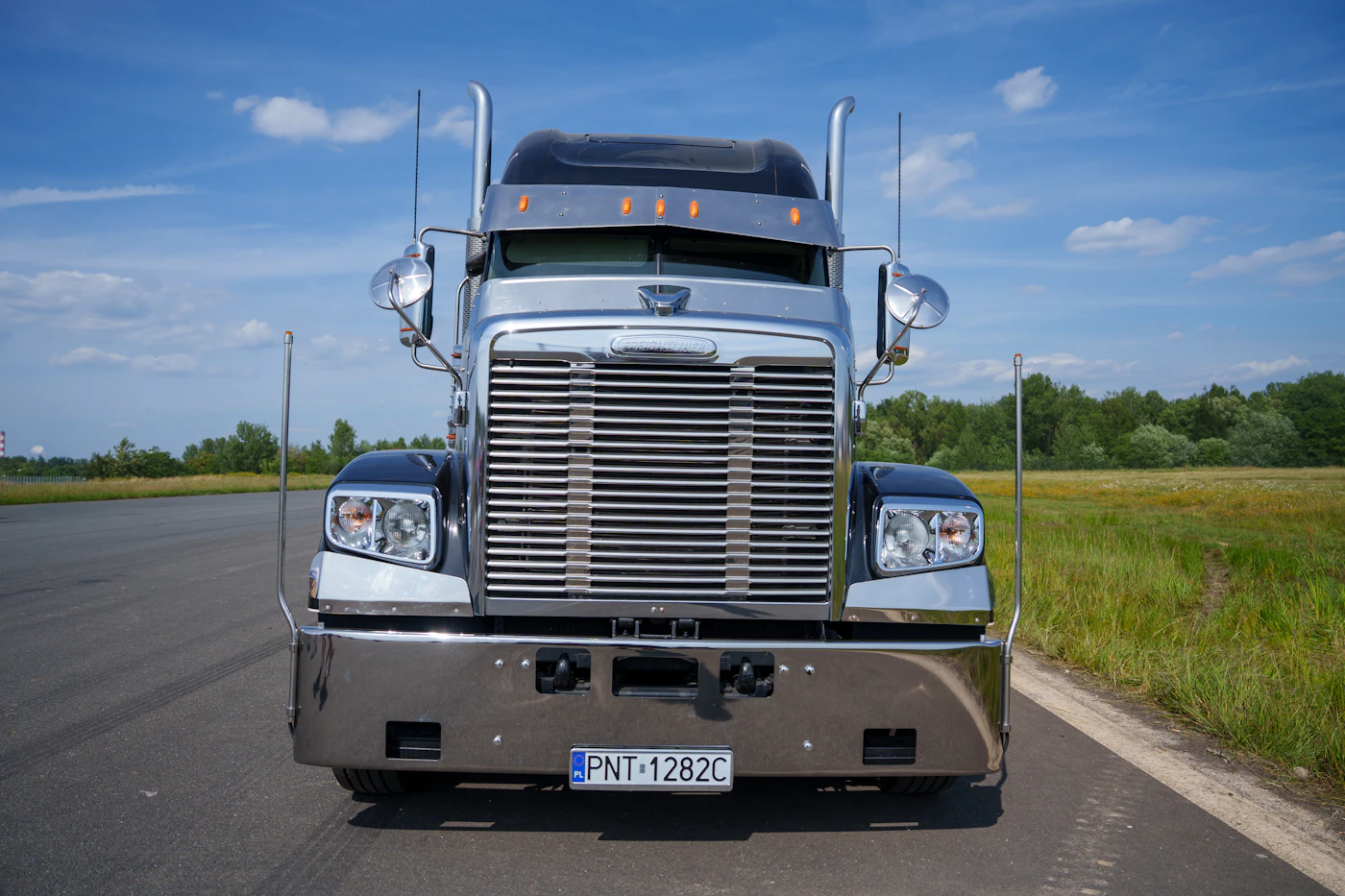
Short answer: A California business vehicle that isn't hauling goods for hire needs at least $30,000/$60,000/$15,000 in liability for policies issued or renewed on or after January 1, 2025 (Vehicle Code §16056), rising to $50,000/$100,000/$25,000 in 2035. For-hire property carriers need $300,000 or $750,000 depending on vehicle weight (Vehicle Code §34631.5). Contracts often require $1,000,000.
Minimum liability by type of business vehicle
| Vehicle use | Minimum liability | Source |
|---|---|---|
| Business car, pickup or van not hauling for hire (policies issued or renewed on or after Jan. 1, 2025) | $30,000 per person / $60,000 per accident bodily injury, $15,000 property damage | Veh. Code §16056(a)(2) |
| Same vehicles, policies issued or renewed on or after Jan. 1, 2035 | Rises by $20,000 / $40,000 / $10,000, to $50,000/$100,000/$25,000 | Veh. Code §16056(d) |
| For-hire property carrier, only vehicles under 10,000 lbs GVWR | $300,000 | Veh. Code §34631.5(a)(2) |
| For-hire property carrier, general freight (any vehicle 10,000 lbs or more) | $750,000 combined single limit | Veh. Code §34631.5(a)(1) |
| Rideshare (TNC) driver, app on, during a ride | $1,000,000 primary | Pub. Util. Code §5433 |
The difference between legal minimums and real-world limits
A $15,000 property damage limit doesn't go far when a work van hits a late-model car. Many customers, general contractors and landlords ask for $1,000,000 combined single limit on business autos before you can start a job, and their certificate requirements override the legal floor in practice.
Checklist
- Title vehicles in the business name when they're used for work, and insure them on a business auto policy.
- Know whether you haul for hire. If you do, the Motor Carrier Permit limits apply instead of the $30,000/$60,000/$15,000 floor. See FMCSA vs. California MCP minimums.
- Ask about hired and non-owned auto if employees drive their own cars for errands.
- Read contracts first. Customer and lease requirements are often higher than state law.
See our commercial auto insurance page and California minimum car insurance requirements.
Frequently asked questions
What is the minimum commercial auto insurance in California?
For a business vehicle that isn't hauling property for hire, Vehicle Code §16056 requires $30,000/$60,000/$15,000 for policies issued or renewed on or after January 1, 2025. For-hire property carriers need $300,000 or $750,000 under Vehicle Code §34631.5, depending on vehicle weight.
Are California's auto minimums going up again?
Yes. Vehicle Code §16056(d) adds $20,000/$40,000/$10,000 for policies issued or renewed on or after January 1, 2035, bringing the floor to $50,000/$100,000/$25,000.
Does my contractor's van need more than the state minimum?
State law sets only the floor. Many general contractors, customers and landlords require $1,000,000 combined single limit on a certificate before you can work.
Is the minimum different if I haul goods for customers?
Yes. A for-hire motor carrier of property needs at least $300,000 with only vehicles under 10,000 lbs GVWR, and $750,000 combined single limit otherwise, plus more for hazardous materials.
Alishahi Insurance · 439 N Canon Dr, Penthouse, Beverly Hills, CA 90210 · (877) 711-4545 · CA License #4348151. General information only. Not legal, tax or financial advice, and not a coverage determination. Coverage depends on policy language and underwriting, and rules vary by state.