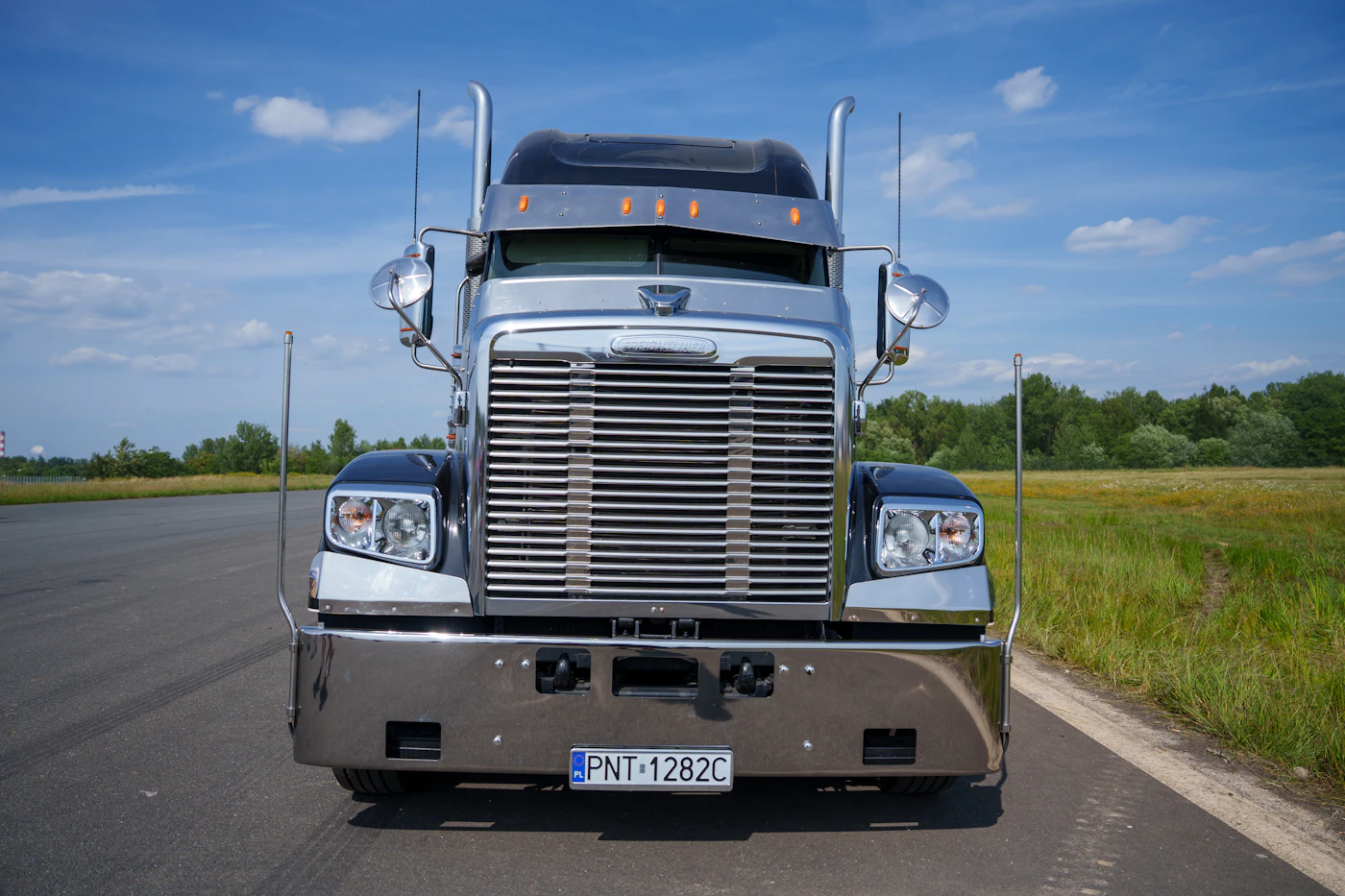
At the Ports of Los Angeles and Long Beach, every truck entering a marine terminal must be on the Ports Drayage Truck Registry. Carriers interchanging equipment under the UIIA need the auto liability and general liability limits the UIIA sets, and the trailer interchange and cargo limits each equipment provider sets. Send me your truck list and your providers, and I check each requirement before I take the account to market.
What makes San Pedro Bay drayage different
- Port of Los Angeles concessionThe port’s Clean Truck Program page says motor carriers making regular calls at its cargo terminals need an approved concession agreement, with a published term of October 1, 2021 through September 30, 2026. An August 2026 Harbor Commission agenda proposed extending existing agreements by up to two years. Confirm with the port which agreement covers you now. Out-of-state and infrequent carriers moving cargo through the port 24 times a year or less can get a temporary access permit instead.
- Ports Drayage Truck RegistryAll trucks entering marine terminals must be on the PDTR. Since October 1, 2018, new PDTR registrations of trucks entering new service at the Port of Los Angeles must be model year 2014 or newer.
- RFID gatesAll container terminals at both ports use RFID readers at their entry gates. Trucks serving terminals without RFID need a valid non-container terminal access sticker or a single-day pass.
- Equipment interchangeMost container and chassis interchange in North America runs under the UIIA, and the UIIA sets its own insurance requirements.
Underneath, it is still a trucking program (how drayage coverage is put together). What changes at the ports is who has to see your insurance and what they require. At the Port of Los Angeles, insurance certificates are part of the concession application package.
CARB rules: what applies to port trucks now
As of October 2026, CARB’s drayage page says no new regulations currently apply to drayage trucks. CARB strongly encourages carriers to adopt zero-emission drayage trucks voluntarily. Its Advanced Clean Fleets page describes that regulation as requiring state and local government agency fleets to add zero-emission vehicles as they replace vehicles, and it lists no drayage requirements.
Two statewide programs still matter for a port truck:
- Truck and Bus Regulation: by January 1, 2023, nearly all trucks and buses were required to have 2010 or newer model year engines.
- Clean Truck Check: CARB says its requirements are in effect for subject vehicles, including vehicles registered outside California while operating in the state. Those vehicles must report, pay an annual vehicle compliance fee and submit passing emissions test results.
Keep the PDTR, your CARB compliance records and your policy’s vehicle schedule lined up, unit by unit.
UIIA insurance requirements
The Uniform Intermodal Interchange and Facilities Access Agreement is the standard industry contract for interchanging equipment between intermodal trucking companies and equipment providers: ocean carriers, railroads and leasing companies. IANA says 95 percent of North American equipment interchanges are managed under it. The UIIA’s insurance requirements are:
- Auto liabilityThe UIIA’s required combined single limit, marked Any Auto, Scheduled and Hired, or All Owned and Hired. An All Owned or Scheduled Only policy is not acceptable. A hold-harmless endorsement (UIIE-1, CA 23 17 or TE 23 17B, most current version) must be made part of the policy, and every UIIA equipment provider you do business with must be listed as an additional insured.
- General liabilityThe UIIA’s required per-occurrence limit, with no portion self-insured. Some equipment providers also require additional insured status on this policy.
- Trailer interchangeMost equipment providers require it, and it must cover comprehensive and collision as well as fire and theft. Limits and deductibles vary by provider and are listed in Form 5B. How trailer interchange works.
- Cargo and workers’ compMost providers require some type of cargo coverage, with limits and deductibles that vary by provider. Some require workers’ compensation with statutory limits, and some also require employer’s liability.
Only one certificate of insurance goes to the UIIA, not one per provider, and the agent enters each insurer’s NAIC number and AM Best rating. Before I bind, I check Form 5B for the providers you actually pull for, so the trailer interchange and cargo limits match. What a certificate of insurance shows.
Federal and California filings
- USDOT number first: a California motor carrier must get a USDOT number before its carrier identification number (the CA number, issued by the CHP), and the CA number is not assigned without the USDOT number on the application.
- Interstate operating authority: for-hire interstate carriers need federal operating authority, and a vehicle that needs authority may not be operated without it or beyond its scope. For-hire interstate carriers of nonhazardous property in vehicles of 10,001 pounds or more must carry at least the federal minimum financial responsibility set in 49 CFR 387.9. What the MCS-90 does.
- California Motor Carrier Permit: from the DMV, for anyone paid to transport property in their motor vehicle. You need the CA number, a certificate of insurance on form MC 65 M, and proof of workers’ compensation or a signed exemption. The DMV sets the required liability levels.
The UIIA’s auto liability requirement is higher than the federal minimum. I set the auto limit to the highest requirement that applies to you and make the federal and DMV filings on that policy. California truck insurance requirements.
Owner-operators and California’s ABC test
Labor Code 2775 treats a worker as an employee unless the hiring entity shows all three parts of the ABC test:
- The person is free from its control and direction.
- The person does work outside the usual course of its business.
- The person is customarily engaged in an independently established business of the same nature.
The Labor Commissioner’s FAQ links a state chart on how the business-to-business exemption applies in the motor carrier industry. If the hiring entity meets the exemption, the Borello test decides the driver’s status. If it does not, the ABC test controls. The requirements include:
- A written contract stating the payment amount, rate of pay, services and pay date.
- The driver’s own business, with three marks: a business location separate from the carrier’s (a residence can count), their own trucks and equipment, and the ability to work with multiple motor carriers.
- Negotiated rates: the driver actually negotiated, or could negotiate, the rate. Turning down work is not enough.
- Holding out to the public: a logo, business cards or advertising on load boards, not merely having worked for others.
Settle with counsel how your drivers are engaged, then insure to match. That means workers’ comp for employees. For leased-on owner-operators, it means a clear split between your auto policy and their own non-trucking liability and occupational accident coverage.
Containers, chassis and cargo
In a drayage loss the container, chassis and freight usually belong to someone else, and each takes a different coverage:
- The box and the chassis: trailer interchange is the coverage for physical damage to equipment you pulled under an interchange agreement. Check the limit against each provider’s Form 5B.
- The freight: motor truck cargo, read for exclusions on unattended trucks, theft from yards and reefer breakdown. How cargo insurance works.
- Loads you hand to other carriers: if you broker overflow to another trucker, contingent cargo is what may respond when that carrier’s cargo coverage does not.
- Your own tractors: physical damage, scheduled by unit, with the same units that are on the registry.
Seal numbers, equipment interchange receipts and photos at pickup help document a sealed-container claim.
What underwriters ask a port drayage account
- Where you run: the marine terminals and rail ramps you serve, your radius, and whether you stay in California or cross state lines.
- What you move: loaded and empty containers, transload work, and any high-value, refrigerated or hazardous freight.
- Trucks: count, model years, PDTR status, and any zero-emission units.
- Drivers: employees or owner-operators, experience, driving records, and the contracts owner-operators sign.
- Equipment: UIIA status, the equipment providers you pull for, and whether chassis are your own or interchanged.
- Yards: where loaded containers sit overnight, and how the yard is secured.
- History: five years of losses and your safety record.
What to send me
- USDOT, MC and CA numbers, and your Motor Carrier Permit status.
- Your port concession agreement or temporary access permit, and the PDTR list of trucks.
- Your UIIA status and the equipment providers you interchange with.
- A vehicle schedule with VINs, model years and values.
- A driver list, marked employee or owner-operator, with the owner-operator contract.
- Current declarations pages for auto, general liability, trailer interchange, cargo, workers’ comp and umbrella.
- Five years of loss runs, with what happened on each claim.
Common questions
What insurance does the UIIA require of a drayage carrier?
Auto liability at the UIIA’s required combined single limit, with the hold-harmless endorsement on the policy and your equipment providers listed as additional insureds. You also need general liability at the UIIA’s required per-occurrence limit. Each equipment provider sets its own trailer interchange, cargo and workers’ comp requirements in Form 5B.
Do I have to run zero-emission trucks to work the Los Angeles and Long Beach ports?
As of October 2026, CARB’s drayage page says no new regulations currently apply to drayage trucks. The Truck and Bus rule’s 2010-or-newer engine requirement and Clean Truck Check still apply. New PDTR registrations of trucks entering new service at the Port of Los Angeles must be model year 2014 or newer.
Does every truck have to be on the Ports Drayage Truck Registry?
Yes. All trucks entering the marine terminals must be on the PDTR. At the Port of Los Angeles, a carrier is registered in the PDTR once its concession agreement is processed.
Is the federal minimum enough for port work?
Not for equipment interchange. The UIIA’s required auto liability limit is higher than the federal minimum for for-hire interstate carriers of nonhazardous property.
Can I use owner-operators in California?
California’s ABC test starts from the assumption that a worker is an employee. If the hiring entity meets the business-to-business exemption, the Borello test decides instead. Settle the structure with counsel and insure for how your drivers are actually engaged.
Does my auto policy cover a damaged container or chassis?
Damage to a container or chassis you pulled under an interchange agreement is what trailer interchange insurance is for. The UIIA says that coverage must include comprehensive and collision as well as fire and theft.
General information about insuring drayage carriers at the Ports of Los Angeles and Long Beach as of October 2026, not legal advice. Port concession and access agreements, PDTR rules, CARB regulations, UIIA requirements and California worker classification rules change. Confirm current terms with each port, CARB and the UIIA, and driver classification with counsel. Coverage depends on underwriting and the terms, conditions and exclusions of the policy actually issued.