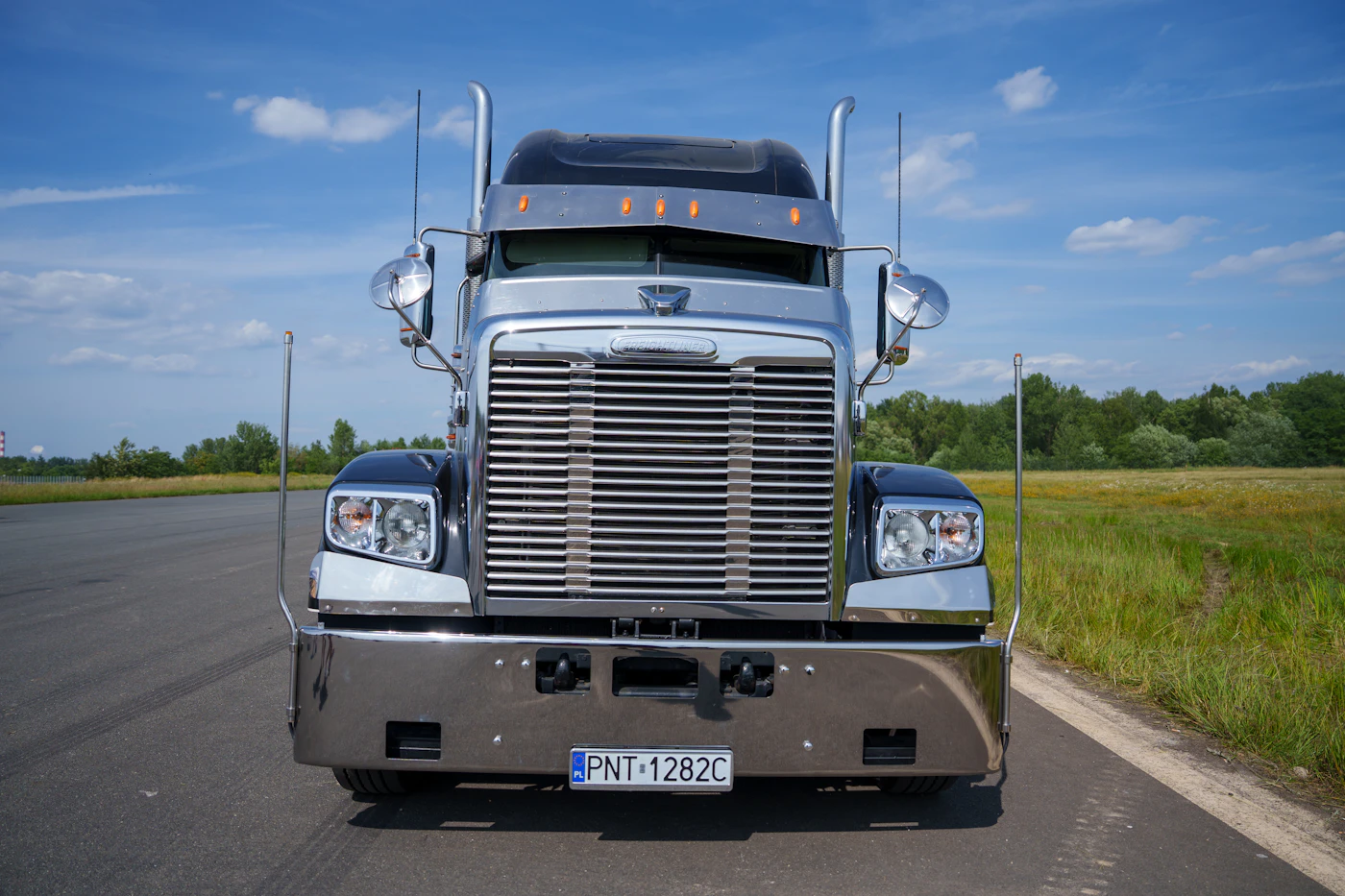
BTS counted 1,397,872 trucks entering the U.S. at the port of Detroit in 2024, 36.4 percent of all northern border truck traffic and more than any other crossing. Since July 27, 2026, those trucks have a second bridge: the Gordie Howe International Bridge, built to carry all nine classes of hazardous materials. Send me your unit list, your lanes into Ontario and your driver roster, and I build from there.
Two bridges, two sets of rules
- VolumeThe Bureau of Transportation Statistics ranked Detroit first among northern border ports for incoming trucks in 2024, ahead of Port Huron and Buffalo–Niagara Falls.
- Gordie Howe bridgeThe six-lane bridge opened at noon on July 27, 2026, with direct access from Ontario’s Highway 401 and from I-75.
- Hazardous materialsThe bridge authority says the span was designed for all nine dangerous goods classes and, for now, requires no special permit or notice for them, though carriers must still meet federal, state and provincial rules. The privately owned Ambassador Bridge has long restricted hazmat loads, and MDOT turned down a 2014 request to let flammable and corrosive cargo cross it.
- Oversize loadsOversize or overweight moves over the Gordie Howe bridge need MTO and/or MDOT permits, and the holder must call the bridge’s Traffic Management Centre at least 24 hours before crossing.
For an underwriter, the route a hazmat load takes now matters as much as the load itself. If you haul placarded freight across the river, I describe which crossing you use and confirm the auto policy carries the limit the material requires (hazmat insurance requirements).
Customs filings and coverage in Canada
- Southbound: CBP must receive the truck’s electronic cargo manifest at least one hour before it arrives at the U.S. port, or 30 minutes ahead for a FAST shipment.
- Northbound: the Canada Border Services Agency must receive and validate the carrier’s eManifest data at least one hour before the shipment reaches the border, and it holds the carrier responsible for late or missing filings.
- Policy territory: your auto, cargo and physical damage forms all have to reach Canada, and a shipper with Ontario plants will ask to see that on the certificate. I check each form’s territory wording, not just the declarations page.
A truck held at the booth over a filing error is a delay, not an insured loss, so the customs side of your operation is something an underwriter asks about but no policy pays for.
Michigan no-fault on a commercial fleet
Under MCL 500.3101, every vehicle that has to be registered in Michigan carries security for personal protection, property protection and residual liability. That reaches tractors and straight trucks plated here, not just cars. Two points shape a Detroit fleet program:
- Your drivers’ PIP: MCL 500.3114(3) says an employee hurt while occupying a vehicle the employer owns or registers collects personal protection benefits from the insurer of that vehicle. Your truck policy, not the driver’s personal policy, is first in line, alongside workers’ comp.
- Property protection: damage a Michigan-registered truck does in Michigan to buildings, fences and properly parked vehicles is largely paid through no-fault property protection rather than a lawsuit, which changes how a dock or yard crash is settled.
I make sure the fleet policy is written on Michigan forms for units plated here, and that out-of-state units running in Michigan carry the extension their insurer certifies. The consumer side is explained on Michigan’s PIP choices.
164,000-pound trains and the physical damage schedule
Michigan regulates axle loads rather than gross weight, and it allows up to 11 axles in a combination. With most of those axles held to 13,000 pounds, the House Fiscal Agency puts the practical ceiling at 164,000 pounds, well above the 80,000-pound federal interstate norm. Steel and aggregate haulers are the usual users of those multi-axle trains.
- Schedule every trailer and booster axle at a value you can document, with lienholders shown for financed units (physical damage for trucks).
- Tell the market where the heavy units run. A train that is legal in Michigan is overweight the moment it crosses into Ohio or Indiana without a permit.
- Heavy loads mean heavy losses. Expect questions about load securement and driver training on long combinations. Heavy haul insurance.
Federal filings and Michigan authority
An interstate for-hire fleet holds a USDOT number and MC authority, files a BOC-3 naming process agents in each state (BOC-3 filings), and pays UCR each year by fleet size (UCR registration). Hauls that start and end inside Michigan need intrastate authority from the Michigan State Police Commercial Vehicle Enforcement Division, with your insurer filing proof of liability. The federal schedule in 49 CFR 387.9 starts at seven hundred fifty thousand dollars for a for-hire interstate truck of 10,001 pounds or more hauling nonhazardous property, steps up to one million for oil, hazardous waste and most hazmat, and reaches five million for certain bulk hazardous substances. The MCS-90 guarantees that amount to the public and lets the insurer collect back what the policy wouldn’t otherwise cover (the MCS-90). State details are on the Michigan truck insurance page.
What decides the price
- CSA percentiles and inspections: border crossings bring roadside inspections, and every out-of-service order lands in FMCSA’s data (CSA scores).
- Hiring standards: a written minimum for age, experience and MVR, Clearinghouse queries before every hire, and proof each driver met it.
- Cameras and telematics: not required, but video of a crash on I-75 or I-94 often decides fault faster than witnesses do.
- Contract limits: automakers and Tier 1 suppliers set liability requirements in their carrier agreements, and big jury awards against trucking companies have made each layer of umbrella and excess cost more. I stack the tower to your largest contract (commercial umbrella).
What to send me
- USDOT and MC numbers, plus Michigan intrastate authority if you have it.
- Unit schedule with VINs, axle counts, values, lienholders and where each unit is plated.
- Driver roster with license class, hazmat and FAST endorsements, hire dates and MVRs.
- Your lanes: share of loads into Canada, which bridge you use, and any placarded freight.
- Customer contracts, current declarations and five years of loss runs.
Call or text (877) 711-4545.
Common questions
Do you have an office in Detroit?
No. Alishahi Insurance has one office, in Beverly Hills, California. I am licensed in Michigan and work with Detroit fleets by phone, text and online.
Can my trucks carry hazmat on the Gordie Howe bridge?
The bridge authority says it was designed for all nine classes and currently needs no special permit or notice, but federal, state and provincial rules still apply. Check its site before each new load type, since it says that may change.
Does my U.S. truck policy cover me in Ontario?
Most fleet auto policies cover the U.S. and Canada, but cargo and physical damage forms vary. I check the territory wording on each one before you cross.
Whose policy pays my driver’s PIP after a crash in Michigan?
Under MCL 500.3114(3), an employee hurt in a vehicle the employer owns or registers collects PIP from that vehicle’s insurer, with workers’ comp also in the picture.
Can I run 164,000 pounds outside Michigan?
Not without permits. Michigan’s 11-axle limits are its own; neighboring states hold to much lower gross weights.
What liability limit do Detroit shippers require?
Seven hundred fifty thousand dollars is only the federal minimum for nonhazardous freight. Automaker and supplier carrier agreements tend to set a higher number, and I reach it with umbrella or excess above the auto policy.
General information about insuring trucking fleets in the Detroit area as of November 2026, not legal or customs advice. FMCSA, CBP, CBSA, MDOT, Michigan State Police and bridge authority rules change; confirm current requirements with each agency, and no-fault questions with counsel. Coverage depends on underwriting and the terms, conditions and exclusions of the policy actually issued.