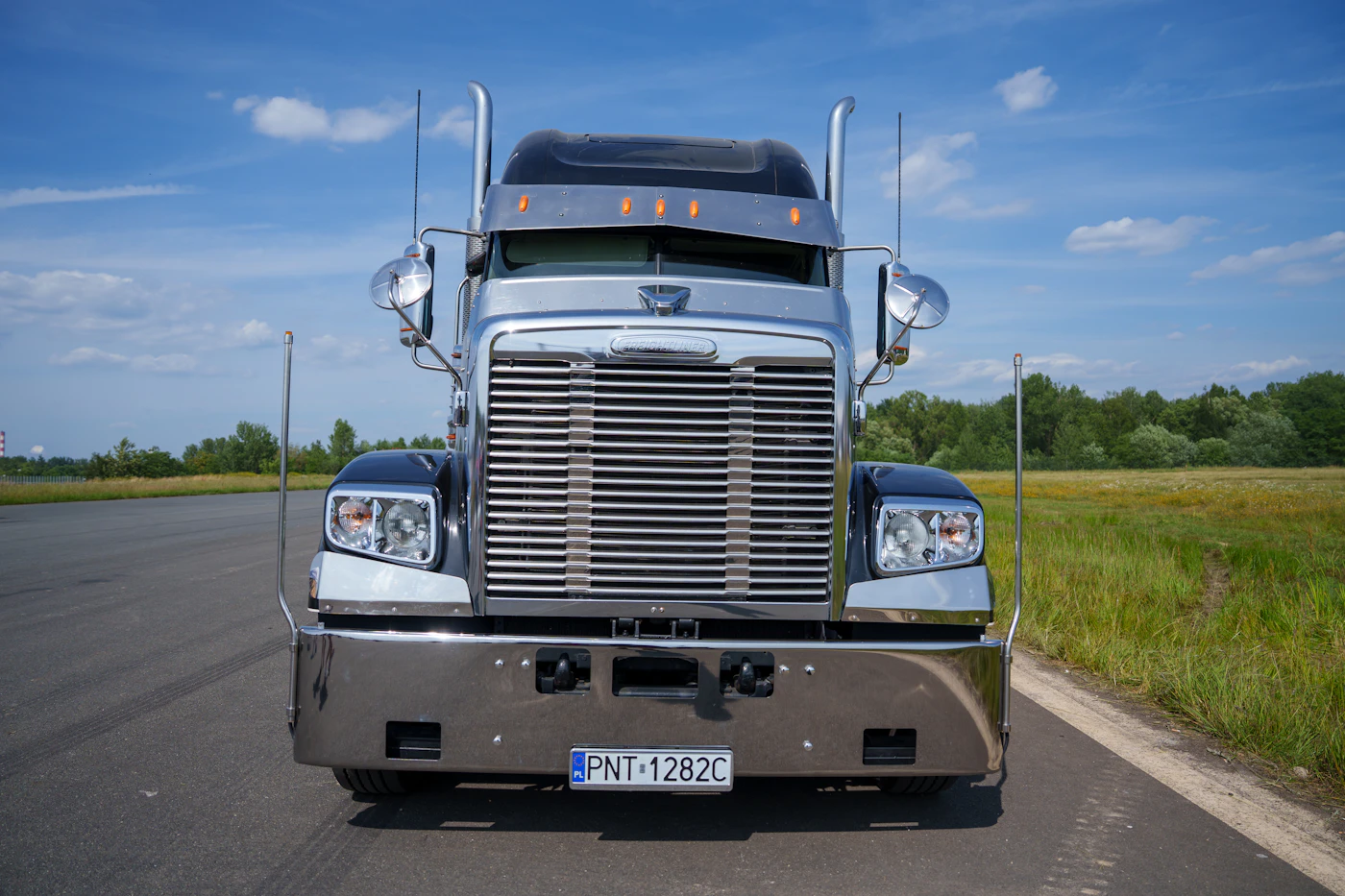
SCAG counts sections of I-10, I-15 and SR-60 among the region’s heaviest truck routes, and the CHP names the Inland Empire as one of four California regions hit hardest by cargo theft. As of November 2026, CARB’s amended Advanced Clean Fleets rule no longer reaches private fleets, but Clean Truck Check and Truck and Bus compliance still decide which trucks a warehouse or broker may dispatch. Send me the unit list, the driver roster and your last terminal inspection, and I take it from there.
The lanes an underwriter pictures
SCAG’s 2024 goods movement report describes the region’s freight this way:
- Warehouse clustersSR-60 and I-10 lead to major warehouse concentrations in Ontario, Fontana and Mira Loma, and more than half the region’s warehouse space sits within five miles of SR-60.
- Truck volumeSections of I-10, I-15, SR-60 and SR-91 carry the region’s highest truck volumes, averaging more than 17,000 trucks a day in 2019.
- DelayFor heavy trucks, I-10 ranked second and SR-60 third among the region’s most congested highways in 2019. SCAG’s bottleneck list includes a 17.5-mile northbound stretch of I-15 in San Bernardino County.
- Bigger buildingsRiverside and San Bernardino counties hold more retail, wholesale, transportation and warehousing floor space than Los Angeles County, mostly because the average building is much larger.
To an underwriter that reads as short, repeated runs in heavy traffic, a lot of backing at docks, and loaded trailers waiting in yards. Radius, stops per day and where trucks sit overnight often shape the quote more than total miles. If you also pull containers out of San Pedro Bay, the port rules are on the Los Angeles and Long Beach drayage page.
CARB rules as of November 2026
Advanced Clean Fleets. CARB’s ACF page now limits the rule to state and local government agency fleets, which must phase in zero-emission vehicles as they retire old ones. The 2025 amendments, approved by the Office of Administrative Law and filed on September 10, 2026, repeal the high-priority fleet and drayage portions, and CARB’s guidance says private fleets are not subject to the rule. One catch: a public agency’s fleet includes vehicles it contracts to operate on its behalf, so a city, county or agency you haul for may ask about your units.
- Clean Truck Check certificates: freight contractors may contract only with compliant vehicles or fleets, and brokers may arrange California loads only through carriers with compliant vehicles. They accept the vehicle’s compliance certificate from CARB’s CTC-VIS system, valid at dispatch, or an affirmation of fleetwide compliance from the last 12 months, and keep the record five years. CARB checks compliance by VIN, not by your company name.
- Registration holds: CARB says most DMV transactions need the truck compliant, with no test or fee due within 90 days of its deadline and no open CARB enforcement action. A unit that can’t renew is one you insure but can’t run.
- Truck and Bus: the rule’s last engine deadline was January 1, 2023, when nearly every truck needed a 2010 or newer engine, and since 2020 the DMV registers only compliant vehicles. Motor carriers, California brokers and California residents who hire or dispatch trucks must verify that the fleets they hire comply.
- Idling: since 2015 the five-minute idling limit binds whoever owns, operates or dispatches the truck, not only the driver, and a dispatching carrier must give each driver its business name, address and a contact.
The South Coast AQMD’s warehouse rule, Rule 2305, also makes operators of buildings of 100,000 square feet or more earn points each year based on truck trips, with tractors counted at 2.5 times. That obligation is the warehouse’s, not yours, but it is why some Inland Empire shippers ask about zero-emission units. Testing schedules are on the fleet insurance page.
Your terminal’s BIT rating
A carrier running tractors or heavy trucks is covered by the BIT program the CHP runs under Vehicle Code 34501.12. The CHP chooses terminals with a performance-based system using methods consistent with FMCSA’s, and an underwriter reads your last rating the way it reads your loss runs.
- Sample sizeThe CHP inspects a sample set by terminal fleet size, counted separately for power units and trailers: 9 units at a terminal fleet of 26 to 50, 14 at 51 to 90, and 20 at 91 or more.
- Records on requestA carrier that doesn’t make vehicles and records available gets an unsatisfactory rating.
- UnsatisfactoryThe terminal is reinspected within 120 days, and the carrier may ask for a review within five business days. If the Motor Carrier Permit is suspended over the rating, the CHP reinspects only when the DMV asks.
- SubhaulersBefore you subcontract to another carrier, it must certify in writing that it complies, and each side keeps the certification for the contract period plus two years.
- Leased unitsA lessor must make its vehicles available when the CHP inspects the lessee’s terminal.
Legal minimums, and the tower above them
The floor is the same at both levels: seven hundred fifty thousand dollars for for-hire interstate carriers of general freight in trucks of 10,001 pounds or more under 49 CFR 387.9, and the same combined single limit for most California motor carriers of property under Vehicle Code 34631.5, filed with the DMV for the Motor Carrier Permit (California permit rules). Two points matter for a growing fleet:
- New entity, new numbers: the DMV says any change in the business entity requires a new CA number from the CHP and a new permit application, so an acquired carrier or a new LLC needs its own filings before its trucks run.
- Contracts set the real limit: distribution centers, retailers and brokers often require a primary auto limit plus an umbrella or excess layer, in their own wording. I build the tower to the highest contract you sign, check that each layer sits over the auto and employer’s liability below it, and issue certificates that match. How much umbrella to carry.
Driver records and age rules
- Pull notice: under Vehicle Code 1808.1, an employer must get a DMV record issued within 30 days before hiring a driver who needs a class A or B license, enroll every such driver in the DMV’s pull-notice system, and get a periodic report at least every 12 months. Owners and family members who drive are enrolled too.
- Ages: nobody under 18 may be employed to drive, and nobody under 21 may drive a commercial vehicle in interstate commerce or haul hazardous material (Vehicle Code 12515). Federal rules also set 21 for interstate drivers (49 CFR 391.11).
- Market rules: most fleet markets set their own minimum age and years of experience above those floors, so I check the roster against each market before quoting rather than after a driver is excluded.
The roster an underwriter wants shows license class, hire date and years driving, with the pull-notice reports behind it.
Cargo theft and high-value tractors
The CHP’s Cargo Theft Interdiction Program names Los Angeles, the Inland Empire, the San Francisco Bay Area and San Diego as the four California regions hit hardest by cargo theft. The patterns it lists:
- Yard burglaries at truck yards, commercial parks and rail yards, mostly at night or on weekends.
- Fictitious pickups using fake identification or a fraudulent business to take a load.
- Terminal robberies and hijackings, with guards or employees held while loaded trucks are taken, or a truck taken at a stop after the load was scouted.
- Inside help from drivers or employees who pass load details to a theft group.
SCAG also reports trucks parking on residential streets for lack of legal spaces, which it links to theft risk. Expect questions about where loaded trailers sit overnight, who can release a load, and how you vet a carrier before handing one off. Read the cargo form’s theft and unattended-vehicle conditions (how cargo coverage works), and schedule each tractor at a value you can document, since one late-model tractor stolen or totaled is a large claim by itself (physical damage for trucks).
Workers’ comp at the terminal
Labor Code 3700 requires every employer to insure its workers’ comp or hold the state’s consent to self-insure, and the DMV won’t issue a Motor Carrier Permit without proof of coverage or a signed exemption. For a fleet, that premium follows driver, dock and shop payroll and your experience modification, so I need payroll split by what people actually do. Since July 1, 2024, Labor Code 6401.9 also requires most California employers to keep a written workplace violence prevention plan; a place with fewer than 10 employees at a time that is closed to the public can be exempt. A terminal robbery of the kind the CHP describes is exactly what that plan has to address.
What to send me
- Your federal and state numbers: USDOT, MC, CA and the Motor Carrier Permit.
- A unit schedule with VINs, model years, values, garaging terminals and Clean Truck Check status.
- The driver roster with license class, hire date, years driving and recent pull-notice reports.
- Your last BIT inspection report for each terminal.
- Customer contracts, or at least their insurance sections.
- Current declarations pages for auto, physical damage, cargo, umbrella or excess, and workers’ comp.
- Five years of loss runs and payroll by job.
Common questions
Does CARB’s Advanced Clean Fleets rule apply to my Inland Empire trucking fleet?
As of November 2026, CARB says the amended rule covers state and local government fleets, not private fleets; the amendments repealing the high-priority and drayage portions were approved and filed on September 10, 2026. If you haul under a public agency contract, the agency counts your vehicles in its own reporting.
Why does a warehouse or broker want my Clean Truck Check certificate?
CARB lets freight contractors and brokers use only compliant vehicles and requires them to keep proof: the vehicle’s compliance certificate valid at dispatch, or a fleetwide affirmation from the last 12 months. Without it they can’t dispatch you.
Can I hire drivers under 21 in California?
California law doesn’t bar paid drivers aged 18 to 20 from in-state work without hazardous material. Under 21, nobody may drive a commercial vehicle in interstate commerce or haul hazardous material, and most fleet markets set higher minimums, so check before you hire.
What happens if my terminal gets an unsatisfactory BIT rating?
The CHP reinspects within 120 days, and you have five business days to ask for a review. If your Motor Carrier Permit is suspended over the rating, the CHP reinspects only when the DMV asks, and underwriters will want the follow-up report.
Is cargo theft worse in the Inland Empire?
The CHP lists the Inland Empire among the four California regions most affected, with Los Angeles, the Bay Area and San Diego. Expect questions about yard security, overnight parking and how you verify pickups.
Is seven hundred fifty thousand dollars of liability enough for a trucking fleet?
It is the legal floor federally and for most California motor carriers of property. Shipper and broker contracts usually set the real limit, and meeting them often takes an umbrella or excess layer above the auto policy.
General information about insuring trucking fleets in Riverside and San Bernardino counties as of November 2026, not legal advice. CARB, CHP, DMV, South Coast AQMD and FMCSA rules change; confirm current requirements with each agency, and how your drivers are engaged with counsel. Coverage depends on underwriting and the terms, conditions and exclusions of the policy actually issued.