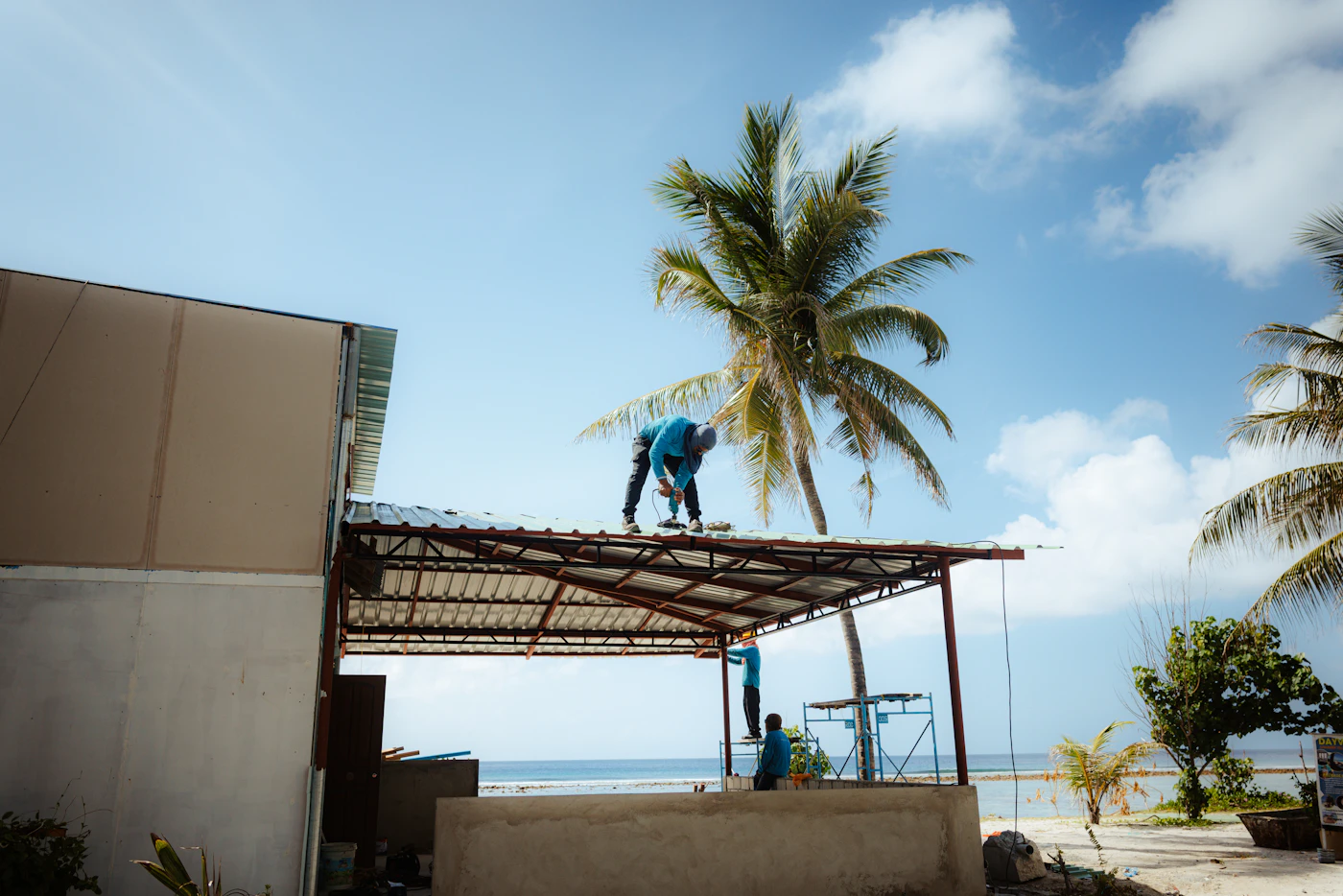
A fire rebuild here is new construction in a very high fire hazard severity zone, often on a hillside, on a street full of job sites. California law keeps your homeowners carrier on the property, but that policy is not built to cover a house going up. Builder’s risk covers the structure and materials during construction. I insure the project; I do not build it.
Why a Los Angeles rebuild needs its own policy
The policy that paid for the old house was written around a finished, occupied home. A wood frame standing open for months on a cleared Palisades or Altadena lot, with a pallet of windows in the driveway, is a different risk.
Builder’s risk covers the structure under construction and the materials meant for it (on site and, depending on the form, in transit and in storage), usually at completed value for the length of the build. It does not replace the contractor’s liability, workers’ compensation or tools coverage. How builder’s risk works.
What your homeowners policy does while you rebuild
- The policy staysAfter a total loss caused by a declared disaster, the insurer must offer to renew for at least the next two annual renewals and no less than 24 months from the loss, and cannot cancel while the house is being rebuilt except for narrow statutory reasons. If the rebuild is not finished at renewal, it must consult you and adjust limits and coverage to your changed exposure.
- Replacement cost timeFor a state-of-emergency loss, your insurer cannot give you less than 36 months from the first actual-cash-value payment to collect full replacement cost, and must add six-month extensions when good-faith rebuilding is delayed by things outside your control, such as unavoidable permit delays.
- Living expensesAdditional living expense runs at least 24 months from the loss, with up to 12 more months for delays outside your control, subject to the policy’s other terms.
None of this turns a homeowners policy into construction coverage. Keep it for liability and ask your carrier in writing what it covers on the new structure as it goes up. If it has lapsed, a cleared lot still needs liability. Coverage for vacant and under-construction property.
You or your contractor: who buys it
Either can, and the construction contract should say which. If your general contractor carries it, ask to be named on the policy as an insured, not just handed a certificate, and check that the limit is the full contract value plus anything you supply yourself: appliances, windows you ordered direct, finishes.
- Check the license first. In a declared disaster area, contracting without a license is a crime that can be charged as a felony. Working with the Contractors State License Board, the District Attorney charged five unlicensed contractors in the Eaton Fire area in December 2025 and six more in the Palisades in June 2026. Look the contractor up on the board’s website before signing.
- Ask for their certificates. General liability, workers’ compensation and, where your contract calls for it, additional insured status for you. What additional insured status actually gives you.
I do not build or recommend contractors; I review their insurance before you sign.
Streamlined permits, long timelines, and when coverage should start
In the City of Los Angeles, Mayor Bass’s Emergency Executive Order 1 lets a Palisades Fire rebuild go “like for like” without coastal, environmental or Mello Act review, up to 110% of the previous footprint and height, with non-conforming setbacks kept; it also allows a basement and an accessory dwelling unit to be added. Executive Order 8 gives zoning-compliant single-family rebuilds in the Coastal Zone a similar path. The City runs the LA One-Stop Rebuilding Center on Sawtelle Boulevard for Palisades permits; Los Angeles County runs one-stop permit centers in Altadena for the Eaton Fire area and in Calabasas for its share of the Palisades Fire area.
Faster permits do not change the policy’s job:
- Bind before the first delivery, not at framing. Materials stored on a cleared lot are exposed from the day they arrive.
- Set the term for the real build, and know how extensions work.
- Read the soft-cost and delay wording. Delay-in-completion coverage typically responds when a covered loss, such as a fire on site, pushes back completion, not when plan check or inspections run slow.
- Put the ADU on a policy. A backyard unit built first is new construction too.
Building to the wildfire code changes the value
The Palisades has been a very high fire hazard severity zone since 1999. New homes in fire hazard severity zones are built to California’s wildfire construction standards, long known as Chapter 7A of the Building Code and, since January 1, 2026, carried in the new California Wildland-Urban Interface Code. Among other things: a Class A roof covering, listed flame- and ember-resistant vents, fire-resistant windows (commonly multi-pane with at least one tempered pane), and noncombustible or ignition-resistant materials for exterior walls and eaves.
The builder’s risk limit has to reflect the cost of building to that standard, not the cost of the house that burned, and the finished home will be underwritten on these features, so keep the product specs and inspection records. Why rebuild cost, not market value, is the number to insure; what ordinance or law coverage pays toward code upgrades on the original claim.
Theft, hillsides and the job site itself
Palisades rebuild sites have lost construction tools and equipment in 2026 burglaries, including from storage containers, and in April 2025 a man was arrested with about 1,000 pounds of copper taken from a construction site in the burn area. LAPD has urged owners and contractors to lock up tools, use GPS trackers, keep equipment in lit, camera-covered areas and install alarm systems.
- Materials and fixtures waiting to be installed are what builder’s risk is for. Underwriters ask about fencing, cameras and locked storage.
- Contractors’ tools and equipment are usually excluded from builder’s risk and belong on the contractor’s own tools and equipment coverage.
- Hillside lots in the City need a grading permit for earthwork in the Hillside Grading Area, and the Department of Building and Safety usually requires a soils or geology report before permits issue. Earth movement is commonly excluded from builder’s risk, and burned slopes can send mud and debris downhill in heavy rain, most often in the first couple of rainy seasons. Know what your form says before winter.
Insuring property in Pacific Palisades through the rebuild.
What to send me
- The address and whether it is a fire rebuild, new home, ADU or major remodel.
- The construction contract, or the clause saying who insures the work, plus the contractor’s name and license number.
- Completed value, including owner-supplied materials.
- Scope: square footage, stories, construction type, basement, pool, ADU.
- Timeline: start, first material delivery and completion.
- Site: hillside or flat, fencing, lighting, cameras, material storage.
- Your homeowners declarations page and any renewal adjustment letter.
- The lender’s insurance requirements, if there is a construction loan.
Common questions
Does my homeowners policy cover my house while it is being rebuilt?
Usually not as construction coverage. California requires your insurer to offer renewal for at least 24 months after a disaster total loss, but a standard homeowners policy is not designed for a house under construction; builder’s risk is.
Who buys builder’s risk on a Palisades or Altadena rebuild, the owner or the contractor?
Either; the construction contract should say which. If your contractor buys it, you should be named on the policy and the limit should cover the full project value.
Do I still need builder’s risk for a like-for-like rebuild?
Yes. Executive Order 1 shortens the permit path in the City of Los Angeles; it does nothing about fire, wind, vandalism or theft while the house is under construction.
Does builder’s risk cover materials stolen from the job site?
Building materials and fixtures meant for the project typically are, subject to the policy’s theft conditions. Contractors’ tools and equipment usually are not and need their own coverage.
Will builder’s risk pay if my permits take longer than expected?
Generally no. Delay coverage typically responds when a covered loss on site delays completion, not when plan check runs slow. Ask how the term can be extended.
Are you a rebuild contractor in Pacific Palisades?
No. I am an insurance broker in Beverly Hills: I insure the project and review your contractor’s insurance before you sign. Check any contractor’s license with the Contractors State License Board.
General information about builder’s risk insurance for Los Angeles construction and fire rebuilds as of October 2026, not legal advice. City and County executive orders, permit procedures and California building codes change; confirm your project’s permit path with Los Angeles City Planning, the Department of Building and Safety or LA County Public Works, and read your own policy wording. Coverage depends on underwriting and the terms, conditions and exclusions of the policy actually issued.